
Print Friendly Version Page

2502127 Search Results

Portrait of Philippe Pinel (1745-1826), French physician, 19th century (engraving)

JLJ4614977: Portrait of Philippe Pinel (1745-1826), French physician, 19th century (engraving), Unknown Artist, (19th century) / Bridgeman Images

Subdivision in Nozay (Essonne).

LBY4610123: Subdivision in Nozay (Essonne). / Bridgeman Images

Vegetable garden in peri urban area and activity area in Persian (Val d'Oise).

MDA4610216: Vegetable garden in peri urban area and activity area in Persian (Val d'Oise). / Bridgeman Images
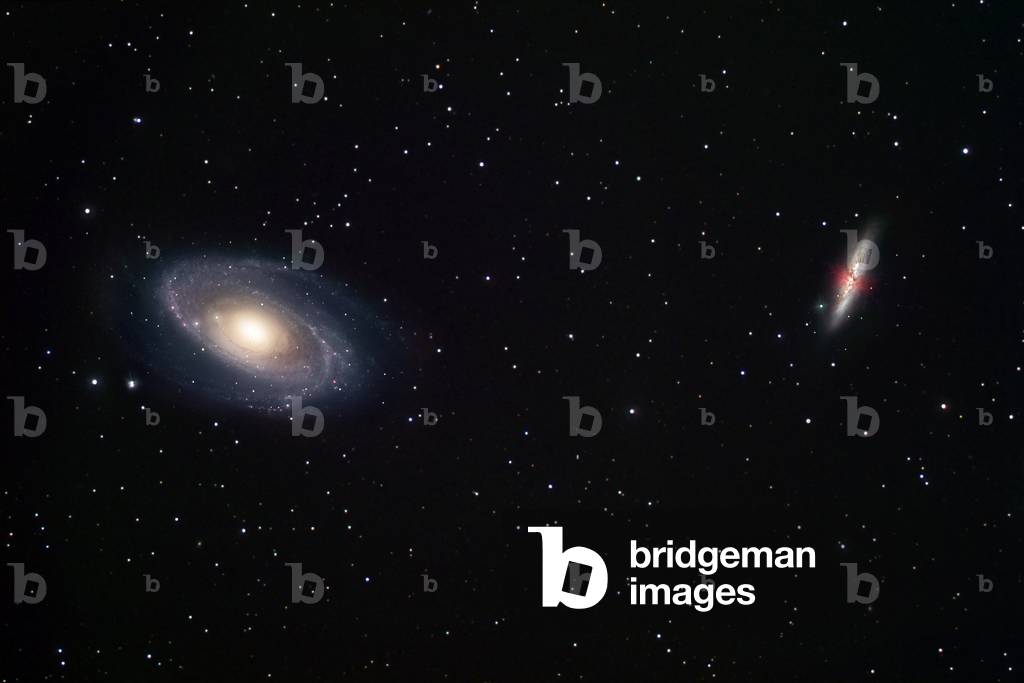
Galaxies M81 and M82 in the Great Bear - Galaxies M81 and M82 in Ursa major - M81 (left) is a spiral galaxy. M82 (right) an irregular galaxy. Separated for about 150,000 light years, these two galaxies belong to the galaxy cluster closest to our local group. These galaxies are approximately 12 million light years away from Earth. M81, seen here at left, is a grand design spiral galaxy that forms a physical pair with irregular galaxy M82. They are separated by 150,000 light years at a distance of 12 million light years. This galaxy group, consisting of M81, M82, NGC 3077 and NGC 2976, is the nearest galaxy group to our own local group of galaxies that contains the Milky Way, Magellanic Clouds, M33, and the M31 - M32 - M110 system

PIX4610307: Galaxies M81 and M82 in the Great Bear - Galaxies M81 and M82 in Ursa major - M81 (left) is a spiral galaxy. M82 (right) an irregular galaxy. Separated for about 150,000 light years, these two galaxies belong to the galaxy cluster closest to our local group. These galaxies are approximately 12 million light years away from Earth. M81, seen here at left, is a grand design spiral galaxy that forms a physical pair with irregular galaxy M82. They are separated by 150,000 light years at a distance of 12 million light years. This galaxy group, consisting of M81, M82, NGC 3077 and NGC 2976, is the nearest galaxy group to our own local group of galaxies that contains the Milky Way, Magellanic Clouds, M33, and the M31 - M32 - M110 system / Bridgeman Images

A gardener, in
A gardener, in

JLJ4610754: A gardener, in "New assembly of the manouvries habilles" 18th century, Germany, 18th century (engraving), Engelbrecht, Martin (1684-1756) / Bridgeman Images
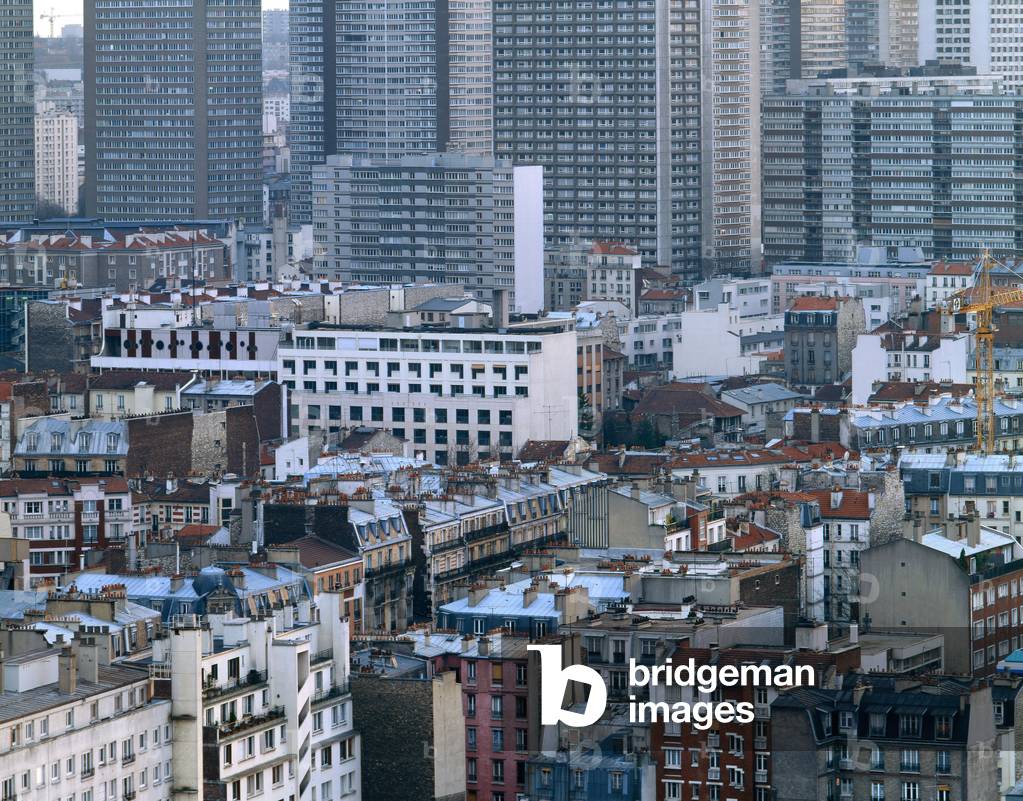
Boulevard Vincent Auriol in Paris.

MDA4610786: Boulevard Vincent Auriol in Paris. / Bridgeman Images
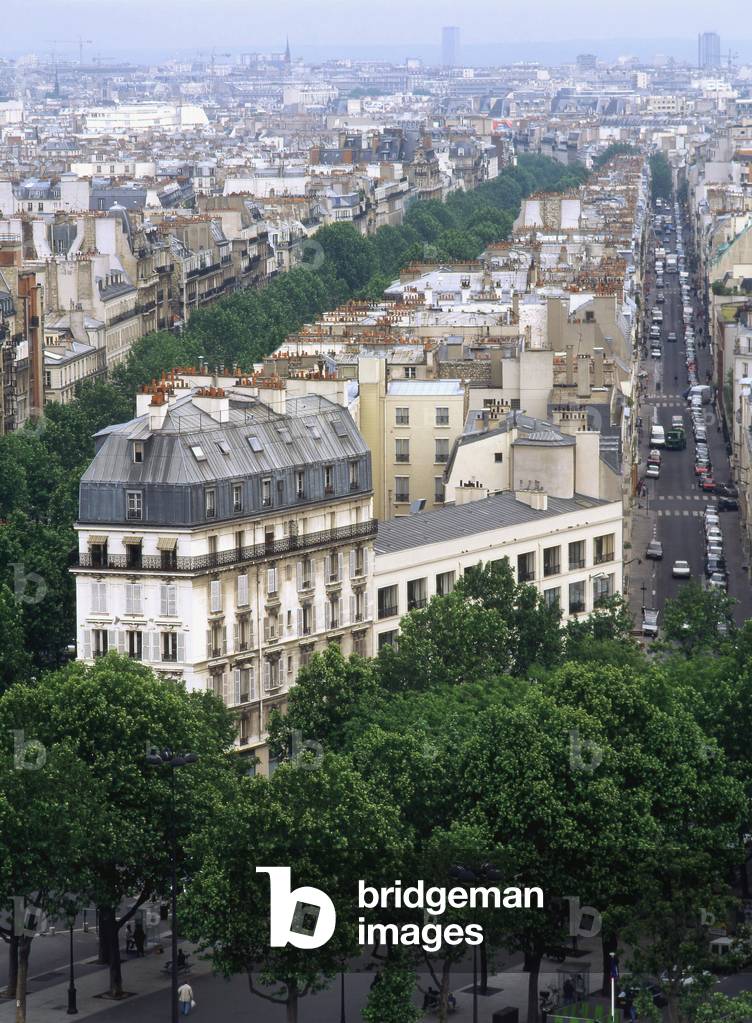
Panoramic view from Opera Bastille on the delimite island by Boulevard Beaumarchais and Rue Amelot, Paris 11th arrondissement.

MDA4610819: Panoramic view from Opera Bastille on the delimite island by Boulevard Beaumarchais and Rue Amelot, Paris 11th arrondissement. / Bridgeman Images

Portrait of Josephine de Lavalette, Baroness de Forget, 1826 (oil on canvas)

JLJ4610889: Portrait of Josephine de Lavalette, Baroness de Forget, 1826 (oil on canvas), Vernet, Emile Jean Horace (1789-1863) / Bridgeman Images

Lot and his Daughters, detail of the destruction of Sodom, c.1517 (oil on panel)

LRI4610858: Lot and his Daughters, detail of the destruction of Sodom, c.1517 (oil on panel), Leyden, Lucas van (c.1494-1533) / Bridgeman Images
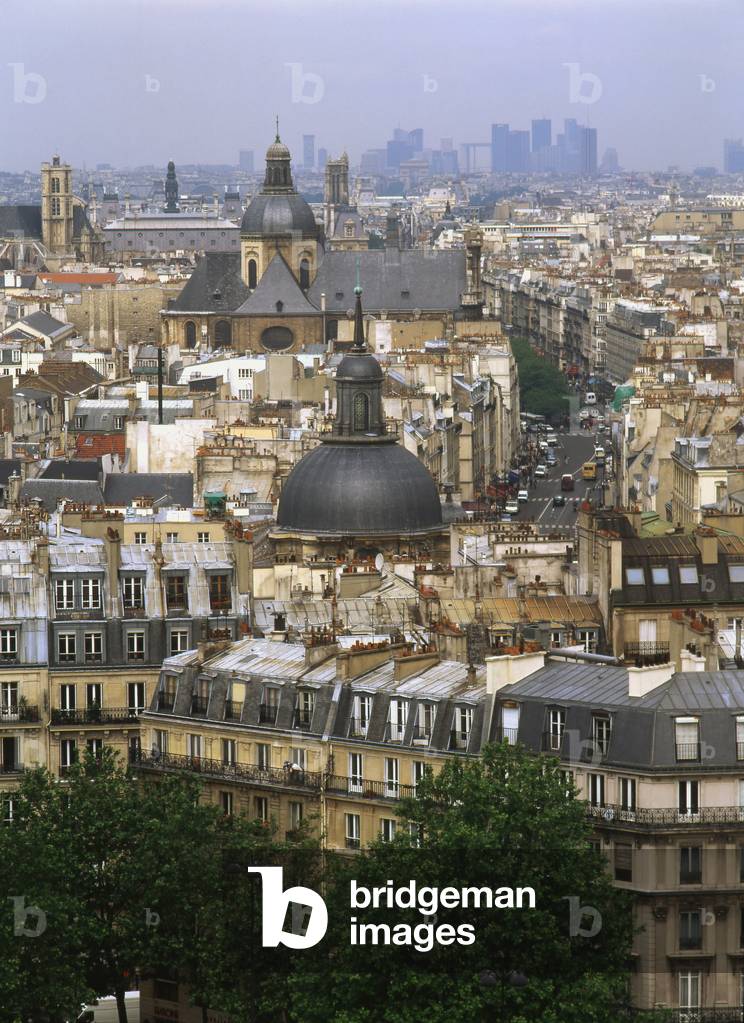
Panoramic view from the Opera Bastille, Paris 12th arrondissement.

MDA4610864: Panoramic view from the Opera Bastille, Paris 12th arrondissement. / Bridgeman Images

Young stars in the dwarf galaxy NGC 4163 - Young stars in dwarf galaxy NGC 4163 - NGC 4163 is an irregular dwarf galaxy located about 10 million years ago - light of the Earth in the constellation Hunting Dogs

PIX4611122: Young stars in the dwarf galaxy NGC 4163 - Young stars in dwarf galaxy NGC 4163 - NGC 4163 is an irregular dwarf galaxy located about 10 million years ago - light of the Earth in the constellation Hunting Dogs / Bridgeman Images

Study of naked woman standing for

JLJ4611132: Study of naked woman standing for " scene de guere au middle age", c.1863-1865 (drawing), Degas, Edgar (1834-1917) / Bridgeman Images

Parisian Costumes: Afternoon Toilet (Afternoon Toilet), 1913 (drawing)

JLJ4611245: Parisian Costumes: Afternoon Toilet (Afternoon Toilet), 1913 (drawing), Brunelleschi, Umberto (1879-1949) / Bridgeman Images

Fifth Avenue in Manhattan, New York, USA.

TEC4611230: Fifth Avenue in Manhattan, New York, USA. / Bridgeman Images

Portrait of a woman wearing a dress called half mourning and feeding birds, 1913 (illustration)

JLJ4611296: Portrait of a woman wearing a dress called half mourning and feeding birds, 1913 (illustration), Lhuer, Victor (1883-1951) / Bridgeman Images

Signals on Park Avenue in Manhattan New York (United States).

TEC4611329: Signals on Park Avenue in Manhattan New York (United States). / Bridgeman Images

Feast of the Supreme Being on the Field of March in 1793, 18th century (watercolour)

JLJ4611343: Feast of the Supreme Being on the Field of March in 1793, 18th century (watercolour), Naudet, Thomas (1773-1810) / Bridgeman Images
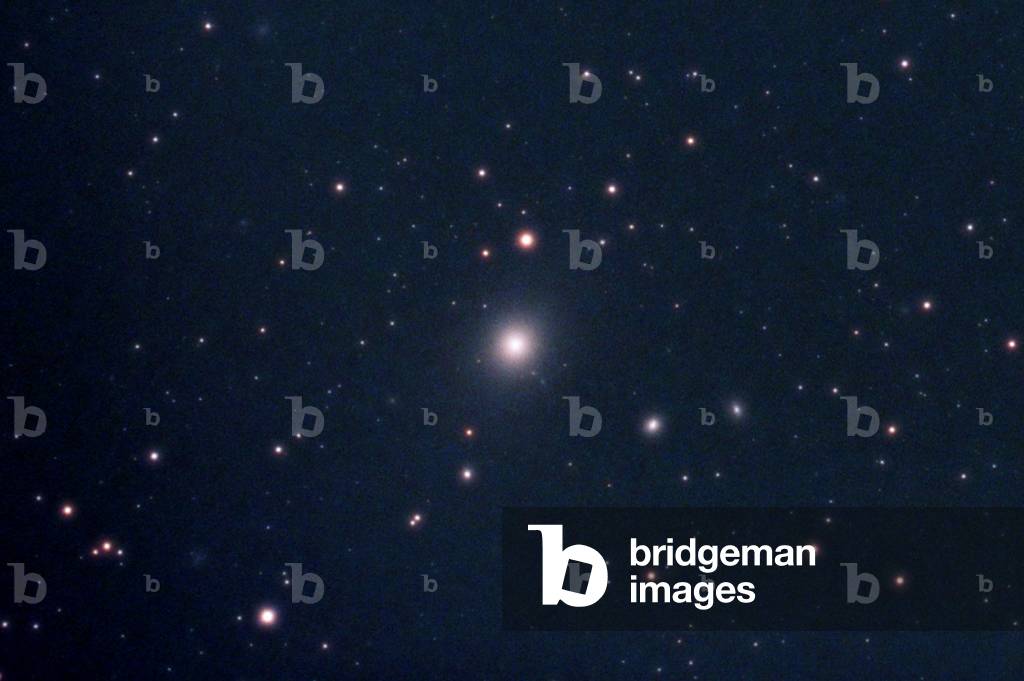
M87 elliptical galaxy in Virgo - M87 elliptical galaxy in Virgo - The M87 galaxy (NGC 4486) is located about 60 million years ago - light from Earth, in the heart of the Virgin's cluster. M87 is the brightest radio source of the constellation, it is also called Virgo A. Image made with an amateur instrument, a 130 mm bezel. Gigantic elliptical galaxy M87 is located at the heart of the Virgo Cluster of galaxies. Also known as radio source Virgo A, M87 is located about 60 million light years away. It appears to have a linear size of 120,000 light years and a mass estimated at 2.7 trillion solar masses, and an extreme luminosity, with an absolute magnitude of about - 22

PIX4611410: M87 elliptical galaxy in Virgo - M87 elliptical galaxy in Virgo - The M87 galaxy (NGC 4486) is located about 60 million years ago - light from Earth, in the heart of the Virgin's cluster. M87 is the brightest radio source of the constellation, it is also called Virgo A. Image made with an amateur instrument, a 130 mm bezel. Gigantic elliptical galaxy M87 is located at the heart of the Virgo Cluster of galaxies. Also known as radio source Virgo A, M87 is located about 60 million light years away. It appears to have a linear size of 120,000 light years and a mass estimated at 2.7 trillion solar masses, and an extreme luminosity, with an absolute magnitude of about - 22 / Bridgeman Images

The glass of the Hudson Hotel, 356 West 58th Street in Manhattan, architect Philippe Starck, New York (United States). Photography 10/04/03.

TEC4611438: The glass of the Hudson Hotel, 356 West 58th Street in Manhattan, architect Philippe Starck, New York (United States). Photography 10/04/03., Starck, Philippe (b.1949) / Bridgeman Images

Galaxy M88 in the Hair of Berenice - Spiral galaxy M88 in Coma Berenices - M88 is a spiral galaxy located in the cluster of the Virgin. Spiral galaxy located in the Virgo cluster of galaxies

PIX4611456: Galaxy M88 in the Hair of Berenice - Spiral galaxy M88 in Coma Berenices - M88 is a spiral galaxy located in the cluster of the Virgin. Spiral galaxy located in the Virgo cluster of galaxies / Bridgeman Images

Art France: 6 leaf screen. Goblins tapestry, 1811 (tapestry)

JLJ4611491: Art France: 6 leaf screen. Goblins tapestry, 1811 (tapestry), French School, (19th century) / Bridgeman Images

Spiral galaxy NGC 4565 in Berenice's Hair - Spiral galaxy NGC 4565 in Coma Berenices - The galaxy NGC 4565 is located about 30 million years ago - light from Earth. It's a spiral galaxy seen by the slice. Image obtained with a 30 cm telescope, composite of several poses. Edge - on galaxy located at about 30 million light years away

PIX4611537: Spiral galaxy NGC 4565 in Berenice's Hair - Spiral galaxy NGC 4565 in Coma Berenices - The galaxy NGC 4565 is located about 30 million years ago - light from Earth. It's a spiral galaxy seen by the slice. Image obtained with a 30 cm telescope, composite of several poses. Edge - on galaxy located at about 30 million light years away / Bridgeman Images

Campaign (Expedition) of Egypt (1798-1801):

JLJ4611587: Campaign (Expedition) of Egypt (1798-1801): "The Battle of the Pyramids, July 21, 1798" Detail, 1798 (oil on canvas), Lejeune, Louis (1775-1848) / Bridgeman Images

Subdivision, Zone Pouillon in Montbeliard (Doubs).

LBY4610137: Subdivision, Zone Pouillon in Montbeliard (Doubs). / Bridgeman Images

A carpenter's wife, in

JLJ4610315: A carpenter's wife, in "New assembly of the manouvries habilles", 18th century (engraving), Engelbrecht, Martin (1684-1756) / Bridgeman Images

Portrait of Jean Paul Marat, French physician, journalist and politician (1743-1793), 18th century (etching)

JLJ4610005: Portrait of Jean Paul Marat, French physician, journalist and politician (1743-1793), 18th century (etching), French School, (18th century) / Bridgeman Images

Landscape with windmill, 1649 (oil on wood)

JLJ4610089: Landscape with windmill, 1649 (oil on wood), Ruysdael, Jacob Salomonsz. (1630-81) / Bridgeman Images

Colliding spiral galaxies NGC 2207 and IC 2163 - Colliding galaxies NGC 2207 and IC 2163 - The galaxies NGC 2207 (left) and IC 2163 (right) form a pair of colliding galaxies approximately 114 million light years away. Currently IC 2163 is moving away from NGC 2207, but it is likely that within several billion years these two galaxies will eventually merge into a single massive galaxy. Image obtained by the Hubble Space Telescope in 1998. The larger and more massive galaxy is cataloged as NGC 2207 (on the left in the Hubble Heritage image), and the smaller one on the right is IC 2163. Strong tidal forces from NGC 2207 have distorted the shape of IC 2163, flinging out stars and gas into long streamers stretching out a hundred thousand light - years towards the right - hand edge of the image. The calculations indicate that IC 2163 is swinging past NGC 2207 in a counterclockwise direction, having made its closest approach 40 million years ago. However, IC 2163 does not have sufficient energy to escape from the gravitational pull of NGC 2207, and is destined to be pulled back and swing past the larger galaxy again in the future. The high resolution of the Hubble telescope image reveals dust lanes in the spiral arms of NGC 2207, clearly silhouetted against IC 2163, which is in the background. The large concentrations of gas and dust in both galaxies may well erupt into regions of active star formation in the near future. Eventually, billions of years from now, these galaxies will merge into a single, more massive galaxy. It is believed that many present - day galaxies, including the Milky Way, were assembled from a similar process of coalescence of smaller galaxies occurring over billions of years

PIX4610001: Colliding spiral galaxies NGC 2207 and IC 2163 - Colliding galaxies NGC 2207 and IC 2163 - The galaxies NGC 2207 (left) and IC 2163 (right) form a pair of colliding galaxies approximately 114 million light years away. Currently IC 2163 is moving away from NGC 2207, but it is likely that within several billion years these two galaxies will eventually merge into a single massive galaxy. Image obtained by the Hubble Space Telescope in 1998. The larger and more massive galaxy is cataloged as NGC 2207 (on the left in the Hubble Heritage image), and the smaller one on the right is IC 2163. Strong tidal forces from NGC 2207 have distorted the shape of IC 2163, flinging out stars and gas into long streamers stretching out a hundred thousand light - years towards the right - hand edge of the image. The calculations indicate that IC 2163 is swinging past NGC 2207 in a counterclockwise direction, having made its closest approach 40 million years ago. However, IC 2163 does not have sufficient energy to escape from the gravitational pull of NGC 2207, and is destined to be pulled back and swing past the larger galaxy again in the future. The high resolution of the Hubble telescope image reveals dust lanes in the spiral arms of NGC 2207, clearly silhouetted against IC 2163, which is in the background. The large concentrations of gas and dust in both galaxies may well erupt into regions of active star formation in the near future. Eventually, billions of years from now, these galaxies will merge into a single, more massive galaxy. It is believed that many present - day galaxies, including the Milky Way, were assembled from a similar process of coalescence of smaller galaxies occurring over billions of years / Bridgeman Images

The death of Jean Baptiste (Jean-Baptiste) Carpeaux (1827-1875), French sculptor, 1892 (painting)

JLJ4610097: The death of Jean Baptiste (Jean-Baptiste) Carpeaux (1827-1875), French sculptor, 1892 (painting), Maignan, Albert Pierre Rene (1845-1908) / Bridgeman Images

Occultation of Saturn by the Moon from 03/11/2001 - Moon is occulting Saturn. November 3 2001 - View with a C8 telescope and Televue-Barlow (2,5x

PIX4588186: Occultation of Saturn by the Moon from 03/11/2001 - Moon is occulting Saturn. November 3 2001 - View with a C8 telescope and Televue-Barlow (2,5x / Bridgeman Images

Conjunction Mars Jupiter - Close conjunction between Jupiter and Mars: Observation of planets Jupiter, very bright, and Mars (just below) in tight conjunction. January 7, 2018. An amateur astronomer takes a photo of the very close conjunction between Jupiter and Mars in the beginning of 2018

PIX4588278: Conjunction Mars Jupiter - Close conjunction between Jupiter and Mars: Observation of planets Jupiter, very bright, and Mars (just below) in tight conjunction. January 7, 2018. An amateur astronomer takes a photo of the very close conjunction between Jupiter and Mars in the beginning of 2018 / Bridgeman Images
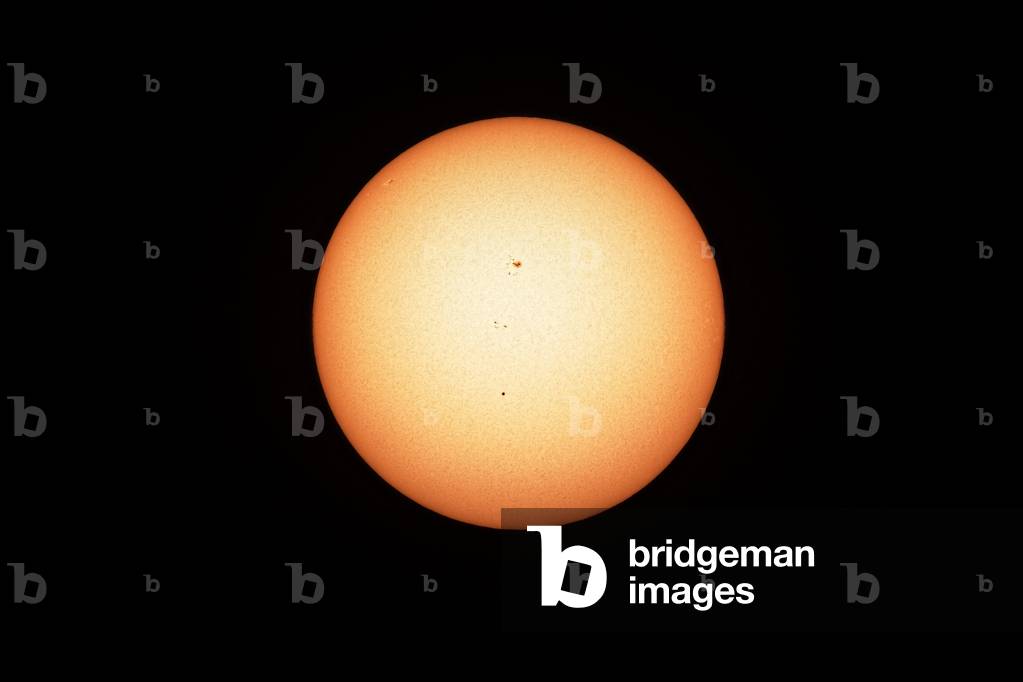
Mercury Transit in front of the Sun. May 9, 2016 - Mercury Transit. May 9, 2016: Mercury is located at the bottom center as a small, dark, round spot

PIX4588338: Mercury Transit in front of the Sun. May 9, 2016 - Mercury Transit. May 9, 2016: Mercury is located at the bottom center as a small, dark, round spot / Bridgeman Images

Debarked human heads: muscles and skeletons are visible, 18th century (engraving)

JLJ4588440: Debarked human heads: muscles and skeletons are visible, 18th century (engraving), Lairesse, Gerard de (1640-1711) / Bridgeman Images

Conjunction Lune Pleiades et clouages noctulescents - Moon near Pleiades with noctilucent clouds - La Lune cendree pres de l'amas des Pleiades seen in Brittany on 30 June 2008. In the sky, clouds of high altitude, very rarely visible in France. Moon near the Pleiades star cluster with noctilucent clouds. These high altitude clouds are usually seen in summer months but nearer the poles than France. Brittany, June 30 2008

PIX4587917: Conjunction Lune Pleiades et clouages noctulescents - Moon near Pleiades with noctilucent clouds - La Lune cendree pres de l'amas des Pleiades seen in Brittany on 30 June 2008. In the sky, clouds of high altitude, very rarely visible in France. Moon near the Pleiades star cluster with noctilucent clouds. These high altitude clouds are usually seen in summer months but nearer the poles than France. Brittany, June 30 2008 / Bridgeman Images

Transit of Venus in front of the Sun. 05/06/2012 - Venus Transit. 05/06/2012 - Transit of Venus in front of the Sun seen by the SDO satellite, June 5, 2012. On June 5-6 2012, SDO is collecting images of one of the rarest predictable solar events: the transit of Venus across the face of the sun. This event happens in pairs eight years apart that are separated from each other by 105 or 121 years. The last transit was in 2004 and the next will not happen until 2117

PIX4588480: Transit of Venus in front of the Sun. 05/06/2012 - Venus Transit. 05/06/2012 - Transit of Venus in front of the Sun seen by the SDO satellite, June 5, 2012. On June 5-6 2012, SDO is collecting images of one of the rarest predictable solar events: the transit of Venus across the face of the sun. This event happens in pairs eight years apart that are separated from each other by 105 or 121 years. The last transit was in 2004 and the next will not happen until 2117 / Bridgeman Images
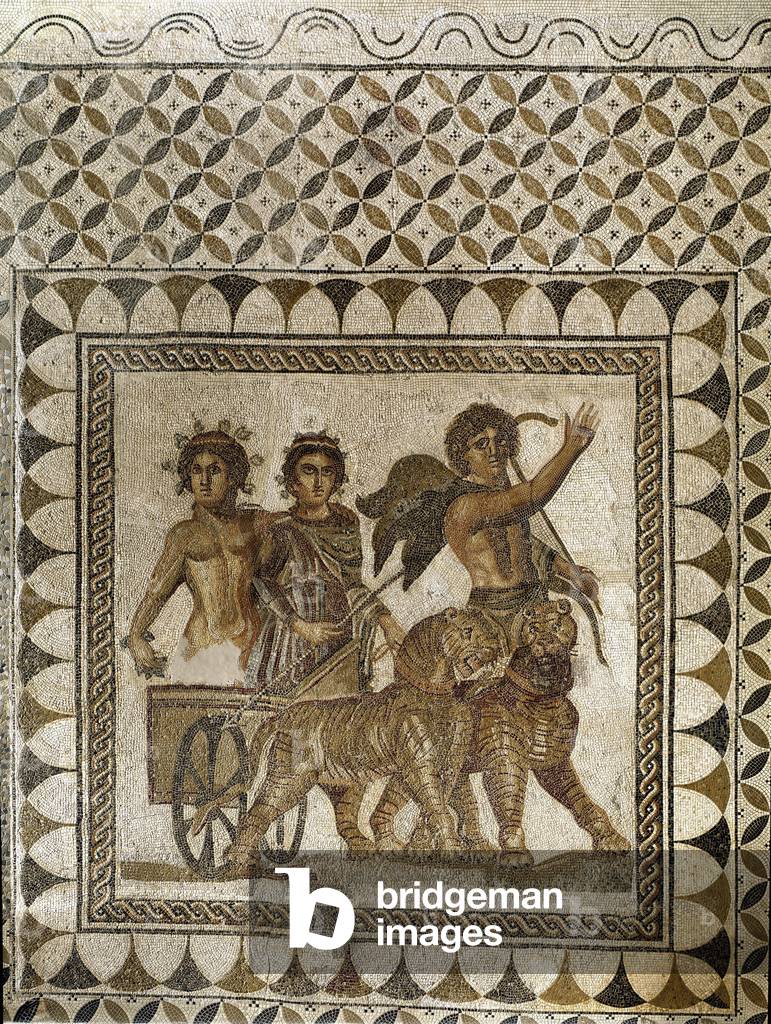
Bacchus in a chariot pulled by tigers, 3rd century (mosaic)

LRI4587966: Bacchus in a chariot pulled by tigers, 3rd century (mosaic), Roman, (3rd century AD) / Bridgeman Images


Back to top