
Print Friendly Version Page

2502127 Search Results

Spiral galaxy NGC 4622 in Centaurus - Spiral galaxy NGC 4622 in Centaurus - The spiral galaxy NGC 4622 is located 111 million light years ago in the southern constellation of Centaurus. The image obtained by the Hubble Space Telescope in May 2001 shows regions filled with new stars in blue. Astronomers have observed that, unlike other known spiral galaxies, it is the outer arms of this galaxy that rotate the whole, rotating in the same direction as the center; moreover, an inner arm of the galaxy would rotate in the opposite direction. A small galaxy absorbed by NGC 4622 could be responsible for this anomaly. NGC 4622 resides 111 million light - years away in the constellation Centaurus. The image taken in May 2001 with Hubble's Wide Field Planetary Camera 2 shows NGC 4622 and its outer pair of winding arms full of new stars (shown in blue). Astronomers are puzzled by the clockwise rotation because of the direction the outer spiral arms are pointing. Most spiral galaxies have arms of gas and stars that trail behind as they turn. But this galaxy has two “” leading””” outer arms that point toward the direction of the galaxy's clockwise rotation. To add to the conundrum, NGC 4622 also has a “” trailing”” inner arm that is wrapped around the galaxy in the opposite direction it is rotating. NGC 4622 is a rare example of a spiral galaxy with arms pointing in opposite directions. Astronomers suspect that NGC 4622 interacted with another galaxy. Its two outer arms are lopsided, meaning that something disturbed it. The Hubble image suggests that NGC 4622 consumed a small companion galaxy

PIX4611676: Spiral galaxy NGC 4622 in Centaurus - Spiral galaxy NGC 4622 in Centaurus - The spiral galaxy NGC 4622 is located 111 million light years ago in the southern constellation of Centaurus. The image obtained by the Hubble Space Telescope in May 2001 shows regions filled with new stars in blue. Astronomers have observed that, unlike other known spiral galaxies, it is the outer arms of this galaxy that rotate the whole, rotating in the same direction as the center; moreover, an inner arm of the galaxy would rotate in the opposite direction. A small galaxy absorbed by NGC 4622 could be responsible for this anomaly. NGC 4622 resides 111 million light - years away in the constellation Centaurus. The image taken in May 2001 with Hubble's Wide Field Planetary Camera 2 shows NGC 4622 and its outer pair of winding arms full of new stars (shown in blue). Astronomers are puzzled by the clockwise rotation because of the direction the outer spiral arms are pointing. Most spiral galaxies have arms of gas and stars that trail behind as they turn. But this galaxy has two “” leading””” outer arms that point toward the direction of the galaxy's clockwise rotation. To add to the conundrum, NGC 4622 also has a “” trailing”” inner arm that is wrapped around the galaxy in the opposite direction it is rotating. NGC 4622 is a rare example of a spiral galaxy with arms pointing in opposite directions. Astronomers suspect that NGC 4622 interacted with another galaxy. Its two outer arms are lopsided, meaning that something disturbed it. The Hubble image suggests that NGC 4622 consumed a small companion galaxy / Bridgeman Images

Barree spiral galaxy NGC 4639 in Virgo - Barred galaxy NGC 4639 in Virgo - The barree spiral galaxy NGC 4639 is located 78 million years - light in the Virgin's galaxy cluster. The blue dots visible on this image obtained by the Hubble Space Telescope are young stars. Other stars, cepheides have also been observed in this galaxy, allowing us to measure their distance with precision. This Hubble Space Telescope image shows NGC 4639, a spiral galaxy located 78 million light - years away in the Virgo cluster of galaxies. The blue dots in the galaxy's outlying regions indicate the presence of young stars. Among them are older, bright stars called Cepheids, which are used as reliable milepost markers to obtain accurate distances to nearby galaxies. Astronomers measure the brightness of Cepheids to calculate the distance to a galaxy. After using Cepheids to calculate the distance to NGC 4639, the team compared the results to the peak brightness measurements of SN 1990N, a type Ia supernova located in the galaxy. Then they compared those numbers with the peak brightness of supernovae similarly calibrated in nearby galaxies. The team then determined that type Ia supernovae are reliable secondary distance markers, and can be used to determine distances to galaxies several hundred times farther away than Cepheids. An accurate value for the Hubble Constant depends on Cepheids and secondary distance methods. The color image was made from separate exposures taken in the visible and near - infrared regions of the spectrum with the Wide Field Planetary Camera 2

PIX4611731: Barree spiral galaxy NGC 4639 in Virgo - Barred galaxy NGC 4639 in Virgo - The barree spiral galaxy NGC 4639 is located 78 million years - light in the Virgin's galaxy cluster. The blue dots visible on this image obtained by the Hubble Space Telescope are young stars. Other stars, cepheides have also been observed in this galaxy, allowing us to measure their distance with precision. This Hubble Space Telescope image shows NGC 4639, a spiral galaxy located 78 million light - years away in the Virgo cluster of galaxies. The blue dots in the galaxy's outlying regions indicate the presence of young stars. Among them are older, bright stars called Cepheids, which are used as reliable milepost markers to obtain accurate distances to nearby galaxies. Astronomers measure the brightness of Cepheids to calculate the distance to a galaxy. After using Cepheids to calculate the distance to NGC 4639, the team compared the results to the peak brightness measurements of SN 1990N, a type Ia supernova located in the galaxy. Then they compared those numbers with the peak brightness of supernovae similarly calibrated in nearby galaxies. The team then determined that type Ia supernovae are reliable secondary distance markers, and can be used to determine distances to galaxies several hundred times farther away than Cepheids. An accurate value for the Hubble Constant depends on Cepheids and secondary distance methods. The color image was made from separate exposures taken in the visible and near - infrared regions of the spectrum with the Wide Field Planetary Camera 2 / Bridgeman Images

Aphrodite to the pillar, after the Aphrodite used by Alcamene, Greek sculptor of the 5th century BC (marble)

JLJ4611757: Aphrodite to the pillar, after the Aphrodite used by Alcamene, Greek sculptor of the 5th century BC (marble), Greek school, (5th century BC) / Bridgeman Images
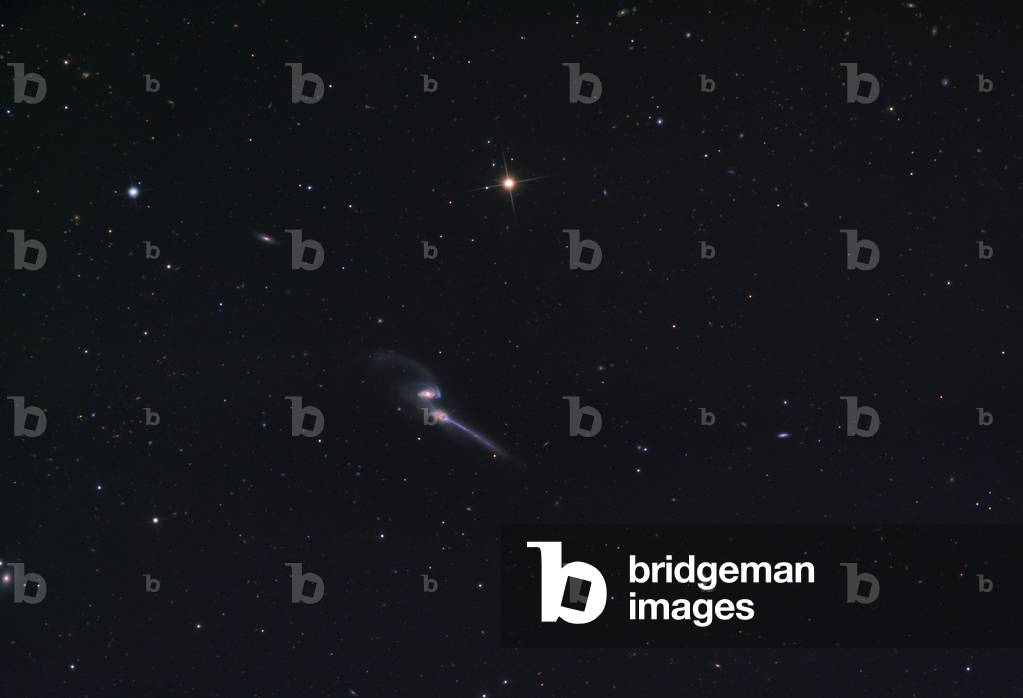
Colliding galaxies NGC 4676 in Berenice's Hair - Colliding galaxies NGC 4676 - The galaxy NGC 4676 is located about 300 million years away - light from Earth. It is a system of two spiral galaxies that collide and eventually become one galaxy. Image obtained on May 31, 2008 with a telescope 61 cm in diameter. Located 300 million light - years away in the constellation Coma Berenices, the colliding galaxies have been nicknamed “” The Mice”” because of the long tails of stars and gas emanating from each galaxy. Otherwise known as NGC 4676, the pair will eventually merge into a single giant galaxy. Image taken on May 31 2008 with a 24 - inch telescope

PIX4611841: Colliding galaxies NGC 4676 in Berenice's Hair - Colliding galaxies NGC 4676 - The galaxy NGC 4676 is located about 300 million years away - light from Earth. It is a system of two spiral galaxies that collide and eventually become one galaxy. Image obtained on May 31, 2008 with a telescope 61 cm in diameter. Located 300 million light - years away in the constellation Coma Berenices, the colliding galaxies have been nicknamed “” The Mice”” because of the long tails of stars and gas emanating from each galaxy. Otherwise known as NGC 4676, the pair will eventually merge into a single giant galaxy. Image taken on May 31 2008 with a 24 - inch telescope / Bridgeman Images

Mobile Art Chanel (architect Zaha Hadid) in New York (USA).

TEC4611861: Mobile Art Chanel (architect Zaha Hadid) in New York (USA)., Hadid, Zaha (1950-2016) / Bridgeman Images

Wall Street a Manhattan, New York, United States. Photograph 03/10/00;

TEC4611910: Wall Street a Manhattan, New York, United States. Photograph 03/10/00; / Bridgeman Images

The New York Stock Exchange (1901-1903), 11 Wall Street in New York (United States). Photography 10/04/03.

TEC4611050: The New York Stock Exchange (1901-1903), 11 Wall Street in New York (United States). Photography 10/04/03. / Bridgeman Images

Chrysler Building in New York (United States).

TEC4611073: Chrysler Building in New York (United States)., Alen, William Van (1883-1954) / Bridgeman Images

Perspective view of Nakano-Cho. Japanese print by Masanobu Tanaka, active between 1741 and 1748, Ukiyo-E style, 1741 (print)

JLJ4611130: Perspective view of Nakano-Cho. Japanese print by Masanobu Tanaka, active between 1741 and 1748, Ukiyo-E style, 1741 (print), Masunobu, Tanaka (fl.1770s) / Bridgeman Images

Art Gallo Romain: ex-voto representing a swaddling child. Limestone sculpture (limestone)

JLJ4611170: Art Gallo Romain: ex-voto representing a swaddling child. Limestone sculpture (limestone), Gallo-Roman / Bridgeman Images

Caleche is at 5th Avenue in front of Central Park New York (United States). Photography 10/04/03.

TEC4611243: Caleche is at 5th Avenue in front of Central Park New York (United States). Photography 10/04/03. / Bridgeman Images
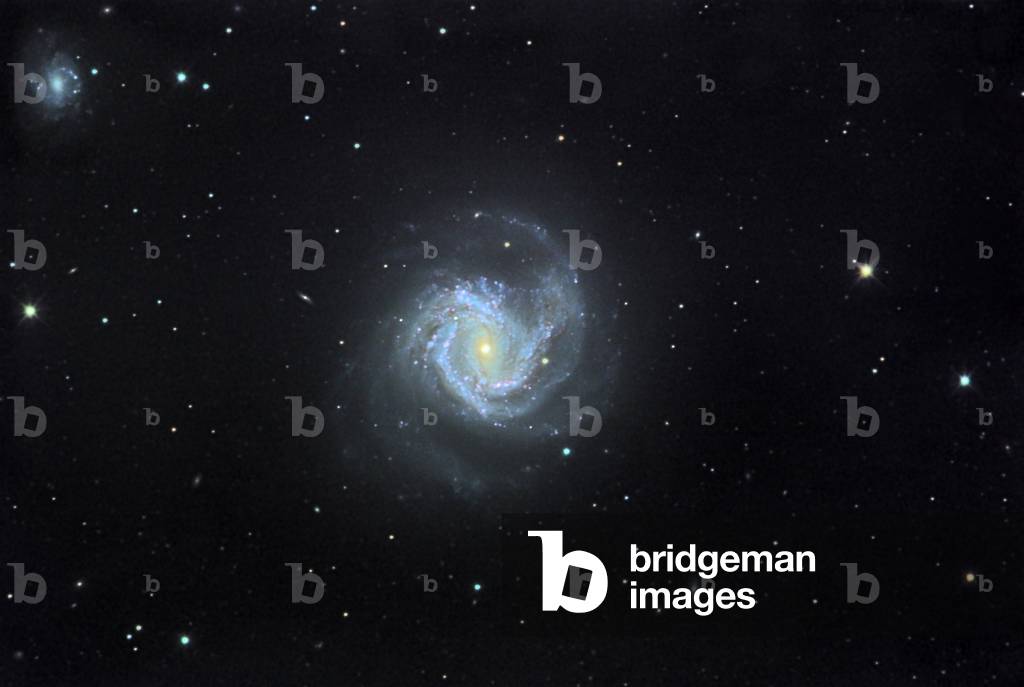
Spiral Galaxy M61 in Virgo - Spiral galaxy M61 in Virgo - The spiral galaxy M61 (NGC 4303) is located about 60 million years away - light from Earth. It is one of the largest galaxies in the Virgin's cluster, measuring 100,000 years - light. The SabBC spiral galaxy M61 is one of the larger galaxies in the Virgo cluster, with a core dimension some 100 000 light - years (6 arc minutes) across, comparable to the size of our own Galaxy

PIX4611277: Spiral Galaxy M61 in Virgo - Spiral galaxy M61 in Virgo - The spiral galaxy M61 (NGC 4303) is located about 60 million years away - light from Earth. It is one of the largest galaxies in the Virgin's cluster, measuring 100,000 years - light. The SabBC spiral galaxy M61 is one of the larger galaxies in the Virgo cluster, with a core dimension some 100 000 light - years (6 arc minutes) across, comparable to the size of our own Galaxy / Bridgeman Images

Downtown a Manhattan New York (United States).

TEC4611292: Downtown a Manhattan New York (United States). / Bridgeman Images

Portrait of Jacques Hebert (1757-1794), 18th century (drawing)

JLJ4611298: Portrait of Jacques Hebert (1757-1794), 18th century (drawing), Gabriel, Georges Francois (1775-1846) / Bridgeman Images

The Tomb of Philippe Pot (1428-1494), Grand Senechal of Burgundy. Detail, 1477-1483 (limestone)

JLJ4611999: The Tomb of Philippe Pot (1428-1494), Grand Senechal of Burgundy. Detail, 1477-1483 (limestone), Franco-Burgundian, (15th century) / Bridgeman Images

Houses in Manhattan, New York (United States).

TEC4612027: Houses in Manhattan, New York (United States). / Bridgeman Images

The promenade planted on the High Line in New York (New York), United States (United States). Photography 26/09/10

TEC4612091: The promenade planted on the High Line in New York (New York), United States (United States). Photography 26/09/10 / Bridgeman Images

Detail Farm, 1750 (oil on canvas)

JLJ4612113: Detail Farm, 1750 (oil on canvas), Oudry, Jean-Baptiste (1686-1755) / Bridgeman Images

Galaxies NGC 5090 - NGC 5091 in Centaurus - Interacting galaxies NGC 5090 - 5091 in Centaurus - NGC 5090 is an elliptical galaxy and NGC 5091 a spiral galaxy. These two galaxies interact and lie about 150 million light years away from Earth. This image was obtained by the ANTU telescope of the VLT on March 29, 1999. NGC 5090 is an elliptical galaxy interacting with the spiral galaxy NGC 5091. Both are located at about 150 million light - years away. Image taken with ANTU telescope (VLT) on March 29, 1999

PIX4612149: Galaxies NGC 5090 - NGC 5091 in Centaurus - Interacting galaxies NGC 5090 - 5091 in Centaurus - NGC 5090 is an elliptical galaxy and NGC 5091 a spiral galaxy. These two galaxies interact and lie about 150 million light years away from Earth. This image was obtained by the ANTU telescope of the VLT on March 29, 1999. NGC 5090 is an elliptical galaxy interacting with the spiral galaxy NGC 5091. Both are located at about 150 million light - years away. Image taken with ANTU telescope (VLT) on March 29, 1999 / Bridgeman Images

Portrait of Paulus Van Beresteyn (1588-1636), 1630 (oil on canvas)

JLJ4612214: Portrait of Paulus Van Beresteyn (1588-1636), 1630 (oil on canvas), Soutman, Pieter Claesz (c.1593-1657) / Bridgeman Images
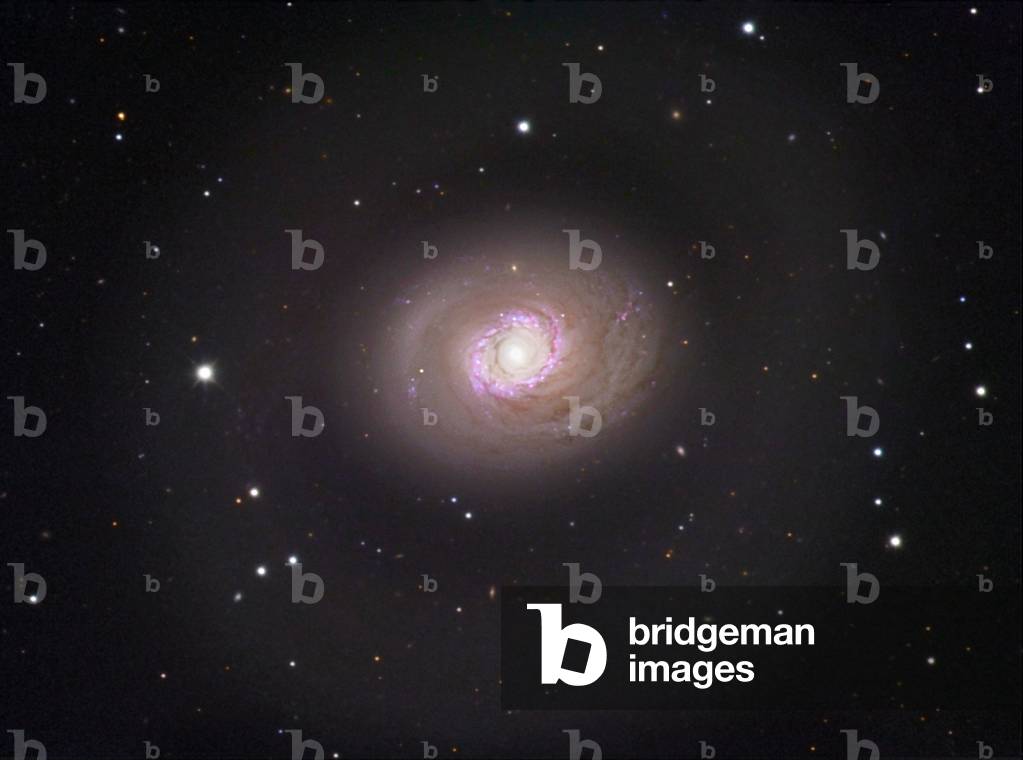
Spiral Galaxy M94 in Hunting Dogs - Spiral galaxy M94 in Canes Venatici - The spiral galaxy M94 (NGC 4736) is located about 15 million years ago - light from Earth. The M94 spiral galaxy was classified as Sab because of the extreme luminosite of its central region. This galaxy has several ring zones of star formation, one of which is very active. M94 is a spiral galaxy located 15 million light - year away. Several active regions of star formation have been identified there

PIX4611948: Spiral Galaxy M94 in Hunting Dogs - Spiral galaxy M94 in Canes Venatici - The spiral galaxy M94 (NGC 4736) is located about 15 million years ago - light from Earth. The M94 spiral galaxy was classified as Sab because of the extreme luminosite of its central region. This galaxy has several ring zones of star formation, one of which is very active. M94 is a spiral galaxy located 15 million light - year away. Several active regions of star formation have been identified there / Bridgeman Images

Wall Street in Manhattan, New York (United States).

TEC4611970: Wall Street in Manhattan, New York (United States). / Bridgeman Images

Portrait of Two English Gentlemen (oil on canvas, circa 1635-1640)

LRI4612022: Portrait of Two English Gentlemen (oil on canvas, circa 1635-1640), Dyck, Anthony van (1599-1641) (school of) / Bridgeman Images

Buildings in New York (New York), United States (United States).

TEC4612069: Buildings in New York (New York), United States (United States). / Bridgeman Images
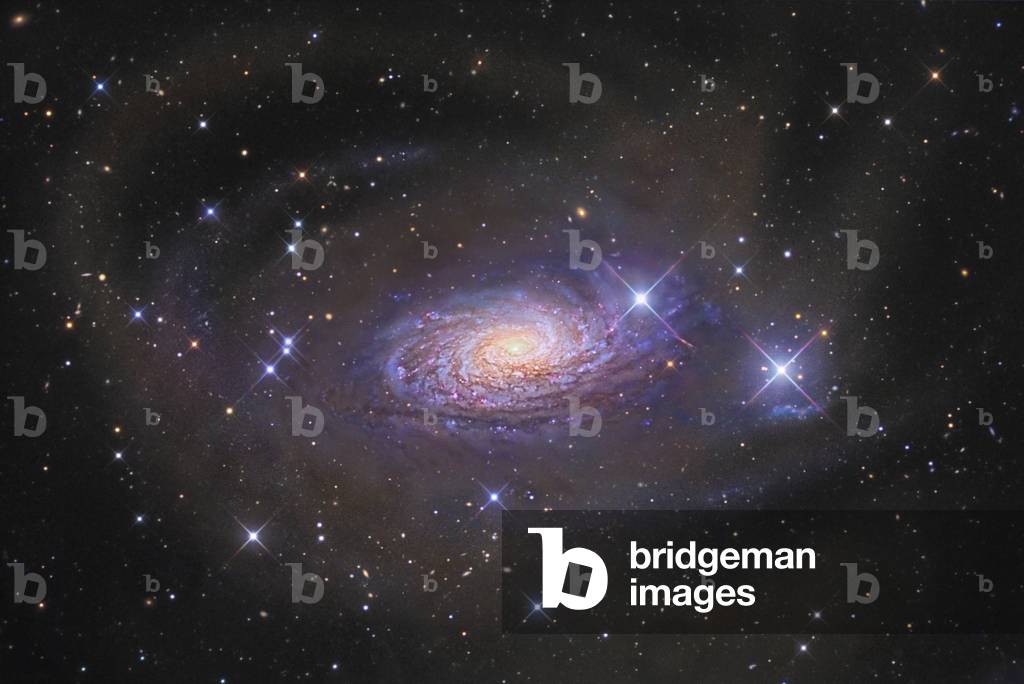
Spiral Galaxy M63 in Hunting Dogs - Spiral galaxy M63 in Canes Venatici - The spiral galaxy M63 (NGC 5055) is located about 35 million years ago - light from Earth. In this image obtained with a 50 cm telescope, the halo around the galaxy is visible and shows a stream of stars from a dwarf satellite galaxy. M63 (NGC 5055) is a spiral glaxy in the contellation Canes Venatici at about 35 million light - years from Earth. Visible in this image is a very faint, giant arc - loop feature in the halo of the galaxy Messier 63; this feature is the stellar stream of a disrupted dwarf satellite galaxy

PIX4612127: Spiral Galaxy M63 in Hunting Dogs - Spiral galaxy M63 in Canes Venatici - The spiral galaxy M63 (NGC 5055) is located about 35 million years ago - light from Earth. In this image obtained with a 50 cm telescope, the halo around the galaxy is visible and shows a stream of stars from a dwarf satellite galaxy. M63 (NGC 5055) is a spiral glaxy in the contellation Canes Venatici at about 35 million light - years from Earth. Visible in this image is a very faint, giant arc - loop feature in the halo of the galaxy Messier 63; this feature is the stellar stream of a disrupted dwarf satellite galaxy / Bridgeman Images

Rejouissances given by the city of Paris aux Halles on 21/01/1782 (oil on canvas)

JLJ4612195: Rejouissances given by the city of Paris aux Halles on 21/01/1782 (oil on canvas), Debucourt, Philibert Louis (1755-1832) / Bridgeman Images

Galaxy NGC 4449 in Hunting Dogs - Dwarf irregular galaxy NGC 4449 in Canes Venatici - Dwarf galaxy irregular located in the constellation Hunting Dogs

PIX4611355: Galaxy NGC 4449 in Hunting Dogs - Dwarf irregular galaxy NGC 4449 in Canes Venatici - Dwarf galaxy irregular located in the constellation Hunting Dogs / Bridgeman Images

French Revolution: a mortuary mask of the French revolutionary Jean Paul Marat (1743-1793), 1793 (carving)

JLJ4611388: French Revolution: a mortuary mask of the French revolutionary Jean Paul Marat (1743-1793), 1793 (carving), French School, (18th century) / Bridgeman Images

The roofs of Manhattan seen from a tower. New York (United States). Photograph 10/04/03.

TEC4611482: The roofs of Manhattan seen from a tower. New York (United States). Photograph 10/04/03. / Bridgeman Images
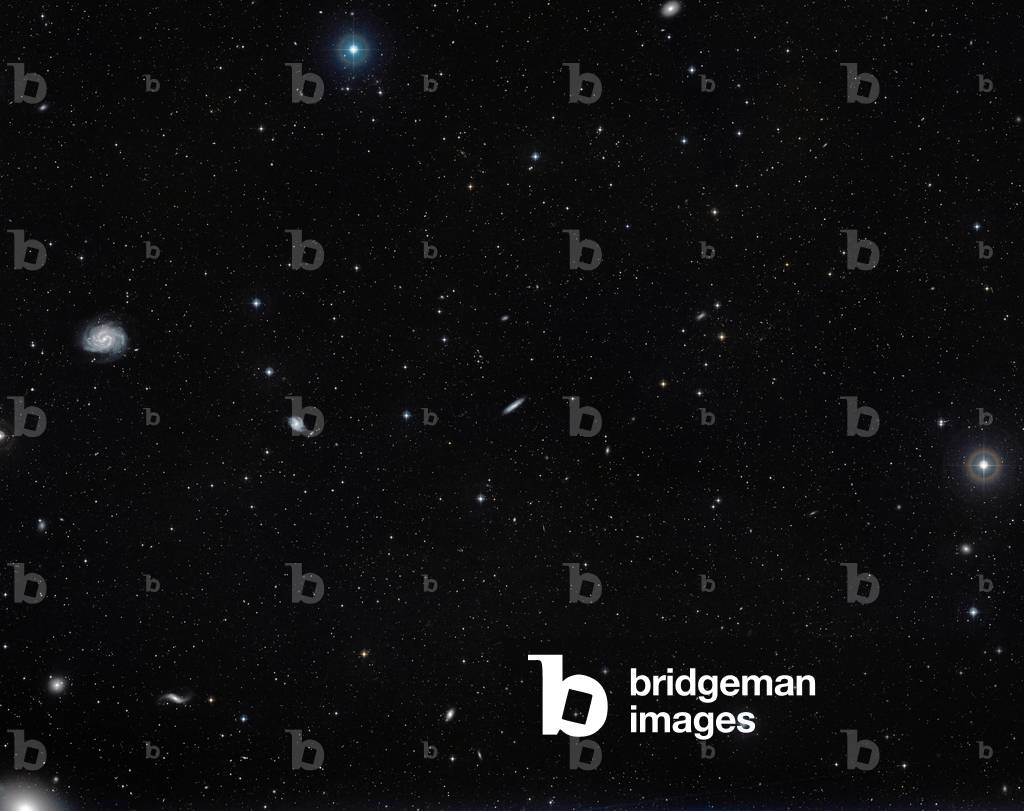
Field around the galaxy NGC 4522 - Wide field around the galaxy NGC 4522 - Field around the galaxy NGC 4522 (center) in the galaxy cluster of the Virgin. On the extreme left, the spiral galaxy NGC 4535. Wide field around the galaxy NGC 4522 (center of the image) in the Virgo galaxy cluster

PIX4611505: Field around the galaxy NGC 4522 - Wide field around the galaxy NGC 4522 - Field around the galaxy NGC 4522 (center) in the galaxy cluster of the Virgin. On the extreme left, the spiral galaxy NGC 4535. Wide field around the galaxy NGC 4522 (center of the image) in the Virgo galaxy cluster / Bridgeman Images

Spiral galaxy NGC 4565 in Berenice's Hair - Spiral galaxy NGC 4565 in Coma Berenices - The galaxy NGC 4565 is located about 30 million years ago - light from Earth. It's a spiral galaxy seen by the slice. This image was obtained by one of the 8.2 m telescopes of the VLT in Chile. NGC 4565 is a very large edge - on spiral galaxy over 100,000 light - years in diameter, located at about 30 million light - years from us

PIX4611520: Spiral galaxy NGC 4565 in Berenice's Hair - Spiral galaxy NGC 4565 in Coma Berenices - The galaxy NGC 4565 is located about 30 million years ago - light from Earth. It's a spiral galaxy seen by the slice. This image was obtained by one of the 8.2 m telescopes of the VLT in Chile. NGC 4565 is a very large edge - on spiral galaxy over 100,000 light - years in diameter, located at about 30 million light - years from us / Bridgeman Images

The Fuller Building, construction 1928-1929, architects Walker Morrisae & Gilette, 41East 57th Street in Manhattan New York (United States). Photography 10/04/03.

TEC4611531: The Fuller Building, construction 1928-1929, architects Walker Morrisae & Gilette, 41East 57th Street in Manhattan New York (United States). Photography 10/04/03. / Bridgeman Images

Spiral Galaxy M58 in Virgo - Spiral galaxy M58 in Virgo - The spiral galaxy M58 (NGC 4579) is located about 60 million years away - light from Earth. It is part of the great cluster of galaxies of the Virgin. M58 is a spiral galaxy of type SBC in the constellation Virgo, although the bar is not prominent and some have classified it as intermediate between normal and barred spirals

PIX4611566: Spiral Galaxy M58 in Virgo - Spiral galaxy M58 in Virgo - The spiral galaxy M58 (NGC 4579) is located about 60 million years away - light from Earth. It is part of the great cluster of galaxies of the Virgin. M58 is a spiral galaxy of type SBC in the constellation Virgo, although the bar is not prominent and some have classified it as intermediate between normal and barred spirals / Bridgeman Images

Spiral galaxy of Sombrero M104 in the Virgin - The Sombrero galaxy (M104) in Virgo - Image of the spiral galaxy M104 or NGC 4594 (Sombrero galaxy), located about 28 million years ago - light. The Sombrero, named after the broad - brimmed Mexican hat it superficially resembles, is probably the most famous galaxy in the sky. The light from this remarkable spiral system is dominated by the billions of old, faint stars that form the vast 'bulge' around its tiny hidden nucleus. Most spirals, including the Milky Way, have clouds of old, faint stars around their nuclei, but in M104 the galaxy's light is dominated by them. This effect is enhanced because disk of the galaxy is seen nearly edge - on and dust in its outer parts is in silhouette as it crosses the picture. The galaxy is about 28 million light years distant

PIX4611629: Spiral galaxy of Sombrero M104 in the Virgin - The Sombrero galaxy (M104) in Virgo - Image of the spiral galaxy M104 or NGC 4594 (Sombrero galaxy), located about 28 million years ago - light. The Sombrero, named after the broad - brimmed Mexican hat it superficially resembles, is probably the most famous galaxy in the sky. The light from this remarkable spiral system is dominated by the billions of old, faint stars that form the vast 'bulge' around its tiny hidden nucleus. Most spirals, including the Milky Way, have clouds of old, faint stars around their nuclei, but in M104 the galaxy's light is dominated by them. This effect is enhanced because disk of the galaxy is seen nearly edge - on and dust in its outer parts is in silhouette as it crosses the picture. The galaxy is about 28 million light years distant / Bridgeman Images

Spiral galaxy of Sombrero M104 in the Virgin - The Sombrero galaxy (M104) in Virgo - The spiral galaxy M104 or NGC 4594 (Sombrero galaxy) is located between 28 and 40 million years - light. Image obtained with a telescope 61 cm in diameter. The Sombrero, named after the broad - brimmed Mexican hat it superficially resembles, is probably the most famous galaxy in the sky. The spiral galaxy is between 28 to 40 million light years distant. Image taken with a 24 - inch telescope

PIX4611664: Spiral galaxy of Sombrero M104 in the Virgin - The Sombrero galaxy (M104) in Virgo - The spiral galaxy M104 or NGC 4594 (Sombrero galaxy) is located between 28 and 40 million years - light. Image obtained with a telescope 61 cm in diameter. The Sombrero, named after the broad - brimmed Mexican hat it superficially resembles, is probably the most famous galaxy in the sky. The spiral galaxy is between 28 to 40 million light years distant. Image taken with a 24 - inch telescope / Bridgeman Images

View of Amsterdam Harbour from Ij Detail, 1666 (oil on canvas)

JLJ4611688: View of Amsterdam Harbour from Ij Detail, 1666 (oil on canvas), Backhuysen, Ludolf, I (1630-1708) / Bridgeman Images


Back to top