
Print this page or go back to standard view.

PIX4623431: The planetary nebula Dumbbell (M27) is located about 1200 light years from Earth in the constellation Little Fox. A planetary nebula is a gas shell from a small late-life star whose heart collapsed to become a white dwarf and expelled the outer layers of its matter. In this image the nova appeared on August 18, 2005 is visible. The Dumbbell Nebula (M27, NGC6853), is a planetary nebula located about 1200 light years from the earth in the constellation of Vulpecula. The nebula was formed when an evolved, red giant star ejected its outer envelope near the end of its lifetime. The expanding cloud of gas becomes visible once the hot core of the star, visible near the center, is exposed and the high-energy, ultraviolet light from the core ionizes the cloud. On the evening of August 17- 18, 2005, two European astronomers simultaneously discovered a new star in the Dumbbell Nebula. This image is a portrait of the Dumbbell Nebula featuring the 2005 nova. It is comprised of thirty separate fifteen minute images digitally combined into a single picture that is equivalent to a single seven and a half hour exposure. Images taken through a 20 inch Ritchey-Chretien telescope and an eleven mega-pixel camera situated in New Mexico's south central mountains were supplemented with images gathered from San Jose, California with a twelve inch Dall-Kirkham Cassegrain reflector and a three mega-pixel SBIG camera -: Nebuleuse planetaire Dumbbell (M27) dans le Petite Fox - The Dumbell nebula with a nova 08-2005 / Bridgeman Images

ITR4623133: One of the three greenhouses of the garden of plants in Paris 75005. / Bridgeman Images

LRI4623152: Portrait of Prince Don Carlos (painting, c.1557), Sanchez Coello, Alonso (c.1531-88) / Bridgeman Images

ITR4623160: One of the three greenhouses of the garden of plants in Paris 75005. / Bridgeman Images

PIX4623267: Planetary nebula NGC 6543 in the Dragon - Planetary Nebula NGC 6543 in Draco - Planetary nebula NGC 6543. Image obtained on September 3, 2008 with a telescope measuring 61 cm in diameter. The planetary Nebula NGC 6543 in Draco. Image taken on September 3 2008 with a 24 - inch telescope / Bridgeman Images

PIX4623319: Planetary nebula M57 (NGC 6720) in Lyra - Planetary nebula M57 (NGC 6720) in Lyr / Bridgeman Images

PIX4623125: Planetary nebula NGC 5189 in the Fly - NGC 5189 - Planetary nebula in Musca - This nebula is located about 3000 light years from Earth in the southern constellation of Fly. Image obtained by the Hubble Space Telescope (HST). The colors used in this image correspond to the emissions of different gases: sulfur in green, hydrogen in orange and oxygen in blue. Hubble Space Telescope have photographed a festive - looking nearby planetary nebula called NGC 5189. Planetary nebulae represent the final brief stage in the life of a medium - sized star like our Sun. While consuming the last of the fuel in its core, the dying star expels a large portion of its outer envelope. This material then becomes heated by the radiation from the stellar remnant and radiates, producing glowing clouds of gas that can show complex structures, as the ejection of mass from the star is uneven in both time and direction. This image was taken with Hubble's Wide Field Camera 3 on October 8, 2012, in filters tuned to the specific colors of fluorescing sulfur, hydrogen, and oxygen atoms. Broad filters in the visible and near - infrared were used to capture the star colors / Bridgeman Images

ITR4623174: One of the three greenhouses of the garden of plants in Paris 75005. / Bridgeman Images

PIX4623396: Planetary nebula NGC 6781 - A planetary nebula, NGC 6781 - This fairly inconspicuous planetary nebula is in Aquila and it marks the end of the long life of a sun - like star. Despite the longevity of their parent stars and the very brief lifetime of the nebula (typically less than 100,000 years) such sights are common because sun - like stars are common. The nebula has nothing to do with planet formation, indeed the formation of the nebula would effectively destroy any planets the parent star had, rather the name refers to the telescopic appearance of the nebula. Some planetaries are very bright and their discs look like solar system planets. A close look at this picture shows some structure in the expanding shell of gas around the star, reminiscent of the much more complex Helix nebula. The nebula we see is the ejected surface of the star expanding into material left from an earlier stage in its decline, when it briefly expanded as a 'red giant'. Irregularities in the earlier ejecta, asymmetrical outburst of the central star and motion of the new nebula through the interstellar medium as well as the star's orientation in space all affect the physical form of planetary nebulae, so a detailed interpretation of the outburst is difficult. The common factor is the central star, which is externemly hot. However, it is stripped of its energy source and destined to cool into oblivion long after the nebula has dispersed / Bridgeman Images

PIX4623637: Planetary nebula Helix (NGC 7293) in Aquarius - Planetary nebula Helix (NGC 7293) - This nebula is located 690 years - light from Earth. Image obtained by Siding Spring's 3.9m telescope This faint object is the nearest planetary nebula to the Sun and on deep photographs has a diameter of about half a degree - - the same apparent size as the Sun in the sky. The AAT colour picture shows the brighter parts of the nebula, revealing various ionization levels within the shell of matter ejected from the central star. The greenish middle portion is evidence of excited oxygen atoms, while the outer red is predominantly light from nitrogen and hydrogen. The smallest of the radial blobs inside the red shell are about 150 astronomical units across (150 times the Earth - Sun distance) and they give this beautiful object its alternative name, the Sunflower Nebula. The Helix is about 400 light years away, or about 100 times more distant than the nearest stars / Bridgeman Images

LRI4623695: Portrait of the President of the United States George Washington (1732-1799) Painting by Giuseppe Perovani (1765-1835) Madrid, Academia de San Fernando, Perovani, Jose (1765-1835) / Bridgeman Images

PIX4623745: Planetary Nebula of the Red Rectangle in the Unicorn - This is a ground - based view of the sky around the Red Rectangle. The image spans a square of one degree and was constructed from three images from the Digitized Sky Survey 2 taken in Blue, Infrared and Red (shown as blue, green and red respectively) / Bridgeman Images

PIX4623523: Planetary nebula Dumbbell (M27) in Little Fox - Dumbell planetary nebula (M27) in Vulpecula - The planetary nebula Dumbbell (M27) is located about 1400 years - light from Earth in the constellation Little Fox. A planetary nebula is a gas shell from a small late-life star whose heart collapsed to become a white dwarf and expelled the outer layers of its matter. Image obtained with a 50 cm telescope, through various filters including an H-alpha filter. The Dumbbell Nebula (M27, NGC 6853), is a planetary nebula located about 1200 light years from the earth in the constellation of Vulpecula. The nebula was formed when an evolved, red giant star ejected its outer envelope near the end of its lifetime. The expanding cloud of gas becomes visible once the hot core of the star, visible near the center, is exposed and the high - energy, ultraviolet light from the core ionizes the cloud / Bridgeman Images

PIX4623704: Planetary nebula PK 36 - 1.1 (SH2 - 71) in Eagle / Bridgeman Images

PIX4623437: Dumbbell Planetary Nebula (M27) in the Little Fox - This planetary nebula is located approximately 1200 years from Earth. Image obtained from the Isaac Newton 2.5 m telescope from La Palma / Bridgeman Images

LRI4623583: Portrait of Euphrasie Proudhon (oil on canvas, 1865), Courbet, Gustave (1819-77) / Bridgeman Images
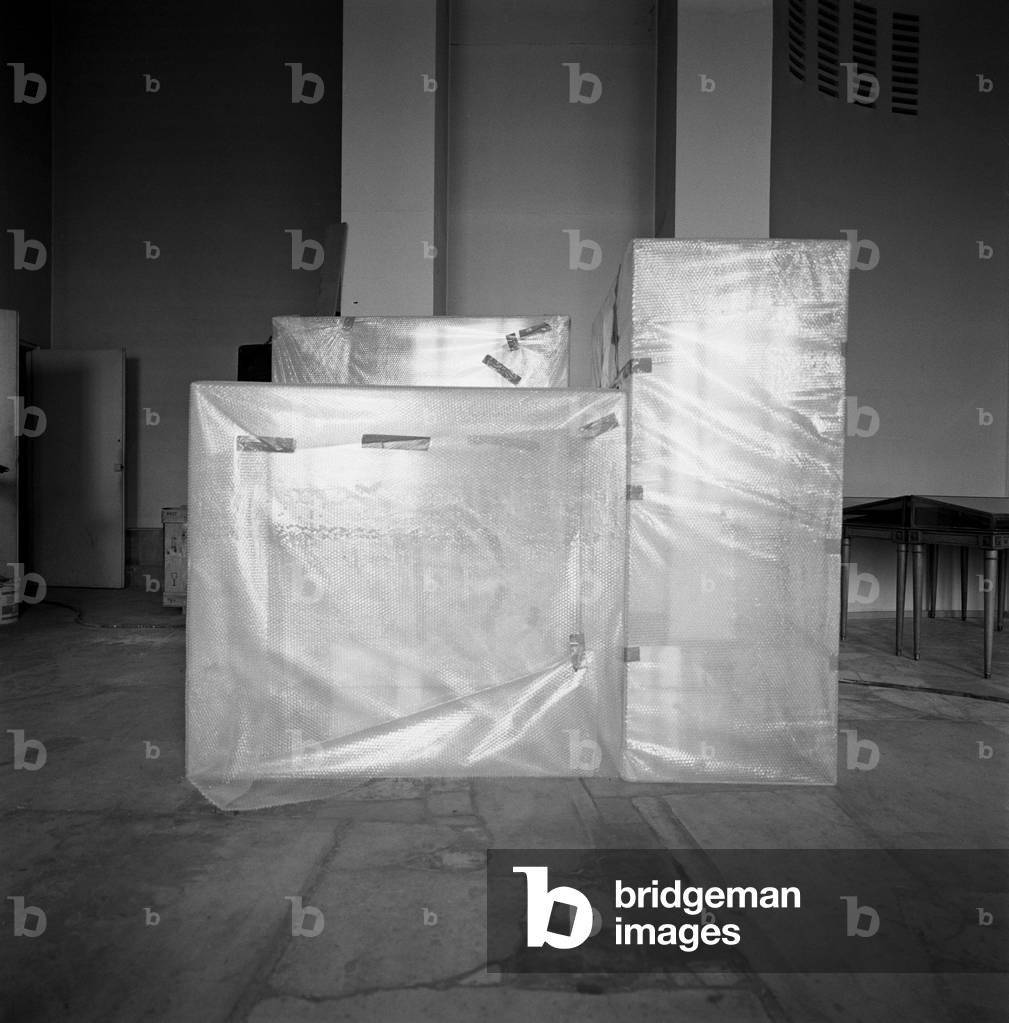
JSN4625774: The site of the Musee des Monuments Francais in Paris. Cite of architecture and heritage, Palais de Chaillot, 1 place du Trocadero, Paris 16th arrondissement. All the renovation and renovation works were entrusted to the architect Jean Francois Bodin, 2007. Photography 2003., Salmon, Jacqueline / Bridgeman Images

PIX4625835: Saturn view of Enceladus - Illustration - Saturn from the surface of Enceladus - The planet Saturn seen from the ice surface of Enceladus. This is how Saturn may appear from the icy surface of Enceladus, one of Saturn's eight major satellites. At a distance of 148 thousand miles, Saturn would subtend an angle of 29o in Enceladus' sky, about the same width as 58 Earth moon's lined up side - by - side. While the surface of Enceladus is as reflective as new fallen snow, it would probably appear leaden about an hour before sunrise with a crescent Saturn as the only source of illumination. Like all of Saturn's major satellites, Enceladus always keeps the same side facing its host planet. From the perspective of a stationary observer on Enceladus, Saturn would always appear in the same position in the sky, cycling through its phases in about one - and - half Earth days. This image also illustrates a phenomenon only recently discovered by Nasa's Cassini probe: sunlight reflecting off of Saturn's rings casts a faint glow onto the cloud tops of Saturn's night side. The illumination is about the same as three of Earth's full moon combined / Bridgeman Images
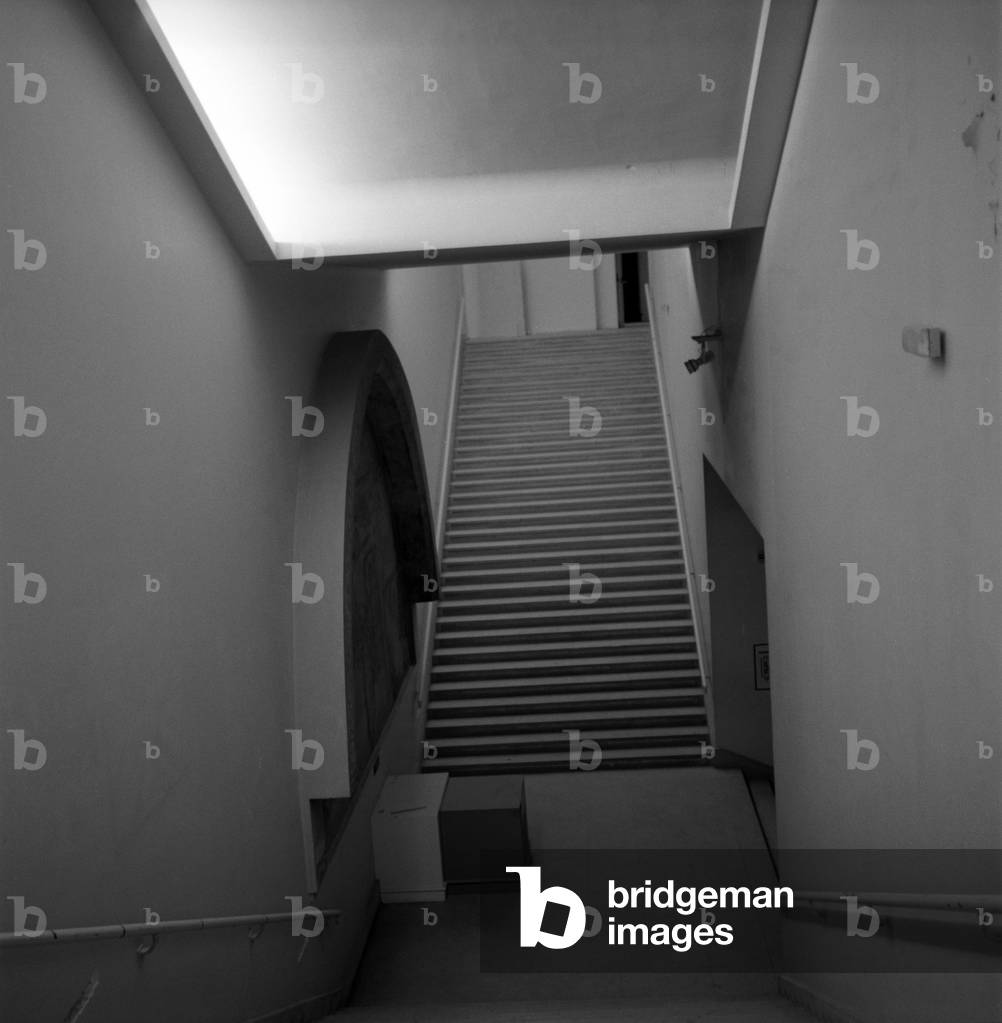
JSN4625853: The site of the Musee des Monuments Francais in Paris. Cite of architecture and heritage, Palais de Chaillot, 1 place du Trocadero, Paris 16th arrondissement. All the renovation and renovation works were entrusted to the architect Jean Francois Bodin, 2007. Photography 2003., Salmon, Jacqueline / Bridgeman Images
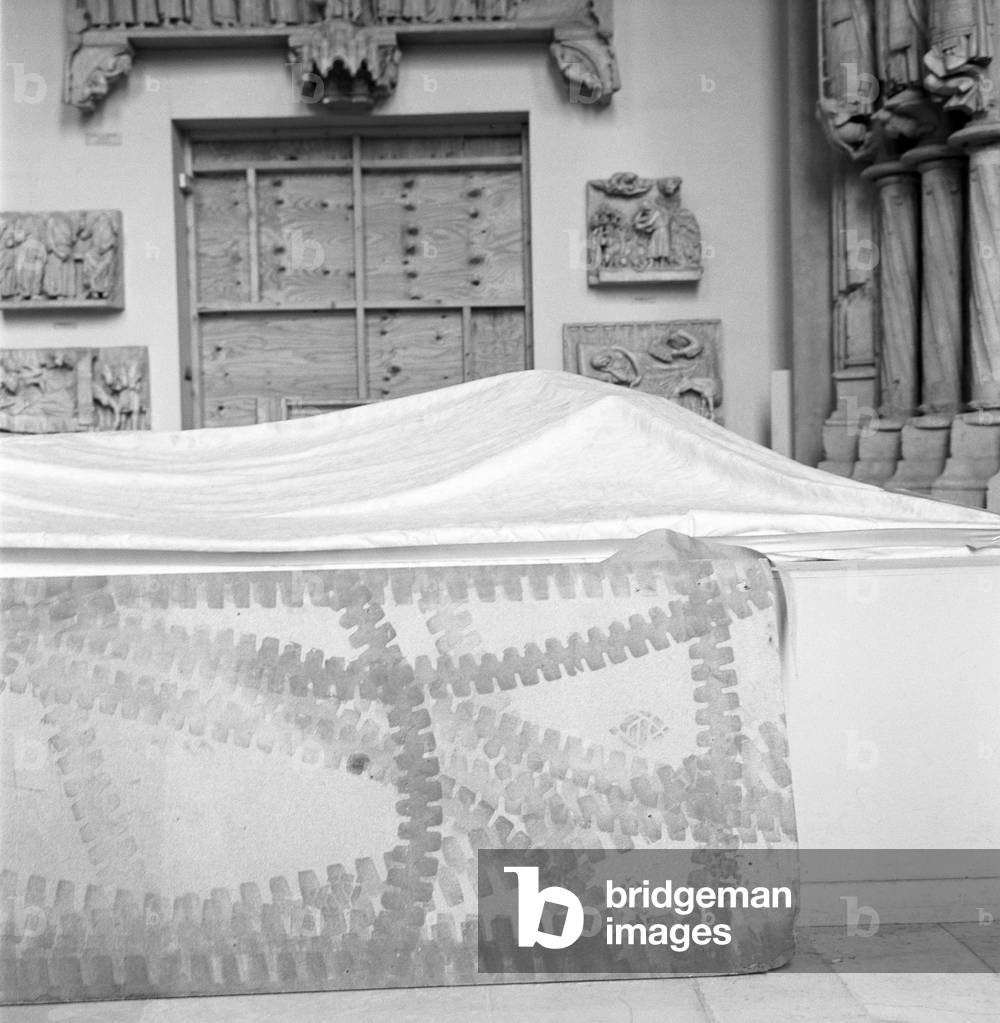
JSN4625961: The site of the Musee des Monuments Francais in Paris. Cite of architecture and heritage, Palais de Chaillot, 1 place du Trocadero, Paris 16th arrondissement. All the renovation and renovation works were entrusted to the architect Jean Francois Bodin, 2007. Photography 2003., Salmon, Jacqueline / Bridgeman Images
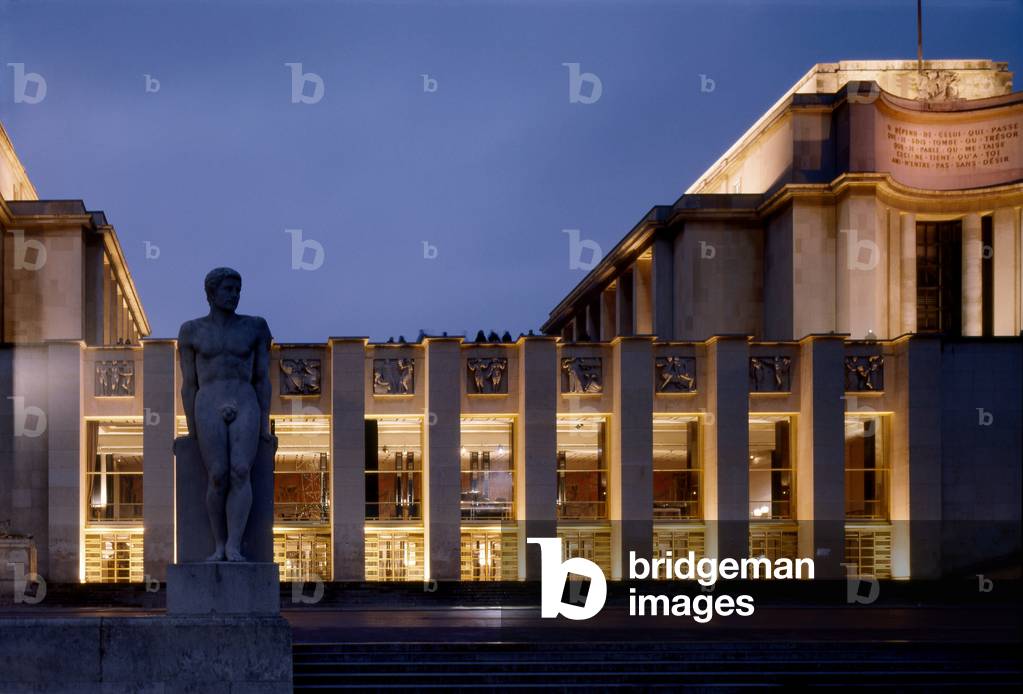
LBY4626026: The National Theatre of Chaillot, Paris 16th arrondissement. Architects Leon Azema (1888-1978), Jacques Carlu (1890-1976) and Louis-Hippolyte (Louis Hippolyte) Boileau (1878-1948), 1937. The works of the foyer are entrusted to Louis Sue and Gustave Jaulmes, both teams having been laureates of the interior design competition. Photography 10/01/01. / Bridgeman Images
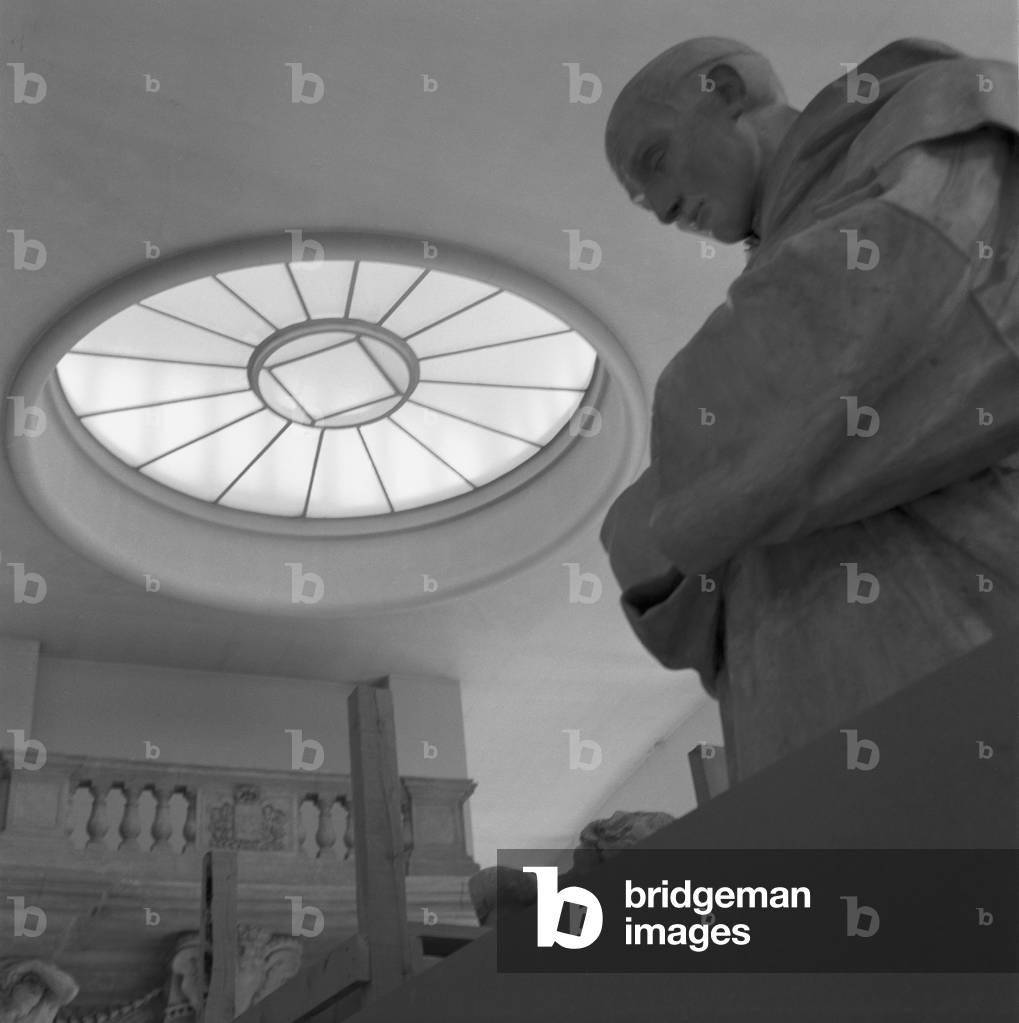
JSN4625948: The site of the Musee des Monuments Francais, Cite de l'architecture et du patrimoine, Palais de Chaillot, 1 place du Trocadero, Paris 16th. All the renovation and renovation works were entrusted to the architect Jean Francois Bodin, the end of the 2007 works. Photography 2003., Salmon, Jacqueline / Bridgeman Images
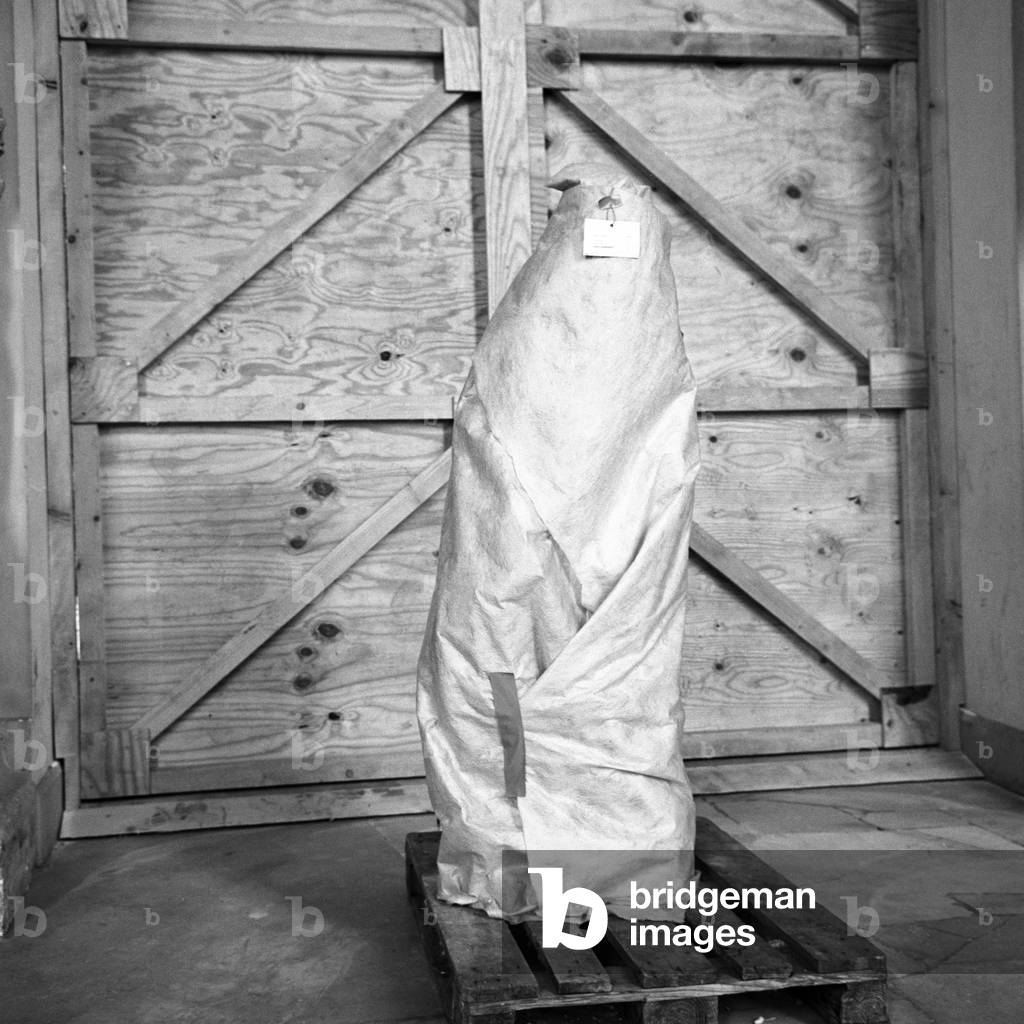
JSN4625983: The site of the Musee des Monuments Francais in Paris. Cite of architecture and heritage, Palais de Chaillot, 1 place du Trocadero, Paris 16th arrondissement. All the renovation and renovation works were entrusted to the architect Jean Francois Bodin, 2007. Photography 2003., Salmon, Jacqueline / Bridgeman Images

PIX4626032: Lightning on Titan - Illustration - Lightning on Titan - Lightning lights illuminate the sky of Titan, Saturn's satellite while astronauts are sheltered in their spaceship. A brilliant flash of titanian lightning illuminates towering clouds of methane while human visitors retire to the safety and warmth of their landing craft. In January 2005, the European Space Agency's Huygens probe detected what may have been electrical discharges due to lightning when it descended through Titan's deep atmosphere (the probe also carried a microphone in hopes of recording the sound of thunder, however none was heard). While Titan's atmosphere may indeed host thunder and lightning, there's been no indication (yet) that there are earthlike cumulous clouds like the ones depicted here / Bridgeman Images

LRI4626038: Battle between the Centaurs and the Lapithes, in the center is Apollo. 470-456 BC (marble sculpture), Greek school, (5th century BC) / Bridgeman Images

LBY4626061: 22 avenue Foch, Paris 16th arrondissement. Monument dedicated to Adolphe Alphand (1817-1891), urban planner who transformed the district. Made by sculptor Aime Jules Dalou (1838-1902) in 1893. Photography 1999., Dalou, Aime Jules (1838-1902) / Bridgeman Images
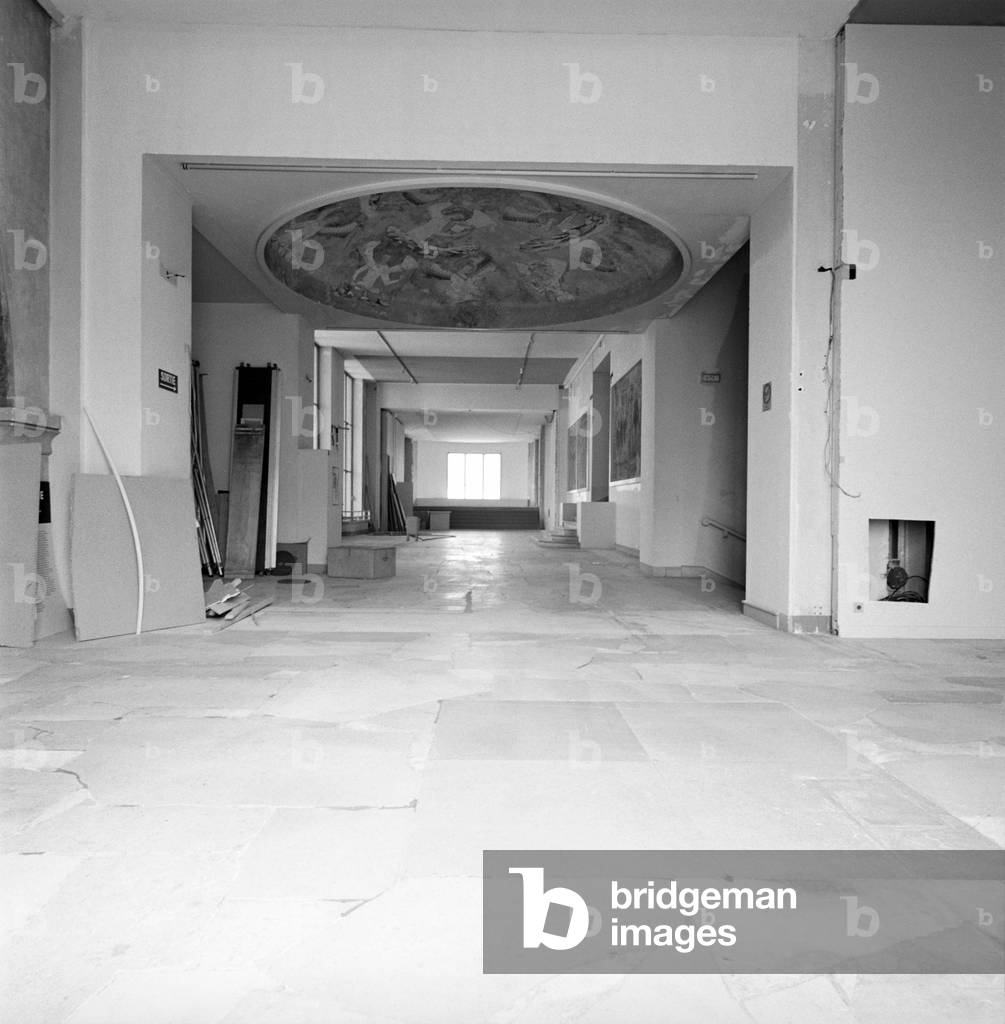
JSN4625821: The site of the Musee des Monuments Francais in Paris. Cite of architecture and heritage, Palais de Chaillot, 1 place du Trocadero, Paris 16th arrondissement. All the renovation and renovation works were entrusted to the architect Jean Francois Bodin, 2007. Photography 2003., Salmon, Jacqueline / Bridgeman Images
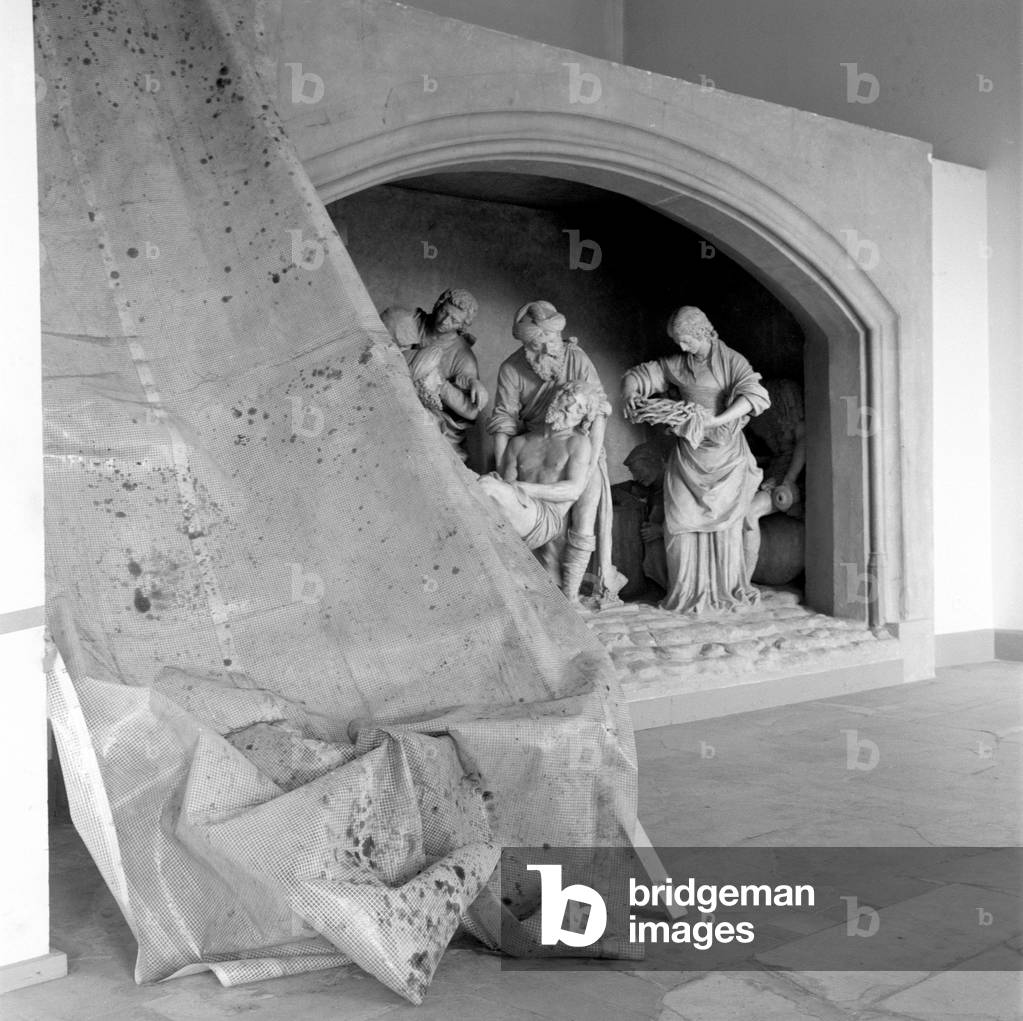
JSN4625841: The site of the Musee des Monuments Francais in Paris. Cite of architecture and heritage, Palais de Chaillot, 1 place du Trocadero, Paris 16th arrondissement. All the renovation and renovation works were entrusted to the architect Jean Francois Bodin, 2007. Photography 2003., Salmon, Jacqueline / Bridgeman Images
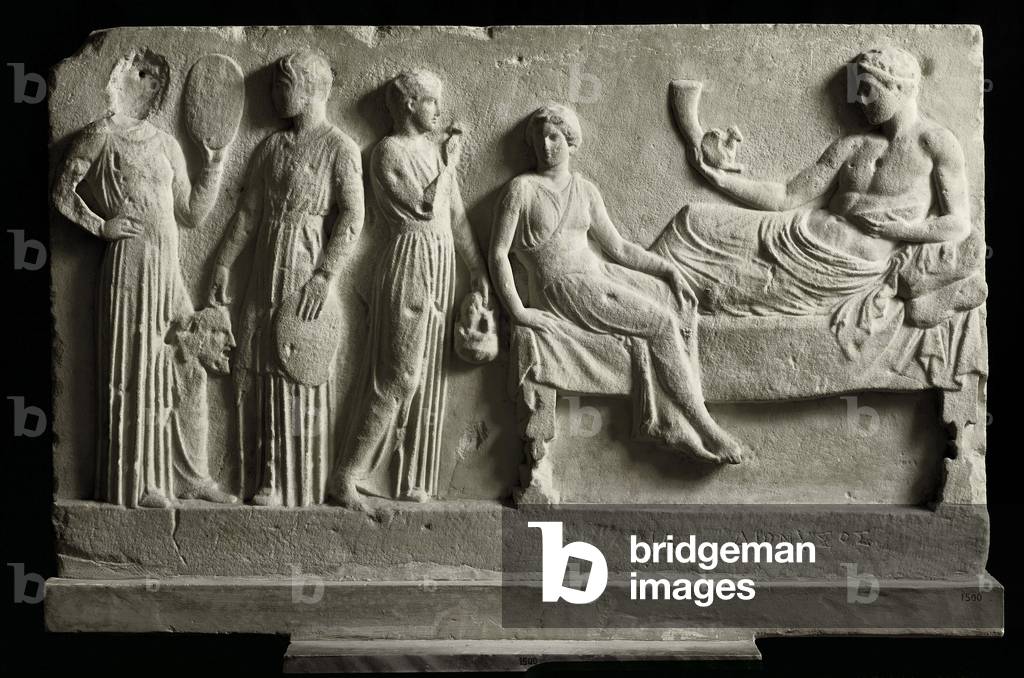
LRI4625858: Greek art: low relief votive marble dedicated to Dionysus Bacchus by the actors, It represents “" The Bacchantes "” of Euripides - 410 BC - Athens, National Archaeological Museum — Bacchae (from the tragedy by Euripides (480 ¿406 BC) - Marble votive relief dedicated to Bacchus Dionysus comedians, 410 BC - National Archaeological Museum, Athens, Greece, Greek school, (5th century BC) / Bridgeman Images

LRI4625968: Apollo. 5th century BC (terracotta sculpture), Greek school, (5th century BC) / Bridgeman Images

LBY4625993: Apartment building, Avenue du President Wilson in Paris 75016. / Bridgeman Images
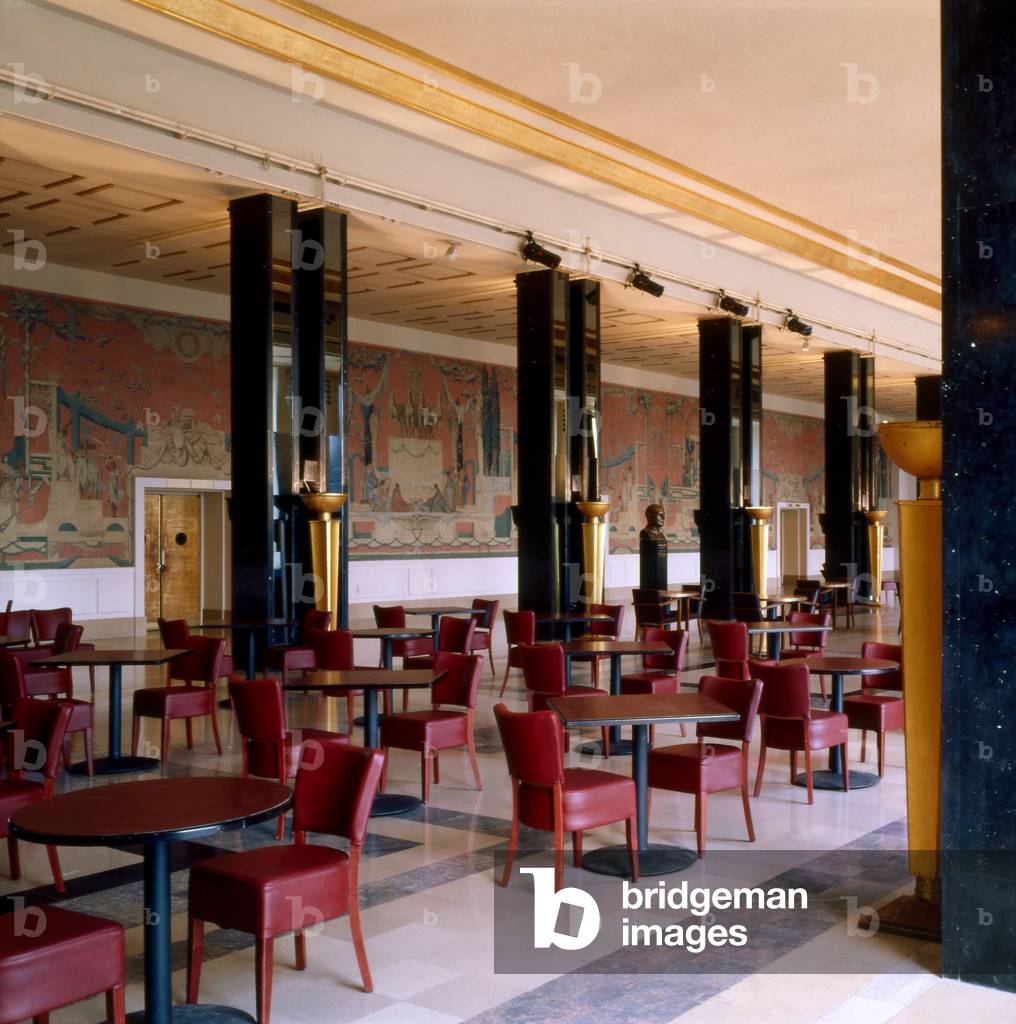
LBY4626059: The National Theatre of Chaillot, Paris 16th arrondissement. Architects Leon Azema (1888-1978), Jacques Carlu (1890-1976) and Louis-Hippolyte (Louis Hippolyte) Boileau (1878-1948), 1937. The works of the foyer are entrusted to Louis Sue and Gustave Jaulmes, both teams having been laureates of the interior design competition. Photography 10/01/01., Carlu, Jacques (1890-1976) Boilieu, L.H & Azema, L. (d.1978) / Bridgeman Images

PIX4626063: Clouds on the south pole of Titan - Illustration - Clouds over Titan's south pole - Artist's view of methane clouds observed over the south pole of Titan by the Cassini probe in October 2004. In October 2004 the Cassini orbiter revealed for the first time what may be highly reflective (in the infrared at least) methane clouds over Titan's south pole. This image suggests how those clouds may appear from within the cloud deck itself. The Sun is visible immediately above, though from this great distance the Sun appears to be only 1/10th its diameter from Earth / Bridgeman Images

LRI4626070: Battle between the Centaurs and the Lapithes, in the center is Apollo: detail representing a centaur and Apollo. 470-456 BC (marble sculpture), Greek school, (5th century BC) / Bridgeman Images

TEC4624531: La rue de la Pompe in Paris 16th. / Bridgeman Images

PIX4624401: Pluto and satellites seen from another satellite - View of Pluto (center), its satellite Charon (right) from one of its new satellites. The second new satellite is the bright spot on the left. These satellites, S/2005 P 1 (renamed Hydra) and S/2005 P 2 (renamed Nix), are about 64,000 and 48,000 km from Pluto. Since August 2006, Pluto is now called 134340 Pluto and is no longer considered a planet but designed as a dwarf planet. / Bridgeman Images