
Print Friendly Version Page

2501742 Search Results

Orion Nebula - the trapeze - The Trapezium region in M42 - Located 1500 years - light, Orion Nebula is the closest region of formation of stars of the Sun. In the center of the picture, the Trapeze of Orion. The Trapeze is among the youngest known open clusters, it is made up of 4 massive stars that make the nebula shine. Image obtained with Siding Spring's 3.9m telescope. The central 'star' of the three groups forming the asterism of Orion's sword is in reality a nebula, and is clearly nebulous to the unaided eye. At the heart of the most luminous nebulosity shimmer a handful of stars known as the Trapezium cluster, visible in binoculars. These are the brightest members of a substantial cluster of stars, most of which are still hidden in the dusty recesses of the Orion nebula against which they are seen. The stars of the Trapezium provide much of the energy which makes the brilliant Orion Nebula visible and are at a distance of about 1500 light years. This image was made at the prime focus of the Anglo - Australian Telescope

PIX4617858: Orion Nebula - the trapeze - The Trapezium region in M42 - Located 1500 years - light, Orion Nebula is the closest region of formation of stars of the Sun. In the center of the picture, the Trapeze of Orion. The Trapeze is among the youngest known open clusters, it is made up of 4 massive stars that make the nebula shine. Image obtained with Siding Spring's 3.9m telescope. The central 'star' of the three groups forming the asterism of Orion's sword is in reality a nebula, and is clearly nebulous to the unaided eye. At the heart of the most luminous nebulosity shimmer a handful of stars known as the Trapezium cluster, visible in binoculars. These are the brightest members of a substantial cluster of stars, most of which are still hidden in the dusty recesses of the Orion nebula against which they are seen. The stars of the Trapezium provide much of the energy which makes the brilliant Orion Nebula visible and are at a distance of about 1500 light years. This image was made at the prime focus of the Anglo - Australian Telescope / Bridgeman Images

Lycee Condorcet, 8 rue du Havre, Paris 9th. Its setting is partly a historical monument since it is located in the buildings of the Capuchin convent of Saint Louis Díantine, built in the decennia of 1780 by the neoclassical architect Alexandre Theodore Brongniart (1739-1813) and became a national property of 1789. Founded in 1803, the lycee has many names, reflecting the political evolution of France (Lycee Bonaparte, then Bourbon, Fontanes and finally Condorcet

TEC4617865: Lycee Condorcet, 8 rue du Havre, Paris 9th. Its setting is partly a historical monument since it is located in the buildings of the Capuchin convent of Saint Louis Díantine, built in the decennia of 1780 by the neoclassical architect Alexandre Theodore Brongniart (1739-1813) and became a national property of 1789. Founded in 1803, the lycee has many names, reflecting the political evolution of France (Lycee Bonaparte, then Bourbon, Fontanes and finally Condorcet / Bridgeman Images

Nebula NGC 1788 in Orion - Nebula NGC 1788 in Orion - This nebula is about 1500 years old - light in the constellation Orion. A cloud extends, darker, detaches from the nebula; it is an area of intense star formation. Image obtained from several long-stained poses, with a large amateur instrument, a 50 cm telescope in New Mexico, USA

PIX4617590: Nebula NGC 1788 in Orion - Nebula NGC 1788 in Orion - This nebula is about 1500 years old - light in the constellation Orion. A cloud extends, darker, detaches from the nebula; it is an area of intense star formation. Image obtained from several long-stained poses, with a large amateur instrument, a 50 cm telescope in New Mexico, USA / Bridgeman Images

Les Galeries Lafayette, 38-46ae boulevard Haussmann, Paris 9e. In 1906 the owners Alphonse Kahn and Theophile Bader entrusted the architect Georges Chedanne (1861-1940) with the construction of a new stone building Boulevard Haussmann. In view of the success of this new concept, Ferdinand Chanut extended the building in 1910-12.

TEC4617652: Les Galeries Lafayette, 38-46ae boulevard Haussmann, Paris 9e. In 1906 the owners Alphonse Kahn and Theophile Bader entrusted the architect Georges Chedanne (1861-1940) with the construction of a new stone building Boulevard Haussmann. In view of the success of this new concept, Ferdinand Chanut extended the building in 1910-12. / Bridgeman Images

Urban dichotomy, contrast old new, Paris 9th.

TEC4617776: Urban dichotomy, contrast old new, Paris 9th. / Bridgeman Images

Les Galeries Lafayette, 38-46ae boulevard Haussmann, Paris 9e. The owners Alphonse Kahn and Theophile Bader entrusted the architect Georges Chedanne in 1906 with the construction of a new stone building. And in view of the success of this new concept, Ferdinand Chanut extended the building in 1910.

TEC4617816: Les Galeries Lafayette, 38-46ae boulevard Haussmann, Paris 9e. The owners Alphonse Kahn and Theophile Bader entrusted the architect Georges Chedanne in 1906 with the construction of a new stone building. And in view of the success of this new concept, Ferdinand Chanut extended the building in 1910. / Bridgeman Images

At the museum, Serigraph 14 - 1977

LRI4617088: At the museum, Serigraph 14 - 1977, Nespolo, Ugo (b.1941) / Bridgeman Images

Rose e A (Mixed media, 1963)

LRI4617172: Rose e A (Mixed media, 1963), Novelli, Gastone (1925-68) / Bridgeman Images

Nebula NGC 3372 and cluster of stars in the Carene - The nebula of the Carene is located about 7000 years from the Earth. It is home to many hot stars, including the star Eta Carinae

PIX4618969: Nebula NGC 3372 and cluster of stars in the Carene - The nebula of the Carene is located about 7000 years from the Earth. It is home to many hot stars, including the star Eta Carinae / Bridgeman Images

The dock of the boatmen in Strasbourg (Alsace).

LBY4618991: The dock of the boatmen in Strasbourg (Alsace). / Bridgeman Images

Nebula NGC 3372 in the Carene - Carina nebula NGC 3372 - The Carene nebula is located about 7500 years from the Earth. It is home to many hot stars, including the massive star Eta Carinae at the bottom left of the image, the clusters of young stars Trumpler 14 (above the right of eta carinae) and Collinder 228 (below eta carinae). To the right of the image, the bright star is WR 22, a star Wolf - Rayet. Image obtained by the 2.2m ESO/MPG telescope of the La Silla Observatory in Chile. This spectacular panoramic view combines a new image of the field around the Wolf - Rayet star WR 22 in the Carina Nebula (right) with an earlier picture of the region around the unique star Eta Carinae in the heart of the nebula (left). The picture was created from images taken with the Wide Field Imager on the MPG/ESO 2.2 - metre telescope at Eso's La Silla Observatory in Chile

PIX4619065: Nebula NGC 3372 in the Carene - Carina nebula NGC 3372 - The Carene nebula is located about 7500 years from the Earth. It is home to many hot stars, including the massive star Eta Carinae at the bottom left of the image, the clusters of young stars Trumpler 14 (above the right of eta carinae) and Collinder 228 (below eta carinae). To the right of the image, the bright star is WR 22, a star Wolf - Rayet. Image obtained by the 2.2m ESO/MPG telescope of the La Silla Observatory in Chile. This spectacular panoramic view combines a new image of the field around the Wolf - Rayet star WR 22 in the Carina Nebula (right) with an earlier picture of the region around the unique star Eta Carinae in the heart of the nebula (left). The picture was created from images taken with the Wide Field Imager on the MPG/ESO 2.2 - metre telescope at Eso's La Silla Observatory in Chile / Bridgeman Images

Strasbourg station (Haut Rhin, Alsacce). Extension, Station Square. Architects Jean Marie Duthilleul and Etienne Tricaud, construction 2007. Photography 10/06/08.

TEC4618930: Strasbourg station (Haut Rhin, Alsacce). Extension, Station Square. Architects Jean Marie Duthilleul and Etienne Tricaud, construction 2007. Photography 10/06/08., Duthilleul, Jean Marie (b.1952) / Bridgeman Images

Concert for two pianists and tape recorder, 1960 (ink on paper)

LRI4618992: Concert for two pianists and tape recorder, 1960 (ink on paper), Riley, Terry (b.1935) / Bridgeman Images

The tram in Strasbourg (Haut Rhin, Alsace). Architect Norman Foster. Photograph 04/04/00.

LBY4619056: The tram in Strasbourg (Haut Rhin, Alsace). Architect Norman Foster. Photograph 04/04/00., Foster, Norman (b.1935) / Bridgeman Images

The Hautepierre district in Strasbourg (Alsace).

LBY4619084: The Hautepierre district in Strasbourg (Alsace). / Bridgeman Images
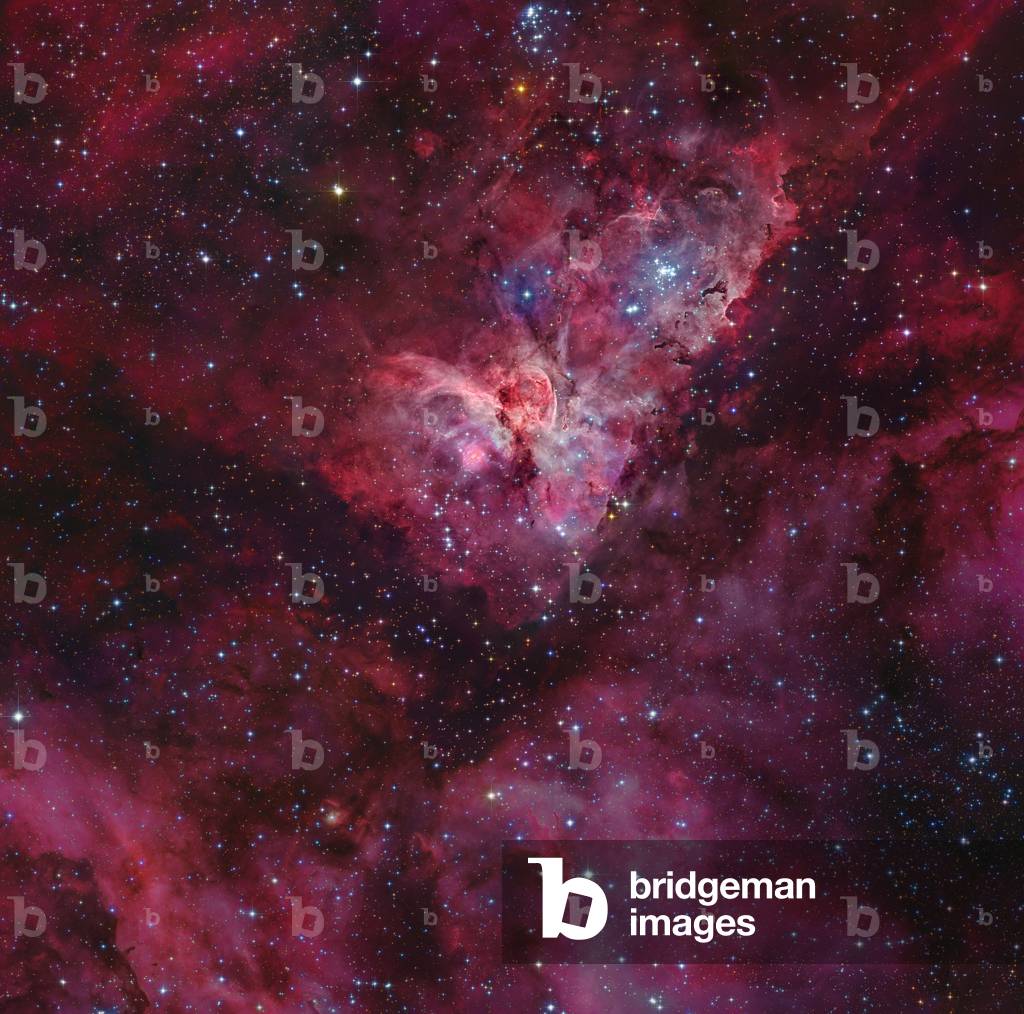
Nebula NGC 3372 in Carene - Nebula NGC 3372 in Carina: The nebula of Carene is located about 7000 light years from Earth. It is home to many hot stars, including the star Eta Carinae. Composite image made from multiple sources, including data from the space telescope Hubble - This image shows a giant star-forming region in the southern sky known as the Carina Nebula (NGC 3372). Composite image from multiple data sources (Hubble Space Telescope, ESO, amateur Data)

PIX4619098: Nebula NGC 3372 in Carene - Nebula NGC 3372 in Carina: The nebula of Carene is located about 7000 light years from Earth. It is home to many hot stars, including the star Eta Carinae. Composite image made from multiple sources, including data from the space telescope Hubble - This image shows a giant star-forming region in the southern sky known as the Carina Nebula (NGC 3372). Composite image from multiple data sources (Hubble Space Telescope, ESO, amateur Data) / Bridgeman Images

Birth of stars in the nebula NGC 3372 - Star formation in the Carina Nebula - Detail of the Carene nebula (NGC 3372) obtained by the Hubble space telescope. The image shows a column of gas eroded by ultraviolet radiation emitted by young stars. Jets are also visible, showing the presence of emerging stars. NGC 3372 is located about 7500 light years away from Earth. The colors used in this image correspond to the emissions of different gases: sulfur in red, hydrogen in green and oxygen in blue. The NASA Hubble Space Telescope photograph captures the chaotic activity atop a three - light - year - tall pillar of gas and dust that is being eaten away by the brilliant light from nearby bright stars. The pillar is also being assaulted from within, as infant stars buried inside it fire off jets of gas that can be seen streaming from towering peaks. This turbulent cosmic pinnacle lies within a tempestuous stellar nursery called the Carina Nebula, located 7,500 light - years away in the southern constellation Carina. The image marks the 20th anniversary of Hubble's launch and deployment into Earth orbit. Nestled inside this dense mountain are fledgling stars. Long streamers of gas can be seen shooting in opposite directions off the pedestal at the top of the image. Another pair of jets is visible at another peak near the center of the image. These jets are the signpost for new star birth. The jets are launched by swirling disks around the stars, as these disks allow material to slowly accrete onto the stars' surfaces. Hubble's Wide Field Camera 3 observed the pillar on Feb. 1 - 2, 2010. The colors in this composite image correspond to the glow of oxygen (blue), hydrogen and nitrogen (green), and sulfur (red)

PIX4619129: Birth of stars in the nebula NGC 3372 - Star formation in the Carina Nebula - Detail of the Carene nebula (NGC 3372) obtained by the Hubble space telescope. The image shows a column of gas eroded by ultraviolet radiation emitted by young stars. Jets are also visible, showing the presence of emerging stars. NGC 3372 is located about 7500 light years away from Earth. The colors used in this image correspond to the emissions of different gases: sulfur in red, hydrogen in green and oxygen in blue. The NASA Hubble Space Telescope photograph captures the chaotic activity atop a three - light - year - tall pillar of gas and dust that is being eaten away by the brilliant light from nearby bright stars. The pillar is also being assaulted from within, as infant stars buried inside it fire off jets of gas that can be seen streaming from towering peaks. This turbulent cosmic pinnacle lies within a tempestuous stellar nursery called the Carina Nebula, located 7,500 light - years away in the southern constellation Carina. The image marks the 20th anniversary of Hubble's launch and deployment into Earth orbit. Nestled inside this dense mountain are fledgling stars. Long streamers of gas can be seen shooting in opposite directions off the pedestal at the top of the image. Another pair of jets is visible at another peak near the center of the image. These jets are the signpost for new star birth. The jets are launched by swirling disks around the stars, as these disks allow material to slowly accrete onto the stars' surfaces. Hubble's Wide Field Camera 3 observed the pillar on Feb. 1 - 2, 2010. The colors in this composite image correspond to the glow of oxygen (blue), hydrogen and nitrogen (green), and sulfur (red) / Bridgeman Images

Pope Pius II meets  the king James I of Scotland. Detail of Life of Pope Pius II (Fresco, 1505-1507)

LRI4619166: Pope Pius II meets the king James I of Scotland. Detail of Life of Pope Pius II (Fresco, 1505-1507), Pinturicchio, Bernardino di Betto (c.1452-1513) / Bridgeman Images

The tram in Strasbourg (Alsace).

LBY4619174: The tram in Strasbourg (Alsace). / Bridgeman Images

Place Adolphe Max in Paris 9th.

TEC4618284: Place Adolphe Max in Paris 9th. / Bridgeman Images

The Square Berlioz, Place Adolphe Max in Paris 9th.

TEC4618297: The Square Berlioz, Place Adolphe Max in Paris 9th. / Bridgeman Images

The Tarantula Nebula (or 30 Bream) is the largest star-forming region of the Magellan Grand Cloud. It is located at 170,000 light years in the constellation Dorado (southern hemisphere). At the center of this nebula, the open cluster of R136 stars, clusters of hot and massive stars.

PIX4618349: The Tarantula Nebula (or 30 Bream) is the largest star-forming region of the Magellan Grand Cloud. It is located at 170,000 light years in the constellation Dorado (southern hemisphere). At the center of this nebula, the open cluster of R136 stars, clusters of hot and massive stars. / Bridgeman Images

The Mayor of the/eme arrondissement in Paris. Photography 11/09/07.

TEC4618384: The Mayor of the/eme arrondissement in Paris. Photography 11/09/07. / Bridgeman Images
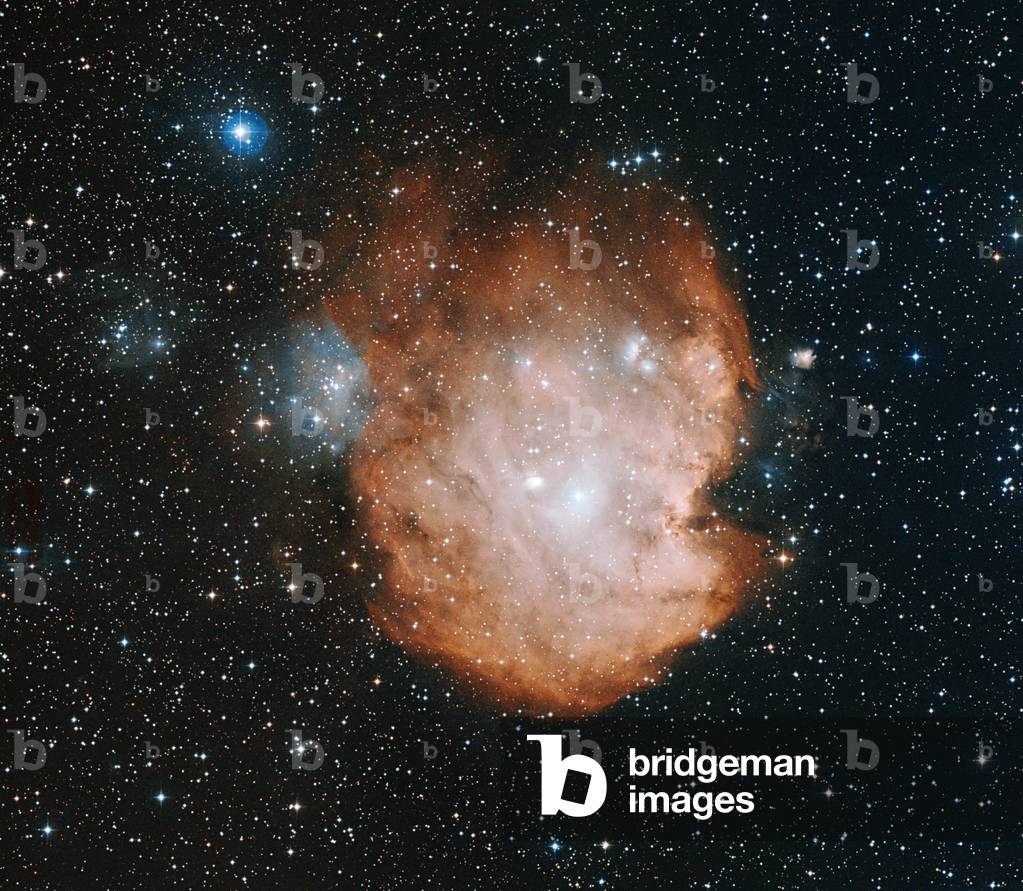
Nebula NGC 2174 in Orion - North is at top. This large and bright nebula surround open cluster NGC2175 located about 1.5 degrees west of chi2 Orionis. Sometime is also called Monkey Nebula. This image is based on data acquired by the Oschin Telescope at the Mount Palomar Observatory

PIX4618412: Nebula NGC 2174 in Orion - North is at top. This large and bright nebula surround open cluster NGC2175 located about 1.5 degrees west of chi2 Orionis. Sometime is also called Monkey Nebula. This image is based on data acquired by the Oschin Telescope at the Mount Palomar Observatory / Bridgeman Images

L'atelier bas du musee Gustave Moreau, 14 rue de La Rochefoucauld, Paris 9th. Very early in his life, Gustave Moreau became aware of the importance of transmitting most of his work to future generations. In 1895, he had the large workshops built above the family house, which he organized into a real museum around his works. The Musee National Gustave Moreau was officially inaugurated on January 14, 1903 by the President of the Republic. Photography 2002.

LBY4618475: L'atelier bas du musee Gustave Moreau, 14 rue de La Rochefoucauld, Paris 9th. Very early in his life, Gustave Moreau became aware of the importance of transmitting most of his work to future generations. In 1895, he had the large workshops built above the family house, which he organized into a real museum around his works. The Musee National Gustave Moreau was officially inaugurated on January 14, 1903 by the President of the Republic. Photography 2002. / Bridgeman Images

Annunciation (Terracotta Sculpture, 1927)

LRI4618530: Annunciation (Terracotta Sculpture, 1927), Martini, Arturo (1889-1947) / Bridgeman Images

Spiral Galaxy NGC 7814 in Pegase - Spiral galaxy NGC 7814 in Pegasu

PIX4613248: Spiral Galaxy NGC 7814 in Pegase - Spiral galaxy NGC 7814 in Pegasu / Bridgeman Images
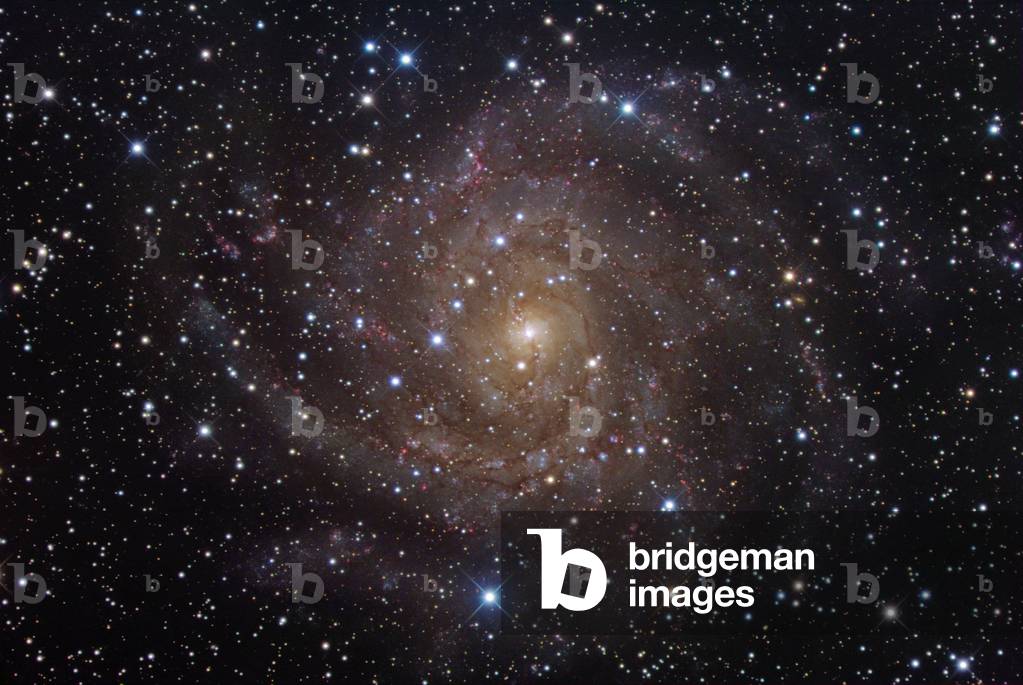
Spiral galaxy IC 342 in the Giraffe - Spiral galaxy IC 342 in Camelopardalis - Spiral galaxy IC 342 located about 14 million years ago - light in the Giraffe. Image obtained with a 50 cm telescope. 15 hours of installation. Spiral galaxy located 14 million light year away

PIX4613273: Spiral galaxy IC 342 in the Giraffe - Spiral galaxy IC 342 in Camelopardalis - Spiral galaxy IC 342 located about 14 million years ago - light in the Giraffe. Image obtained with a 50 cm telescope. 15 hours of installation. Spiral galaxy located 14 million light year away / Bridgeman Images
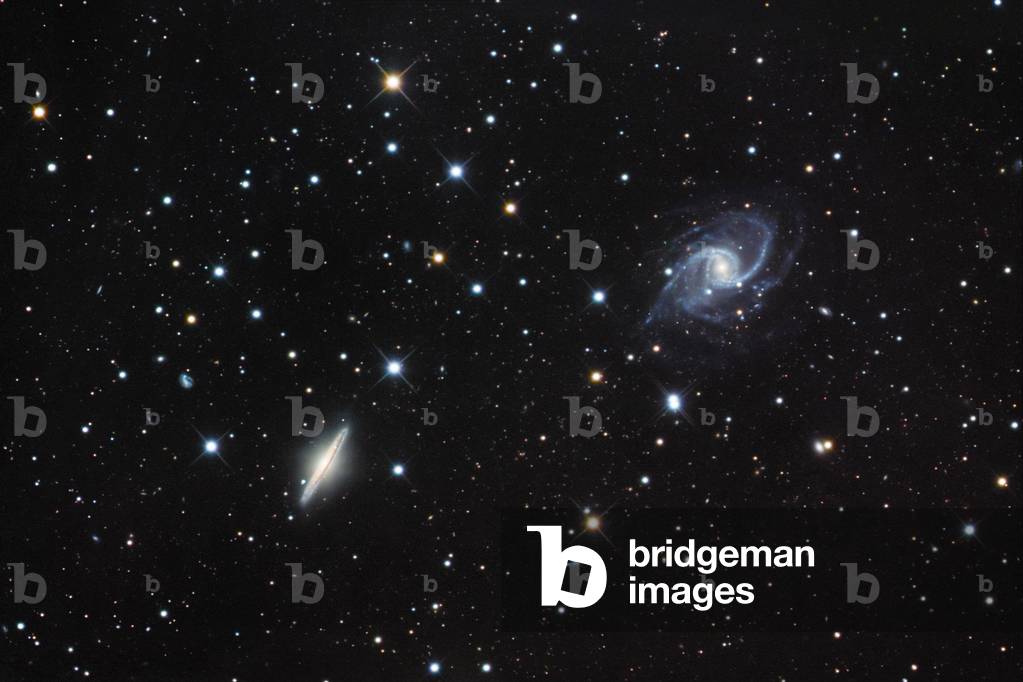
Spiral galaxies NGC 5905 and NGC 5908 in Dragon - Spiral galaxies NGC 5905 and 5908 in Draco - These galaxies are located approximately 140 million years ago - light in the constellation of Dragon. NGC 5905, on the right, is a barree spiral galaxy, NGC 5908, a spiral galaxy seen from the edge. These galaxies are about 140 million light years in the constellation Draco. Right is the NGC 5905 barred spiral galaxy, left the edge - on NGC 5908 spiral galaxy

PIX4612826: Spiral galaxies NGC 5905 and NGC 5908 in Dragon - Spiral galaxies NGC 5905 and 5908 in Draco - These galaxies are located approximately 140 million years ago - light in the constellation of Dragon. NGC 5905, on the right, is a barree spiral galaxy, NGC 5908, a spiral galaxy seen from the edge. These galaxies are about 140 million light years in the constellation Draco. Right is the NGC 5905 barred spiral galaxy, left the edge - on NGC 5908 spiral galaxy / Bridgeman Images

KaDeWe department store, Wittenbergplatz in Schoneberg, Berlin, Germany.

TEC4619875: KaDeWe department store, Wittenbergplatz in Schoneberg, Berlin, Germany. / Bridgeman Images

Nebula Trifide (M20) in the constellation Sagittarius - Trifid nebula (M20) in Sagittarius - View of the Trifide nebula (M20 or NGC 6514) located in the constellation Sagittarius between 5000 and 10,000 years - light from Earth. Image obtained by Siding Spring's 3.9m telescope. Trifid nebula is located in Sagittarius constellation between 5000 and 10 000 light - years away. Stars, the Sun included, were born within clouds of dusty gas such as the Trifid Nebula. Within it a number of young hot stars have already formed. The hottest cause the gas, mostly hydrogen, to emit its characteristic red light. Around the red emission nebula the gas contains many dust grains which preferentially reflect the blue component of starlight, and to the north (top) of the nebula can be seen a bright star which illuminates part of the dust to create a region of blue reflection. In some parts of the nebula there are so many dust grains that they hide the glowing gas, producing the three dark lanes which give the object its name

PIX4619538: Nebula Trifide (M20) in the constellation Sagittarius - Trifid nebula (M20) in Sagittarius - View of the Trifide nebula (M20 or NGC 6514) located in the constellation Sagittarius between 5000 and 10,000 years - light from Earth. Image obtained by Siding Spring's 3.9m telescope. Trifid nebula is located in Sagittarius constellation between 5000 and 10 000 light - years away. Stars, the Sun included, were born within clouds of dusty gas such as the Trifid Nebula. Within it a number of young hot stars have already formed. The hottest cause the gas, mostly hydrogen, to emit its characteristic red light. Around the red emission nebula the gas contains many dust grains which preferentially reflect the blue component of starlight, and to the north (top) of the nebula can be seen a bright star which illuminates part of the dust to create a region of blue reflection. In some parts of the nebula there are so many dust grains that they hide the glowing gas, producing the three dark lanes which give the object its name / Bridgeman Images

March - Spirit - View from the top of Husband Hill - Detail of the 360-degree panorama obtained by Spirit from 1st to 3rd October 2005. The summit of Husband Hill is 100m above the surrounding plateau. The Rover Spirit landed on Mars in the Gusev crater area, July 4, 2004

PIX4615683: March - Spirit - View from the top of Husband Hill - Detail of the 360-degree panorama obtained by Spirit from 1st to 3rd October 2005. The summit of Husband Hill is 100m above the surrounding plateau. The Rover Spirit landed on Mars in the Gusev crater area, July 4, 2004 / Bridgeman Images

March - Spirit - View during the descent of Husband Hill. 11/2005 - Martian surface seen from the rover Spirit. 11/2005 - Detail of 360 degres panorama obtained by Spirit from 23 to 28 November 2005. The Rover Spirit landed on Mars in the Gusev crater area on July 4, 2004. Detail from the martian panorama taken by Spirit late november 2005 during its descent from Husband Hill

PIX4615713: March - Spirit - View during the descent of Husband Hill. 11/2005 - Martian surface seen from the rover Spirit. 11/2005 - Detail of 360 degres panorama obtained by Spirit from 23 to 28 November 2005. The Rover Spirit landed on Mars in the Gusev crater area on July 4, 2004. Detail from the martian panorama taken by Spirit late november 2005 during its descent from Husband Hill / Bridgeman Images

A street in Berlin, Germany (Drawing, 1921)

LRI4615731: A street in Berlin, Germany (Drawing, 1921), Kirchner, Ernst Ludwig (1880-1938) / Bridgeman Images

La rue Saint Maur in Paris 10th. Photography 25/08/07.

TEC4615738: La rue Saint Maur in Paris 10th. Photography 25/08/07. / Bridgeman Images

March - Opportunity - Landing site - Challenger memorial station photography by the rover Opportunity around February 20, 2004. The probe landed in a 20-metre-wide impact crater named Eagle. The Rover Opportunity landed on Mars in the Meridiani Planum region, January 25, 2004

PIX4615767: March - Opportunity - Landing site - Challenger memorial station photography by the rover Opportunity around February 20, 2004. The probe landed in a 20-metre-wide impact crater named Eagle. The Rover Opportunity landed on Mars in the Meridiani Planum region, January 25, 2004 / Bridgeman Images


Back to top