
Print this page or go back to standard view.

TEC4615275: Quai Eurostar, architect A.Stratus, realisation 1996, in the Gare du Nord in Paris 10th. Architect Jakob Hittorff (1792-1867), construction 1862. / Bridgeman Images

TEC4615317: Gare du Nord in Paris 10th. Architect Jakob Hitttorf (1792-1867), construction 1862. / Bridgeman Images

TEC4615318: Lariboisiere Hospital overlooking the entrance in Paris. Architect Pierre Gauthier, construction 1854. / Bridgeman Images

TEC4615435: Jardin de Saint Vincent de Paul, Place Frantz Liszt. Paris 10th. Realisation 1844, architects Jean Baptiste Lepere (1761-1844) and Jakob Hittorf (1792-1867). / Bridgeman Images

PIX4615513: March: Hills east of Spirit landing site / Bridgeman Images

TEC4615523: Construction of a housing building, quai de Valmy in Paris 10th. Photograph 2005. / Bridgeman Images

LRI4615555: James Dean, 1959 (Collage), Johnson, Ray (1927-95) / Bridgeman Images

TEC4615556: Convent of Recollets, 150-154 rue du Faubourg Saint Martin, Paris 10th. Built in 1604, it was abandoned for many years. Rehabilitates, since 2004, an international reception centre for artists, researchers, intellectuals and academics. There are eighty one furniture dwellings and workshops dwellings available to them. The Centre also houses the Maison de l'Architecture of France and a cultural animation association. Photography 2005. / Bridgeman Images

PIX4615568: March: Surface seen by Spirit. - Detail of the panorama obtained by Spirit between 3 and 5 March 2004 when the rover was halfway between its landing site and the Bonnevile crater. In the distance the Columbia Hills. The Rover Spirit landed on Mars in the Gusev crater area, July 4, 2004 / Bridgeman Images

TEC4615645: A Velib station, boulevard Magenta in Paris 10th. Photography 18/08/07. / Bridgeman Images

PIX4614685: Full Moon on the Alps - Full Moon above Alps: Full Moon on the French Alps - Full moonrise above english Alps / Bridgeman Images

PIX4614799: Eclipse de Lune - 28/09/2015 - Lunar eclipse September 28 2015: The main phases of the eclipse of the Moon of 28 September 2015 seen above Gollenstein, the largest menhir in Central Europe - Multi exposures of total lunar eclipse on september 28 2015, seen above Gollenstein, the tallest menhir of central Europe / Bridgeman Images

TEC4614832: Wall painted in Paris 10th. Artwork by Francois Boisrond. / Bridgeman Images

LRI4614911: Cubist composition, 20th century (Painting), Filla, Emil (1882-1953) / Bridgeman Images

PIX4614926: Mars seen by the Hubble Space Telescope - 1990 - Image obtained in December 1990 showing the area of Syrtis Major. The north pole is at the top left / Bridgeman Images

TEC4615369: Canal Saint Martin overlooking a playground in Paris 10th. / Bridgeman Images

TEC4615637: Velib station, Rue de Verdun in Paris 10th. Photography 18/08/07. / Bridgeman Images

TEC4615690: A Velib boulevard Magenta station in Paris 10th. Photography 18/08/07. / Bridgeman Images

PIX4615740: March - Spirit - Panorama McMurdo - Detail - 10 - 2006 - March: McMurdo panorama - Spirit - Detail - 10 - 2006 - Detail of the panorama “” Mac Murdo”” obtained by the Spirit rover from April to October 2006. Spirit stayed in the same place directing its solar panels towards the Sun to recharge its batteries. The Rover Spirit landed on Mars in the Gusev crater area on July 4, 2004. “McMurdo” panorama detail. From April through October 2006, Spirit has stayed on a small hill known as “Low Ridge.”” There, the rover's solar panels are tilted towards the sun to maintain enough solar power for Spirit to keep making scientific observations throughout the winter on southern Mars. This view of the surroundings from Spirit's “Winter Haven”” is presented in approximately true color / Bridgeman Images

TEC4615866: L'Hotel du Nord, quai de Jemmapes in Paris 10th. / Bridgeman Images

LRI4615917: Venus (oil on canvas, 1912), Larionov, Mikhail (1881-1964) / Bridgeman Images

TEC4615935: Gare de l'Est in Paris 75010. Architecture by Francois Alexandre Duquesney, 1852. Photography 17/04/09 / Bridgeman Images

TEC4615012: Porte Saint Martin in Paris 10th. Architect Pierre Bullet (1639-1716). / Bridgeman Images

PIX4615074: Mars - Schiaparelli - Mosaic of images obtained by the Viking probe 1. Although the image appears to represent an entire hemisphere of Mars, this view covers only a small portion (2500 km) deformed by a fish - eye effect. One can see in the centre the Schiaparelli crater (450 km in diameter) surrounded by the dark areas of Sinus Meridiani and Sinus Sabaeus, the white spot at the bottom of the image represents the Hellas basin. / Bridgeman Images

PIX4615086: Mars - Schiaparelli - Arabia - Mosaic of images obtained by the Viking probe 1. The large yellow and bright circular region is Arabia. Below, in the center of the image, the Schiaparelli crater (450 km in diameter) surrounds by the dark regions of Sinus Meridiani and Sinus Sabaeus; the white spot at the bottom of the image represents the Hellas basin. On the right, the dark area of Syris Major / Bridgeman Images

TEC4629900: A superquadra building in Brasilia (Brazil). / Bridgeman Images
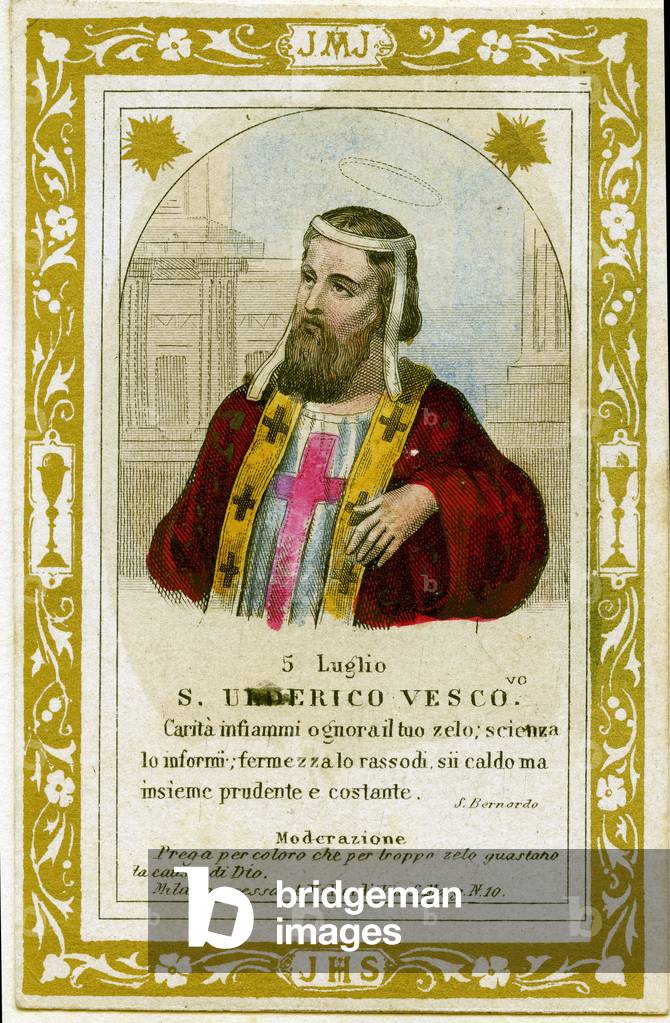
LRI4629927: Saint Ulrich (engraving, 19th century), Anonymous / Bridgeman Images

PIX4629857: Comparison between Earth and Venus - Earth and Venus compared - Comparison at the scale of the sizes of Earth and Venus, seen here without their atmosphere. The size of the Venus planet is roughly the same as that of the Earth. This to-scale image suggests how the Earth and Venus might appear without their atmospheres. Venus' diameter is 86% that of the Earth's. It has 82% the mass. If you weigh 180 pounds on the Earth, you would weigh 163 pounds on Venus. Venus is about three-quarters the Earth's distance from the Sun. While Venus is roughly the same size and density as the Earth, it is otherwise a very different world. Earth's surface is a varied one, with liquid water covering three quarters of its surface. Those areas not under water have been highly modified by plate tectonics, weather, and life itself. Venus on the other hand is far too hot to host liquid water. Volcanoes, massive lava flows and the occasional impact crater characterize its surface. Latest observations suggest that Venus may periodically resurface itself completely - and catastrophic - through massive, planet-wide volcanic eruptions. The last such resurfacing “” event”” appears to have occurred about 500 million years ago / Bridgeman Images

TEC4629869: A residential building of a superquadra in Brasilia (Brazil). photograph 14/04/07. / Bridgeman Images

PIX4629885: Terre Lune et Soleil - artist view - Earth Moon and Sun - Artwork / Bridgeman Images

PIX4629899: Comparison of Earth Sizes, Venus, Mercury and Mars - Diametre de la terre: 12,756,28 km Diametre de Venus: 12,100 km Diametre de Mercury: 4870 km Diametre de Mars: 6790 k / Bridgeman Images

TEC4629937: A gas station in Brasilia (Brazil). / Bridgeman Images

PIX4630060: The solar system - Partial view - Our solar system. Artwork - Artist's view of the solar system. The planets represented are Mars, Earth, Neptune, Saturn, Jupiter. The Sun and a comet are also represented. Partial view of the planets of our solar system showing Mars, the Earth, Neptune, Saturn, Jupiter, a comet and the Sun / Bridgeman Images

LRI4630081: Representation of the Cisalpine sparrow (Passer domesticus italiae or Italian Sparrow) (Chromolithography, 1865-1869), Bettoni, Eugenio (1845-98) & Dressler, Oscar (19th century) / Bridgeman Images

LRI4630122: Representation of the Falvette Curruca Orphea (Chromolithography, 1865-1869), Bettoni, Eugenio (1845-98) & Dressler, Oscar (19th century) / Bridgeman Images
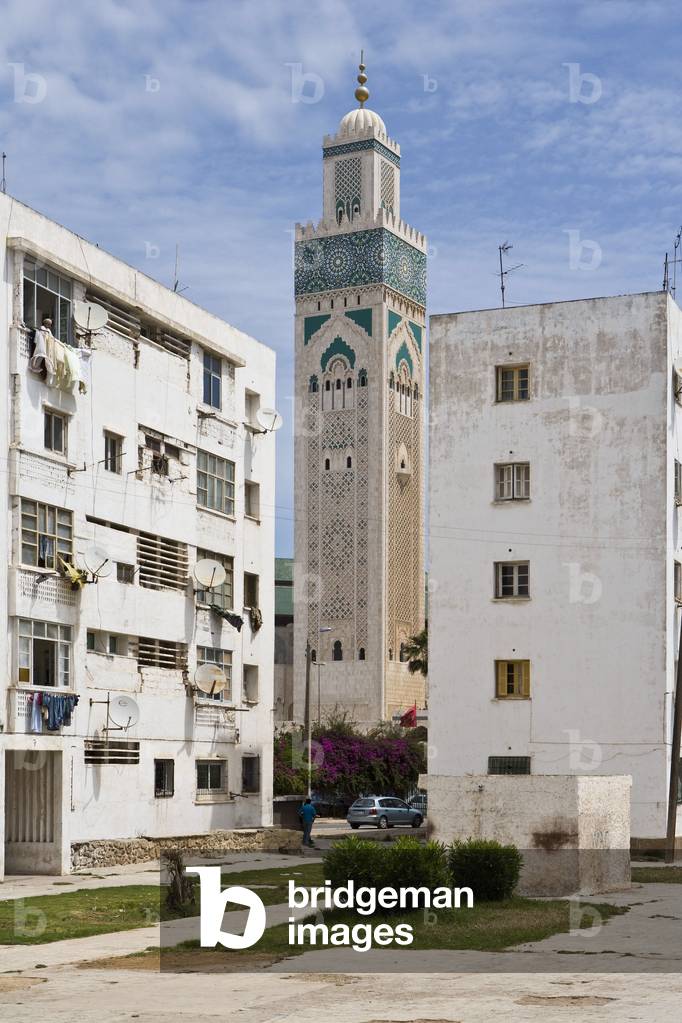
OMG4630159: The Mosquee Hassan II in Casablanca, Morocco. Architect Michel Pinseau, 1986-1993. Photography 23/05/07. / Bridgeman Images