
Print this page or go back to standard view.

TEC4618384: The Mayor of the/eme arrondissement in Paris. Photography 11/09/07. / Bridgeman Images
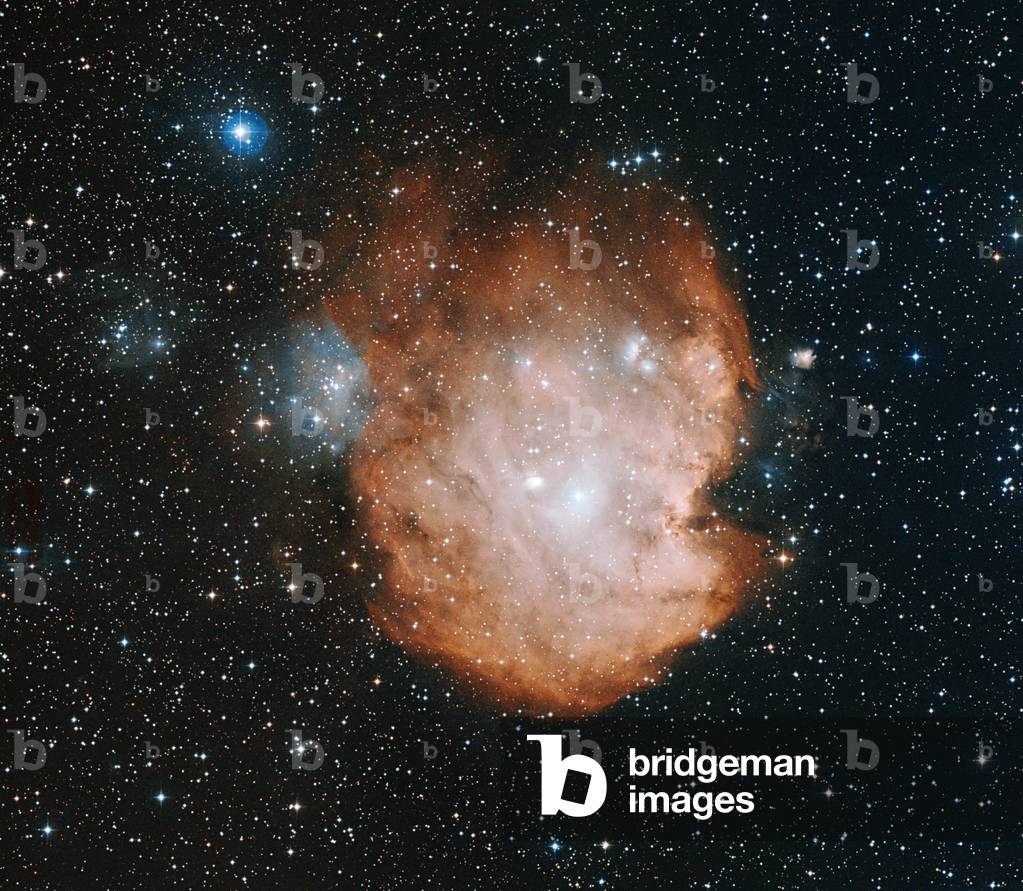
PIX4618412: Nebula NGC 2174 in Orion - North is at top. This large and bright nebula surround open cluster NGC2175 located about 1.5 degrees west of chi2 Orionis. Sometime is also called Monkey Nebula. This image is based on data acquired by the Oschin Telescope at the Mount Palomar Observatory / Bridgeman Images

LBY4618475: L'atelier bas du musee Gustave Moreau, 14 rue de La Rochefoucauld, Paris 9th. Very early in his life, Gustave Moreau became aware of the importance of transmitting most of his work to future generations. In 1895, he had the large workshops built above the family house, which he organized into a real museum around his works. The Musee National Gustave Moreau was officially inaugurated on January 14, 1903 by the President of the Republic. Photography 2002. / Bridgeman Images

LRI4618530: Annunciation (Terracotta Sculpture, 1927), Martini, Arturo (1889-1947) / Bridgeman Images

PIX4613248: Spiral Galaxy NGC 7814 in Pegase - Spiral galaxy NGC 7814 in Pegasu / Bridgeman Images
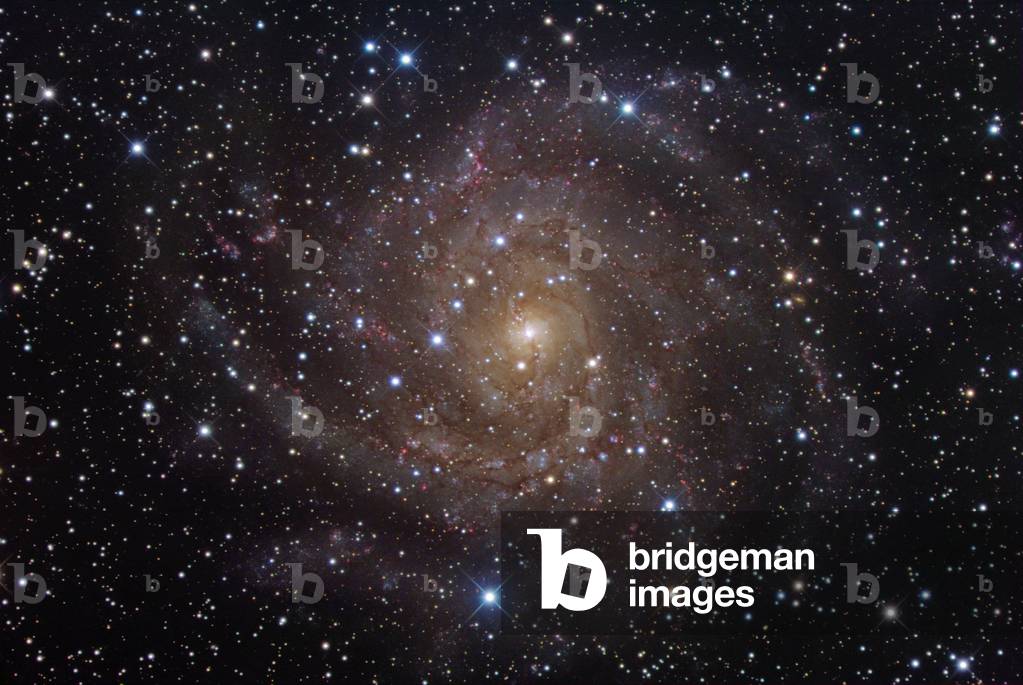
PIX4613273: Spiral galaxy IC 342 in the Giraffe - Spiral galaxy IC 342 in Camelopardalis - Spiral galaxy IC 342 located about 14 million years ago - light in the Giraffe. Image obtained with a 50 cm telescope. 15 hours of installation. Spiral galaxy located 14 million light year away / Bridgeman Images
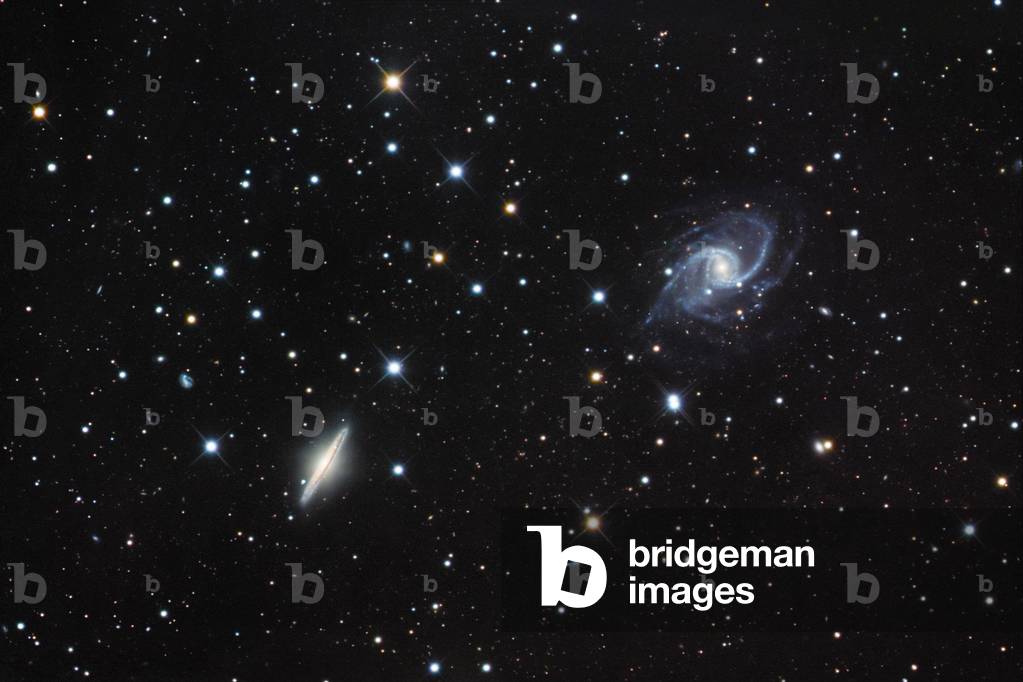
PIX4612826: Spiral galaxies NGC 5905 and NGC 5908 in Dragon - Spiral galaxies NGC 5905 and 5908 in Draco - These galaxies are located approximately 140 million years ago - light in the constellation of Dragon. NGC 5905, on the right, is a barree spiral galaxy, NGC 5908, a spiral galaxy seen from the edge. These galaxies are about 140 million light years in the constellation Draco. Right is the NGC 5905 barred spiral galaxy, left the edge - on NGC 5908 spiral galaxy / Bridgeman Images

TEC4619875: KaDeWe department store, Wittenbergplatz in Schoneberg, Berlin, Germany. / Bridgeman Images

PIX4619538: Nebula Trifide (M20) in the constellation Sagittarius - Trifid nebula (M20) in Sagittarius - View of the Trifide nebula (M20 or NGC 6514) located in the constellation Sagittarius between 5000 and 10,000 years - light from Earth. Image obtained by Siding Spring's 3.9m telescope. Trifid nebula is located in Sagittarius constellation between 5000 and 10 000 light - years away. Stars, the Sun included, were born within clouds of dusty gas such as the Trifid Nebula. Within it a number of young hot stars have already formed. The hottest cause the gas, mostly hydrogen, to emit its characteristic red light. Around the red emission nebula the gas contains many dust grains which preferentially reflect the blue component of starlight, and to the north (top) of the nebula can be seen a bright star which illuminates part of the dust to create a region of blue reflection. In some parts of the nebula there are so many dust grains that they hide the glowing gas, producing the three dark lanes which give the object its name / Bridgeman Images

PIX4615683: March - Spirit - View from the top of Husband Hill - Detail of the 360-degree panorama obtained by Spirit from 1st to 3rd October 2005. The summit of Husband Hill is 100m above the surrounding plateau. The Rover Spirit landed on Mars in the Gusev crater area, July 4, 2004 / Bridgeman Images

PIX4615713: March - Spirit - View during the descent of Husband Hill. 11/2005 - Martian surface seen from the rover Spirit. 11/2005 - Detail of 360 degres panorama obtained by Spirit from 23 to 28 November 2005. The Rover Spirit landed on Mars in the Gusev crater area on July 4, 2004. Detail from the martian panorama taken by Spirit late november 2005 during its descent from Husband Hill / Bridgeman Images

LRI4615731: A street in Berlin, Germany (Drawing, 1921), Kirchner, Ernst Ludwig (1880-1938) / Bridgeman Images

TEC4615738: La rue Saint Maur in Paris 10th. Photography 25/08/07. / Bridgeman Images

PIX4615767: March - Opportunity - Landing site - Challenger memorial station photography by the rover Opportunity around February 20, 2004. The probe landed in a 20-metre-wide impact crater named Eagle. The Rover Opportunity landed on Mars in the Meridiani Planum region, January 25, 2004 / Bridgeman Images

PIX4615883: Martian panorama taken by the rover Opportunity - Martian panorama seen from rover Opportunity - 360 degres panorama obtained by the rover Opportunity from the position where the rover remained for five weeks in November and December 2008. The 276 images that make up this panorama were taken from November 21 to 24, 2008. In this image the rover, whose top of its antenna can be seen in the center of the image, is located about 1 km southwest of the Victoria crater. Opportunity returned to Endeavour crater on December 23, 2008. The Rover Opportunity landed on Mars in the Meridiani Planum region on January 25, 2004. This 360 - degree panorama shows the vista from the location where Nasa's Mars Exploration Rover Opportunity spent five weeks in November and December 2008 while the sun was almost directly in between Mars and Earth, limiting communications. Opportunity is approaching the fifth Earth - year anniversary of its landing on Mars, continuing a surface mission that was initially scheduled to last three months. The rover landed on Jan. 24, 2004 (Pacific Standard Time; Jan. 25, 2004 Universal Time). When it reached the location from which its panoramic camera (Pancam) captured this view, it had driven a total of 13,616 meters (8.46 miles) since its landing. The view combines 276 different exposures taken with Opportunity's panoramic camera (Pancam) - - 92 pointings, with three filters at each pointing. The component images were taken during the period from the rover's 1,716th Martian day, or sol, to the mission's Sol 1719 (Nov. 21 to 24, 2008). Opportunity has driven 1.83 kilometers (1.14 miles) since it exited Victoria Crater on Sol 1634 (Aug. 28, 2008). It skirted the west rim of Victoria and, at the point from which this panorama was taken, had reached a position about a kilometer (six - tenths of a mile) southwest of the south rim of the crater. North is in the center of the panorama. Rover tracks are visible from the drive to th / Bridgeman Images

TEC4615886: Paris. Photography 25/08/07. / Bridgeman Images

PIX4615921: March: Faults and impact crater in Acheron Fossae. - Fracture system around a 55 km diametre and 2000m deep impact crater. Image obtained by the Mars Express probe in 2004 / Bridgeman Images

PIX4615391: Traces of the passage of water on Mars - Ancient river beds on Mars. Observation of sedimentary rocks shows that water is in the liquid state to dig these furrows. Region of 14 km by 19 km Mosaic of images obtained by the Mars Global Surveyor probe between August 2000 and September 2003 / Bridgeman Images

TEC4615405: Peniche on the Canal Saint Martin in Paris 10th. / Bridgeman Images

TEC4615441: Boulevard de Srtasbourg overlooking the Cafe de France with the Gare de l'Est in Paris 10th. / Bridgeman Images

TEC4615473: The Canal Saint Martin in Paris 10th. Inaugurated in 1825, the Saint-Martinae Canal connects the Villette basin to the Seine. It has 9 locks and 2 turntables. Photography 2005. / Bridgeman Images

TEC4615479: The Canal Saint Martin in Paris 10th. Inaugurated in 1825, the Saint-Martinae Canal connects the Villette basin to the Seine. It has 9 locks and 2 turntables. Photography 2005. / Bridgeman Images

TEC4615517: Quai de Valmy in Paris 10th. / Bridgeman Images

TEC4615550: Convent of Recollets, 150-154 rue du Faubourg Saint Martin, Paris 10th. Built in 1604, the convent was abandoned for many years. Rehabilitates an international reception centre for artists, researchers, intellectuals and academics since 2004. There are eighty one furniture dwellings and workshops dwellings available to them. The Centre also houses the Maison de l'Architecture of France and a cultural animation association. Photography 2005. / Bridgeman Images

PIX4615559: March: Columbia memorial station - Columbia memorial station, the landing base of the rover Spirit, photographed by the rover during his 16th Martian day (18 - 19 January 2004). The Rover Spirit landed on Mars in the Gusev crater area, July 4, 2004 / Bridgeman Images

PIX4615587: March: Cratere Bonneville seen by Spirit - Panorama of 360 degres obtained by Spirit on 12 and 13 March 2004. Bonneville is an impact crater 200m in diameter. Far on the right, Columbia Hills; near the horizon line in the center of the image, a bright point, the thermal shield of the probe. On the left, the traces left by the rover. The Rover Spirit landed on Mars in the Gusev crater area, July 4, 2004 / Bridgeman Images

PIX4615651: Rover Spirit - Self Portrait - The Rover Spirit used his panoramic camera to take several images and create this mosaic on December 7, 2004. The mat on which the camera is mounted has been erased. This self-portrait shows the accumulation of Martian dust on the rover and its solar panels. The Rover Spirit landed on Mars in the Gusev crater area, July 4, 2004 / Bridgeman Images
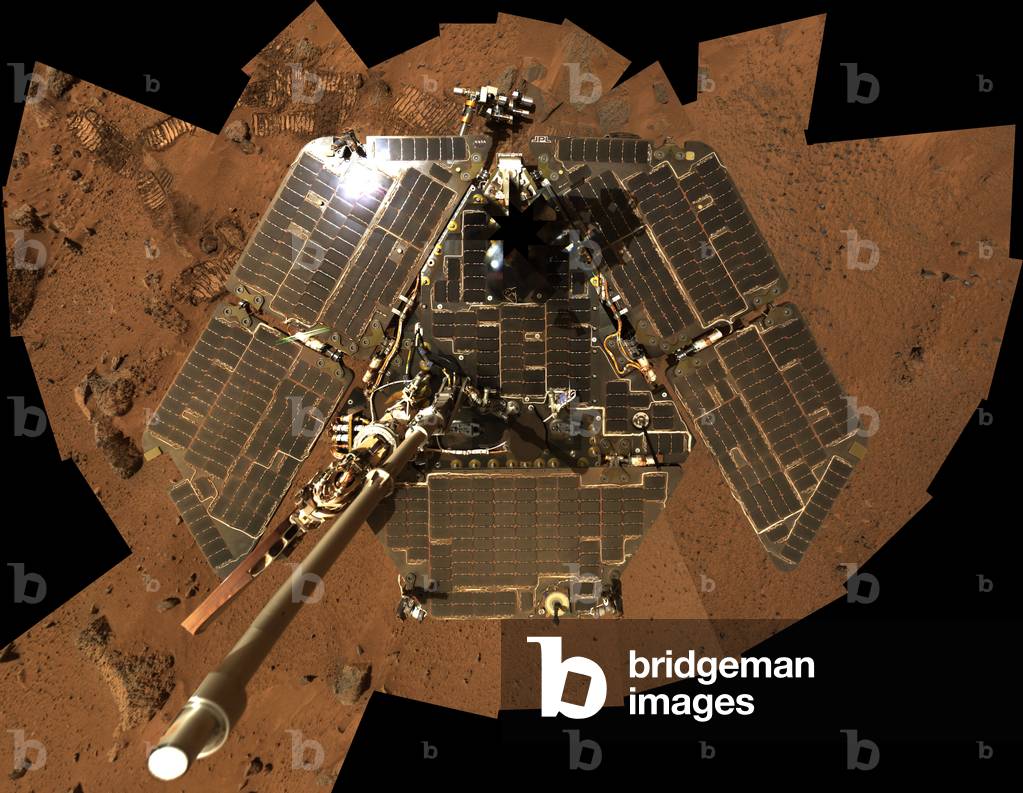
PIX4615673: March: Rover Spirit - Self Portrait - The Rover Spirit used his panoramic camera to take several images and create this mosaic on August 27, 2005. This self-portrait shows the accumulation of Martian dust on the rover and its solar panels. The Rover Spirit landed on Mars in the Gusev crater area, July 4, 2004 / Bridgeman Images
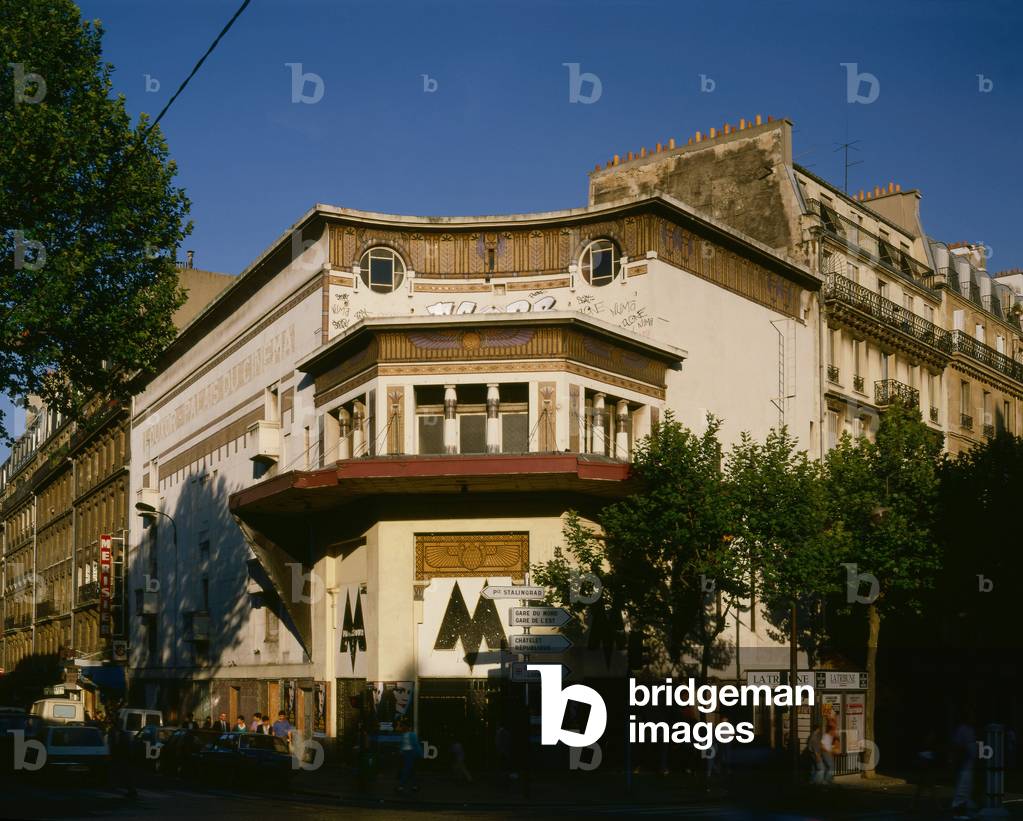
MDA4616209: Cinema Luxor Pathe in Paris 10th. Construction 1920, architect Henri Zipcy, decor of the Amedee Tiberi facade. Photography 1990. / Bridgeman Images

PIX4616278: Mars - Satellite Phobos - Martian moon Phobos - View of the satellite Phobos obtained by the Mars Express probe on July 23, 2008 at a distance of 97 km from the Martian moon. The resolution is 3.7 meters per pixel. On 23 July 2008, the High Resolution Stereo Camera on board the ESA's Mars Express took the highest - resolution full - disc image yet of the surface of the moon Phobos. The image data was acquired from a distance of 97 km with a spatial resolution of about 3.7 m/pixel in orbit 5851. These images have surpassed all previous images from other missions in continuous coverage of the illuminated surface at the highest spatial resolution of 3.7 m/pixel. This image is photometrically enhanced to bring out the features in the less illuminated part / Bridgeman Images

LRI4616050: Cycle on the life of Saint Stephen: “” The funeral of Saint Stephen”” (The esequie di santo Stefano) Detail. Fresco by Filippo Lippi (ca. 1406-1469) 1452-1465 Prato, Cattedrale di Santo Stefano (Duomo) Italy - Stories from the Life of St. Stephen. Funeral, by Filippo Lippi (c.1406-1469). Detail. Fresco, 1452-65. Cathedral of Santo Stefano, Prato, Italy, Lippi, Filippo (c.1406-69) / Bridgeman Images

PIX4615739: March - Spirit - Panorama McMurdo 10 - 2006 - March: McMurdo panorama - Spirit 10 - 2006 - Panorama of 360 degres “” Mac Murdo”” obtained by the Spirit rover from April to October 2006. Spirit stayed in the same place directing its solar panels towards the Sun to recharge its batteries. Many dark, porous volcanic rocks are visible in this image. The Rover Spirit landed on Mars in the Gusev crater area on July 4, 2004. This 360 - degree view, called the “” McMurdo”” panorama, comes from the panoramic camera (Pancam) on Nasa's Mars Exploration Rover Spirit. From April through October 2006, Spirit has stayed on a small hill known as “Low Ridge.”” There, the rover's solar panels are tilted towards the sun to maintain enough solar power for Spirit to keep making scientific observations throughout the winter on southern Mars. This view of the surroundings from Spirit's “” Winter Haven”” is presented in approximately true color. Many dark, porous - textured volcanic rocks can be seen around the rover, including many on Low Ridge. Two rocks to the right of center, brighter and smoother - looking in this image and more reflective in infrared observations by Spirit's miniature thermal emission spectrometer, are thought to be meteorites / Bridgeman Images

LRI4615742: Fragrant island (Watercolour, 1929), Klee, Paul (1879-1940) / Bridgeman Images

TEC4615751: La rue du Buisson Saint Louis in Paris 10th. / Bridgeman Images

TEC4615833: Le quai de Valmy in Paris 10th. / Bridgeman Images

TEC4615874: Le quai de Jemmapes in Paris 10th. / Bridgeman Images