Unknown Artist, (19th century) Assets (17892 in total)

Search options

Orientation
Colour

Display options

View

Print

To print search results, use print friendly version of this page.

Results

A meal at the Turkomans (Iraq). Drawing by Emile Bayard (1837-1891), to illustrate the journey to Central Asia, in 1863, by Arminius Vambery (Hungarian scientist disguise in dervish). Engraving in “” Le tour du monde””, edited by Edouard Charton, 1865. Selva's collection.

LSE4325544: A meal at the Turkomans (Iraq). Drawing by Emile Bayard (1837-1891), to illustrate the journey to Central Asia, in 1863, by Arminius Vambery (Hungarian scientist disguise in dervish). Engraving in “” Le tour du monde””, edited by Edouard Charton, 1865. Selva's collection., Unknown Artist, (19th century) / Bridgeman Images

Dervishes Nakhisbendi, a Persian Bokhara, Iran). Drawing by Emile Bayard (1837-1891), to illustrate the journey to Central Asia, in 1863, by Arminius Vambery (Hungarian scientist disguise in dervish). Engraving in “” Le tour du monde””, edited by Edouard Charton, 1865. Selva's collection.

LSE4325553: Dervishes Nakhisbendi, a Persian Bokhara, Iran). Drawing by Emile Bayard (1837-1891), to illustrate the journey to Central Asia, in 1863, by Arminius Vambery (Hungarian scientist disguise in dervish). Engraving in “” Le tour du monde””, edited by Edouard Charton, 1865. Selva's collection., Unknown Artist, (19th century) / Bridgeman Images

A Sienese cart of peasants, has two wheels, for the transport of wine barrels, drawn by a couple of small white oxen. Engravure pour illustrrer un voyage à Siena (Italy) en 1865, in “” Le tour du monde, nouveau journal des voyages”” published under the direction of Edouard Charton, 1866, Paris. Selva Collection.

LSE4325647: A Sienese cart of peasants, has two wheels, for the transport of wine barrels, drawn by a couple of small white oxen. Engravure pour illustrrer un voyage à Siena (Italy) en 1865, in “” Le tour du monde, nouveau journal des voyages”” published under the direction of Edouard Charton, 1866, Paris. Selva Collection., Unknown Artist, (19th century) / Bridgeman Images

Blacksmith manganjas (ethnic group of the Zambeze region). Engravure to illustrate Dr. Livingstone's first voyages to Southern Africa from 1840 to 1856, in “Le tour du monde, nouveau journal des voyages”” published under the direction of Edouard Charton, 1866, Paris. Selva Collection.

LSE4325715: Blacksmith manganjas (ethnic group of the Zambeze region). Engravure to illustrate Dr. Livingstone's first voyages to Southern Africa from 1840 to 1856, in “Le tour du monde, nouveau journal des voyages”” published under the direction of Edouard Charton, 1866, Paris. Selva Collection., Unknown Artist, (19th century) / Bridgeman Images

A contest of wrestling with bare hands and a race of horses among the Turcomans, organized during the big public celebrations, the distance of the race is one kilometer, between three or four competitors, the winner receives a piece of cotton cloth and the title of president of the race Engraving to illustrate the story of Henri de Blocqueville “” 14 months of captivite chez les Turcomans”” between 1860 and 1861, in “Le tour du monde, nouveau journal des voyages”” published under the direction of Edouard Charton, 1866, Paris. Selva Collection.

LSE4325775: A contest of wrestling with bare hands and a race of horses among the Turcomans, organized during the big public celebrations, the distance of the race is one kilometer, between three or four competitors, the winner receives a piece of cotton cloth and the title of president of the race Engraving to illustrate the story of Henri de Blocqueville “” 14 months of captivite chez les Turcomans”” between 1860 and 1861, in “Le tour du monde, nouveau journal des voyages”” published under the direction of Edouard Charton, 1866, Paris. Selva Collection., Unknown Artist, (19th century) / Bridgeman Images

Floating penitenciers of French Guiana, a colony devolved to the captivity of those who took over the courts and the men who had to stay. Engraving to illustrate the voyage in French Guiana in 1862-1863, by Frederic Bouyer, captain of fregate, in “” Le tour du monde, nouveau journal des voyages”, published under the direction of Edouard Charton, 1866, Paris. Selva Collection.

LSE4325800: Floating penitenciers of French Guiana, a colony devolved to the captivity of those who took over the courts and the men who had to stay. Engraving to illustrate the voyage in French Guiana in 1862-1863, by Frederic Bouyer, captain of fregate, in “” Le tour du monde, nouveau journal des voyages”, published under the direction of Edouard Charton, 1866, Paris. Selva Collection., Unknown Artist, (19th century) / Bridgeman Images

The manufacturer of lacquered cups. Engraving to illustrate the voyage to Japan in 1863-1864, by Aime Humbert, minister of the Swiss Confederation, in “Le tour du monde, nouveau journal des voyages”, published under the direction of Edouard Charton, 1866, Paris. Selva Collection.

LSE4325888: The manufacturer of lacquered cups. Engraving to illustrate the voyage to Japan in 1863-1864, by Aime Humbert, minister of the Swiss Confederation, in “Le tour du monde, nouveau journal des voyages”, published under the direction of Edouard Charton, 1866, Paris. Selva Collection., Unknown Artist, (19th century) / Bridgeman Images

The business card manufacturer. Engraving to illustrate the voyage to Japan in 1863-1864, by Aime Humbert, minister of the Swiss Confederation, in “Le tour du monde, nouveau journal des voyages”, published under the direction of Edouard Charton, 1866, Paris. Selva Collection.

LSE4325912: The business card manufacturer. Engraving to illustrate the voyage to Japan in 1863-1864, by Aime Humbert, minister of the Swiss Confederation, in “Le tour du monde, nouveau journal des voyages”, published under the direction of Edouard Charton, 1866, Paris. Selva Collection., Unknown Artist, (19th century) / Bridgeman Images

Yori Omo and a samurai army repel the invasion of the Mongols in 1274 led by Qubilai (Kubilai Khan, first emperor of the Mongolian Yuan dynasty (1215-1294), but typhoons (kami kaze: wind of the gods) repel and capsize the Mongolian fleet, sparing the Japanese soil and generates the a true belief in protection divine of Japan. Engraving to illustrate the voyage to Japan in 1863-1864, by Aime Humbert, minister of the Swiss Confederation, in “Le tour du monde, nouveau journal des voyages”, published under the direction of Edouard Charton, 1866, Paris. Selva Collection.

LSE4326000: Yori Omo and a samurai army repel the invasion of the Mongols in 1274 led by Qubilai (Kubilai Khan, first emperor of the Mongolian Yuan dynasty (1215-1294), but typhoons (kami kaze: wind of the gods) repel and capsize the Mongolian fleet, sparing the Japanese soil and generates the a true belief in protection divine of Japan. Engraving to illustrate the voyage to Japan in 1863-1864, by Aime Humbert, minister of the Swiss Confederation, in “Le tour du monde, nouveau journal des voyages”, published under the direction of Edouard Charton, 1866, Paris. Selva Collection., Unknown Artist, (19th century) / Bridgeman Images

Funeral ceremonies: religious service in front of the coffin, in the mortuary house. Engraving to illustrate the voyage to Japan in 1863-1864, by Aime Humbert, minister of the Swiss Confederation, in “Le tour du monde, nouveau journal des voyages”, published under the direction of Edouard Charton, 1866, Paris. Selva Collection.

LSE4326023: Funeral ceremonies: religious service in front of the coffin, in the mortuary house. Engraving to illustrate the voyage to Japan in 1863-1864, by Aime Humbert, minister of the Swiss Confederation, in “Le tour du monde, nouveau journal des voyages”, published under the direction of Edouard Charton, 1866, Paris. Selva Collection., Unknown Artist, (19th century) / Bridgeman Images

His majesty Katchiba on a journey, leader of the Obbos tribe (tribe of the White Nile region), on the back of one of his subjects and always accompanies two others so that they serve alternately as a guide and a mount, a woman accompanies them who wears a beer jar. Engravure pour illustration le voyage au lac Albert, en 1861-1864, de Sir Samuel White Baker, in “Le tour du monde, nouveau journal des voyages”” published under the direction of Edouard Charton, 1867, Paris. Selva Collection.

LSE4326078: His majesty Katchiba on a journey, leader of the Obbos tribe (tribe of the White Nile region), on the back of one of his subjects and always accompanies two others so that they serve alternately as a guide and a mount, a woman accompanies them who wears a beer jar. Engravure pour illustration le voyage au lac Albert, en 1861-1864, de Sir Samuel White Baker, in “Le tour du monde, nouveau journal des voyages”” published under the direction of Edouard Charton, 1867, Paris. Selva Collection., Unknown Artist, (19th century) / Bridgeman Images

The woodworkers of the Montchanin mine, throwing them into the well inclined; in costume, the mine's chief engineer oversees the manoeuvres. Engraving to illustrate a voyage to the Creusot and the mines of Saone and Loire, in 1865, by L. Simonin, in “” Le tour du monde, nouveau journal des voyages”” published under the direction of Edouard Charton, 1867, Paris. Selva Collection.

LSE4326122: The woodworkers of the Montchanin mine, throwing them into the well inclined; in costume, the mine's chief engineer oversees the manoeuvres. Engraving to illustrate a voyage to the Creusot and the mines of Saone and Loire, in 1865, by L. Simonin, in “” Le tour du monde, nouveau journal des voyages”” published under the direction of Edouard Charton, 1867, Paris. Selva Collection., Unknown Artist, (19th century) / Bridgeman Images

Let's blacksmiths in front of their forge in Yedo (or Edo, imperial capital, present-day Tokyo). Engraving to illustrate the voyage to Japan, in 1863-1864, by Aime Humbert, minister of the Swiss Confederation, in “” Le tour du monde, nouveau journal des voyages”” published under the direction of Edouard Charton, 1867, Paris. Selva Collection.

LSE4326189: Let's blacksmiths in front of their forge in Yedo (or Edo, imperial capital, present-day Tokyo). Engraving to illustrate the voyage to Japan, in 1863-1864, by Aime Humbert, minister of the Swiss Confederation, in “” Le tour du monde, nouveau journal des voyages”” published under the direction of Edouard Charton, 1867, Paris. Selva Collection., Unknown Artist, (19th century) / Bridgeman Images

Kelek on the Tiger, traditional commercial raft, wooden floor supported by a layer of air-inflated skins, for the transport of goods and passengers, the boat follows the watercourse, once it arrives at its destination, the raft is demolished, the wood resold and the transport continues on camels. Engravure pour illustrrer le voyage dans la Babylon, en 1866, by Guillaume Lejean, in “Le tour du monde, nouveau journal des voyages”” published under the direction of Edouard Charton, 1867, Paris. Selva Collection.

LSE4326248: Kelek on the Tiger, traditional commercial raft, wooden floor supported by a layer of air-inflated skins, for the transport of goods and passengers, the boat follows the watercourse, once it arrives at its destination, the raft is demolished, the wood resold and the transport continues on camels. Engravure pour illustrrer le voyage dans la Babylon, en 1866, by Guillaume Lejean, in “Le tour du monde, nouveau journal des voyages”” published under the direction of Edouard Charton, 1867, Paris. Selva Collection., Unknown Artist, (19th century) / Bridgeman Images

General view of the fish market, with the port of the barquees of the goods, the shacks and the stalls of presentation of the products, and the stage for sale to the auction houses, with the lively animation that reunites the place: portfaix, sellers and merchants. Engraving to illustrate the voyage to Japan, in 1863-1864, by Aime Humbert, minister of the Swiss Confederation, in “Le tour du monde, nouveau journal des voyages”” published under the direction of Edouard Charton, Hachette, Paris, 1867. Selva Collection.

LSE4326377: General view of the fish market, with the port of the barquees of the goods, the shacks and the stalls of presentation of the products, and the stage for sale to the auction houses, with the lively animation that reunites the place: portfaix, sellers and merchants. Engraving to illustrate the voyage to Japan, in 1863-1864, by Aime Humbert, minister of the Swiss Confederation, in “Le tour du monde, nouveau journal des voyages”” published under the direction of Edouard Charton, Hachette, Paris, 1867. Selva Collection., Unknown Artist, (19th century) / Bridgeman Images

Presentation and assembly of carnival tanks at the Palais de l'industrie, in particular that of fatty beef which is making its appearance there. Engraving in “” Le petit journal”” 28/02/1897. Selva Collection.

LSE4326567: Presentation and assembly of carnival tanks at the Palais de l'industrie, in particular that of fatty beef which is making its appearance there. Engraving in “” Le petit journal”” 28/02/1897. Selva Collection., Unknown Artist, (19th century) / Bridgeman Images

The bridge and the castle of Saint Angelo (Castel Sant'Angelo) in Rome, located on the right bank of the Tiber, decided by Emperor Hadrian, in 135, to be his mausolee and the counterpart of the tomb of Augustus on the left bank, it was completed in 139 and was very quickly turned away from his funeral purpose to become a military by being integrated into the wall as than fortress. Engraving to illustrate the voyage to Rome, by Francis Wey, in 1864-1868, published in “Le tour du monde, nouveau journal des voyages”, under the direction of Edouard Charton, 1868, Paris. Selva Collection.

LSE4328229: The bridge and the castle of Saint Angelo (Castel Sant'Angelo) in Rome, located on the right bank of the Tiber, decided by Emperor Hadrian, in 135, to be his mausolee and the counterpart of the tomb of Augustus on the left bank, it was completed in 139 and was very quickly turned away from his funeral purpose to become a military by being integrated into the wall as than fortress. Engraving to illustrate the voyage to Rome, by Francis Wey, in 1864-1868, published in “Le tour du monde, nouveau journal des voyages”, under the direction of Edouard Charton, 1868, Paris. Selva Collection., Unknown Artist, (19th century) / Bridgeman Images

A doctor posing moxas (small sagebrush cones burned in specific parts of the body), a preventive treatment against various symptoms from indigestion to lack of appetite, crying and toothache, employs twice a year and has fixed time by the Japanese. Engraving to illustrate Japan, travel story by Aime Humbert, minister of the Swiss Confederation, in 1863-1864, published in “Le tour du monde, nouveau journal des voyages”, under the direction of Edouard Charton, 1868, Paris. Selva Collection.

LSE4328321: A doctor posing moxas (small sagebrush cones burned in specific parts of the body), a preventive treatment against various symptoms from indigestion to lack of appetite, crying and toothache, employs twice a year and has fixed time by the Japanese. Engraving to illustrate Japan, travel story by Aime Humbert, minister of the Swiss Confederation, in 1863-1864, published in “Le tour du monde, nouveau journal des voyages”, under the direction of Edouard Charton, 1868, Paris. Selva Collection., Unknown Artist, (19th century) / Bridgeman Images

At the foot of Piazza Navona, Rome (Italy). Engraving to illustrate the voyage to Rome, by Francis Wey, in 1864-1868, published in “Le tour du monde, nouveau journal des voyages”, under the direction of Edouard Charton, 1868, Paris. Selva Collection.

LSE4328456: At the foot of Piazza Navona, Rome (Italy). Engraving to illustrate the voyage to Rome, by Francis Wey, in 1864-1868, published in “Le tour du monde, nouveau journal des voyages”, under the direction of Edouard Charton, 1868, Paris. Selva Collection., Unknown Artist, (19th century) / Bridgeman Images

A cosmopolitan sailboat, the fastest fish in the world, thanks to its sail-shaped fin on its back, faulted on the shore and attacked by crows. Engraving to illustrate the story Quatre mois en Florida, by M. Pousselgue, in 1851-1852, published in “” le tour du monde””, under the direction of D'Edouard Charton, Hachette, Paris 1869.Selva Collection.

LSE4328526: A cosmopolitan sailboat, the fastest fish in the world, thanks to its sail-shaped fin on its back, faulted on the shore and attacked by crows. Engraving to illustrate the story Quatre mois en Florida, by M. Pousselgue, in 1851-1852, published in “” le tour du monde””, under the direction of D'Edouard Charton, Hachette, Paris 1869.Selva Collection., Unknown Artist, (19th century) / Bridgeman Images

Back from hunting at night, the prey, a bear, is tied up and suspended from a branch that the hunters carry on the shoulder. Engraving to illustrate the story Quatre mois en Florida, by M. Pousselgue, in 1851-1852, published in “” le tour du monde””, under the direction of D'Edouard Charton, Hachette, Paris 1869.Selva Collection.

LSE4328534: Back from hunting at night, the prey, a bear, is tied up and suspended from a branch that the hunters carry on the shoulder. Engraving to illustrate the story Quatre mois en Florida, by M. Pousselgue, in 1851-1852, published in “” le tour du monde””, under the direction of D'Edouard Charton, Hachette, Paris 1869.Selva Collection., Unknown Artist, (19th century) / Bridgeman Images

Day and night, paintings on the body of the dancers of the religious ceremony and atonement, executed by the chiefs and his companions, among the Mandans Indians (or noumah ka kie: pheasants), on the left bank of Missouri. Engraving to illustrate an excursion among the Indian tribes of the basins of Colombia and Upper Missouri, by G. Catlin, in 1855, published in “” le tour du monde””, under the direction of D'Edouard Charton, Hachette, Paris 1869.Selva Collection.

LSE4328557: Day and night, paintings on the body of the dancers of the religious ceremony and atonement, executed by the chiefs and his companions, among the Mandans Indians (or noumah ka kie: pheasants), on the left bank of Missouri. Engraving to illustrate an excursion among the Indian tribes of the basins of Colombia and Upper Missouri, by G. Catlin, in 1855, published in “” le tour du monde””, under the direction of D'Edouard Charton, Hachette, Paris 1869.Selva Collection., Unknown Artist, (19th century) / Bridgeman Images

The scars, Muslims in procession during the commemorative feast of the martyrdom of Hossein, hit their head with a sword, each of them covered with a white sheet, to collect the blood flowing from their wounds. Engraving to illustrate the voyage in the provinces of the Caucasus, by Basile Vereschaguine, in 1864-1865, published in “” le tour du monde””, under the direction of D'Edouard Charton, Hachette, Paris 1869.Selva Collection.

LSE4328591: The scars, Muslims in procession during the commemorative feast of the martyrdom of Hossein, hit their head with a sword, each of them covered with a white sheet, to collect the blood flowing from their wounds. Engraving to illustrate the voyage in the provinces of the Caucasus, by Basile Vereschaguine, in 1864-1865, published in “” le tour du monde””, under the direction of D'Edouard Charton, Hachette, Paris 1869.Selva Collection., Unknown Artist, (19th century) / Bridgeman Images

The dirty dish dealer. Engraving to illustrate the journey to Japan, by Aime Humbert, minister of the Swiss Confederation, in 1863-1864, published in “” le tour du monde””, under the direction of Edouard Charton, Hachette, Paris 1869.Selva Collection.

LSE4328677: The dirty dish dealer. Engraving to illustrate the journey to Japan, by Aime Humbert, minister of the Swiss Confederation, in 1863-1864, published in “” le tour du monde””, under the direction of Edouard Charton, Hachette, Paris 1869.Selva Collection., Unknown Artist, (19th century) / Bridgeman Images

The apprets for sumo wrestling, the atletes warm up, stretch, get styled and concentrate before fighting. Engraving to illustrate the journey to Japan, by Aime Humbert, minister of the Swiss Confederation, in 1863-1864, published in “” le tour du monde””, under the direction of Edouard Charton, Hachette, Paris 1869.Selva Collection.

LSE4328690: The apprets for sumo wrestling, the atletes warm up, stretch, get styled and concentrate before fighting. Engraving to illustrate the journey to Japan, by Aime Humbert, minister of the Swiss Confederation, in 1863-1864, published in “” le tour du monde””, under the direction of Edouard Charton, Hachette, Paris 1869.Selva Collection., Unknown Artist, (19th century) / Bridgeman Images

Small contadine (peasant) from the surroundings of Rome, spinning wool with its spindle. Engraving to illustrate the voyage to Rome, by Francis Wey, in 1864-1870, published in “Le tour du monde”” 1870-1871, edited by Edouard Charton, edition Hachette, Paris. Selva Collection.

LSE4328960: Small contadine (peasant) from the surroundings of Rome, spinning wool with its spindle. Engraving to illustrate the voyage to Rome, by Francis Wey, in 1864-1870, published in “Le tour du monde”” 1870-1871, edited by Edouard Charton, edition Hachette, Paris. Selva Collection., Unknown Artist, (19th century) / Bridgeman Images

A concert of singers, a Muong Lim (Laos), vivid music and rhythmee sung by a soloist and repeated in chorus during each chorus, all wear the traditional hairstyle of the Mou Tsu, who wear long hair, braids under their turban. Engraving to illustrate a voyage of exploration in Indochina, by Francis Garnier, lieutenant of ship, in 1866-1868, published in “” Le tour du monde””” 1872, edited by Edouard Charton, edition Hachette, Paris. Selva Collection.

LSE4329211: A concert of singers, a Muong Lim (Laos), vivid music and rhythmee sung by a soloist and repeated in chorus during each chorus, all wear the traditional hairstyle of the Mou Tsu, who wear long hair, braids under their turban. Engraving to illustrate a voyage of exploration in Indochina, by Francis Garnier, lieutenant of ship, in 1866-1868, published in “” Le tour du monde””” 1872, edited by Edouard Charton, edition Hachette, Paris. Selva Collection., Unknown Artist, (19th century) / Bridgeman Images

Indigenous people of the Magdalena (rivers), in the streets of the city of Mompox (Colombia). Engraving to illustrate the voyage to New Granada, by Dr. Saffray, in 1869, published in “” Le tour du monde””” 1872, edited by Edouard Charton, edition Hachette, Paris. Selva Collection.

LSE4329250: Indigenous people of the Magdalena (rivers), in the streets of the city of Mompox (Colombia). Engraving to illustrate the voyage to New Granada, by Dr. Saffray, in 1869, published in “” Le tour du monde””” 1872, edited by Edouard Charton, edition Hachette, Paris. Selva Collection., Unknown Artist, (19th century) / Bridgeman Images

The Vouagogo (tribe of Tanzania) in preparation for war, under the tree, the author of the story Henry Morton Stanley (1841-1904). Engraving to illustrate the voyage in search of Livingstone, in central Africa, by Henry Stanley, correspondent of the “New-York Herald”, in 1871-72, published in “” Le tour du monde”” 1873, edited by Edouard Charton, Hachette edition, Paris. Selva Collection.

LSE4329308: The Vouagogo (tribe of Tanzania) in preparation for war, under the tree, the author of the story Henry Morton Stanley (1841-1904). Engraving to illustrate the voyage in search of Livingstone, in central Africa, by Henry Stanley, correspondent of the “New-York Herald”, in 1871-72, published in “” Le tour du monde”” 1873, edited by Edouard Charton, Hachette edition, Paris. Selva Collection., Unknown Artist, (19th century) / Bridgeman Images
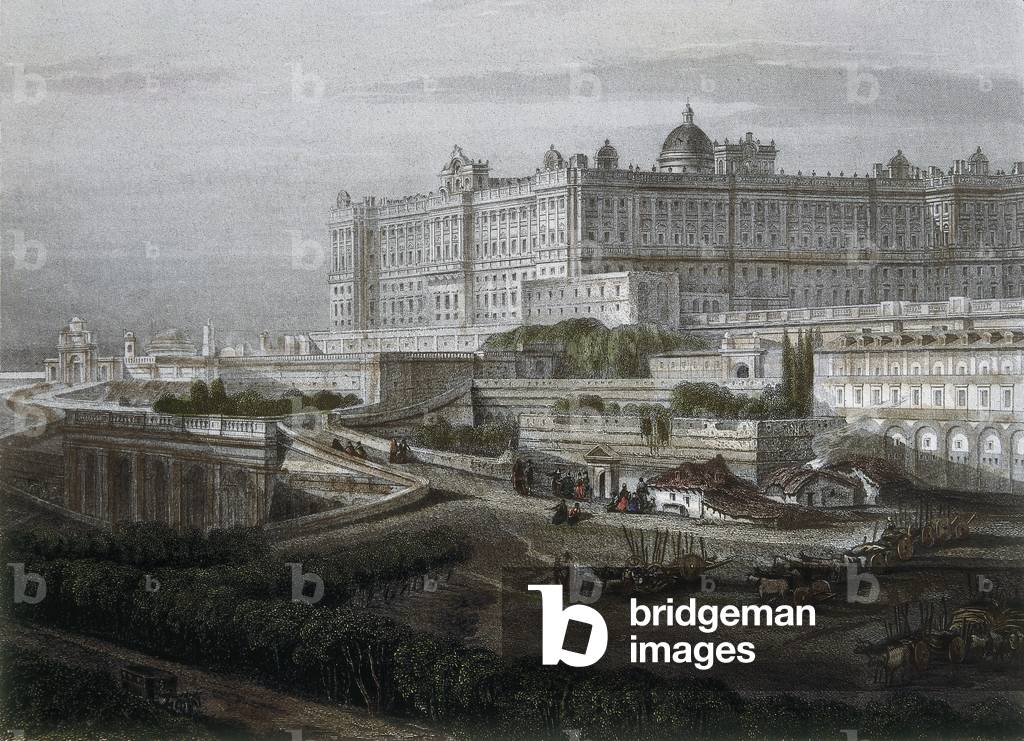
View of Madrid, 19th century (coloured engraving)

IBE5355981: View of Madrid, 19th century (coloured engraving), Unknown Artist, (19th century) / Bridgeman Images

DEERFIELD MASSACRE, 1704, 19th century (engraving)

NWI4838004: DEERFIELD MASSACRE, 1704, 19th century (engraving), Unknown Artist, (19th century) / Bridgeman Images

Capture of the city and citadel of San Sebastian in Spain in September 1813 (litho)

JLJ4575104: Capture of the city and citadel of San Sebastian in Spain in September 1813 (litho), Unknown Artist, (19th century) / Bridgeman Images

Russian Campaign: 'The surrender of the troops of Vandamme to the Battle of Culm, 1813 (oil on canvas)

JLJ4575305: Russian Campaign: 'The surrender of the troops of Vandamme to the Battle of Culm, 1813 (oil on canvas), Unknown Artist, (19th century) / Bridgeman Images

Evangelization: 'Banks missionaries in South America are carried by the Indians' Anonymous 19th century painting, (oil on canvas)

JLJ4575969: Evangelization: 'Banks missionaries in South America are carried by the Indians' Anonymous 19th century painting, (oil on canvas), Unknown Artist, (19th century) / Bridgeman Images

Shaking Quakers religious procession (dance) in New York. Illustration of the 19th century.

GIA4787065: Shaking Quakers religious procession (dance) in New York. Illustration of the 19th century., Unknown Artist, (19th century) / Bridgeman Images

Portrait of Gaetano Fraschini (1816-1887) in the role of Foresto in the opera “Attila”” by Giuseppe Verdi (1813-1901) 19th century

GIA4788094: Portrait of Gaetano Fraschini (1816-1887) in the role of Foresto in the opera “Attila”” by Giuseppe Verdi (1813-1901) 19th century, Unknown Artist, (19th century) / Bridgeman Images


Back to top