
Print Friendly Version Page

2497523 Search Results

The Virgin of the Annunciation Detail Painting by Annibale Carracci (1560-1609) (Annibal Carrache) circa 1587 Dim 150x76 cm Bologna Pinacoteca Nazionale

LRI4603479: The Virgin of the Annunciation Detail Painting by Annibale Carracci (1560-1609) (Annibal Carrache) circa 1587 Dim 150x76 cm Bologna Pinacoteca Nazionale, Carracci, Annibale (1560-1609) / Bridgeman Images

Cistus of Crete - Gum cistus, Cistus creticus. Handcoloured stipple copperplate engraving by Lambert Junior from a drawing by Pierre Jean-Francois Turpin from Chaumeton, Poiret and Chamberet's “” La Flore Medicale,”” Paris, Panckoucke, 1830.

FLO4603605: Cistus of Crete - Gum cistus, Cistus creticus. Handcoloured stipple copperplate engraving by Lambert Junior from a drawing by Pierre Jean-Francois Turpin from Chaumeton, Poiret and Chamberet's “” La Flore Medicale,”” Paris, Panckoucke, 1830., Turpin, Pierre Jean Francois (1775-1840) / Bridgeman Images

Large lobelia or siphilitic lobelia - Blue cardinal's flower, Lobelia syphilitica. Handcoloured stipple copperplate engraving by Lambert Junior from a drawing by Pierre Jean-Francois Turpin from Chaumeton, Poiret and Chamberet's “” La Flore Medicale,”” Paris, Panckoucke, 1830.

FLO4603699: Large lobelia or siphilitic lobelia - Blue cardinal's flower, Lobelia syphilitica. Handcoloured stipple copperplate engraving by Lambert Junior from a drawing by Pierre Jean-Francois Turpin from Chaumeton, Poiret and Chamberet's “” La Flore Medicale,”” Paris, Panckoucke, 1830., Turpin, Pierre Jean Francois (1775-1840) / Bridgeman Images

White or common marrube - Common horehound, Marrubium vulgare. Handcoloured stipple copperplate engraving by Lambert Junior from a drawing by Pierre Jean-Francois Turpin from Chaumeton, Poiret and Chamberet's “” La Flore Medicale,”” Paris, Panckoucke, 1830.

FLO4603722: White or common marrube - Common horehound, Marrubium vulgare. Handcoloured stipple copperplate engraving by Lambert Junior from a drawing by Pierre Jean-Francois Turpin from Chaumeton, Poiret and Chamberet's “” La Flore Medicale,”” Paris, Panckoucke, 1830., Turpin, Pierre Jean Francois (1775-1840) / Bridgeman Images

Black mustard or black seneve - Mustard, Sinapis nigra. Handcoloured stipple copperplate engraving by Lambert Junior from a drawing by Pierre Jean-Francois Turpin from Chaumeton, Poiret and Chamberet's “” La Flore Medicale,”” Paris, Panckoucke, 1830.

FLO4603835: Black mustard or black seneve - Mustard, Sinapis nigra. Handcoloured stipple copperplate engraving by Lambert Junior from a drawing by Pierre Jean-Francois Turpin from Chaumeton, Poiret and Chamberet's “” La Flore Medicale,”” Paris, Panckoucke, 1830., Turpin, Pierre Jean Francois (1775-1840) / Bridgeman Images
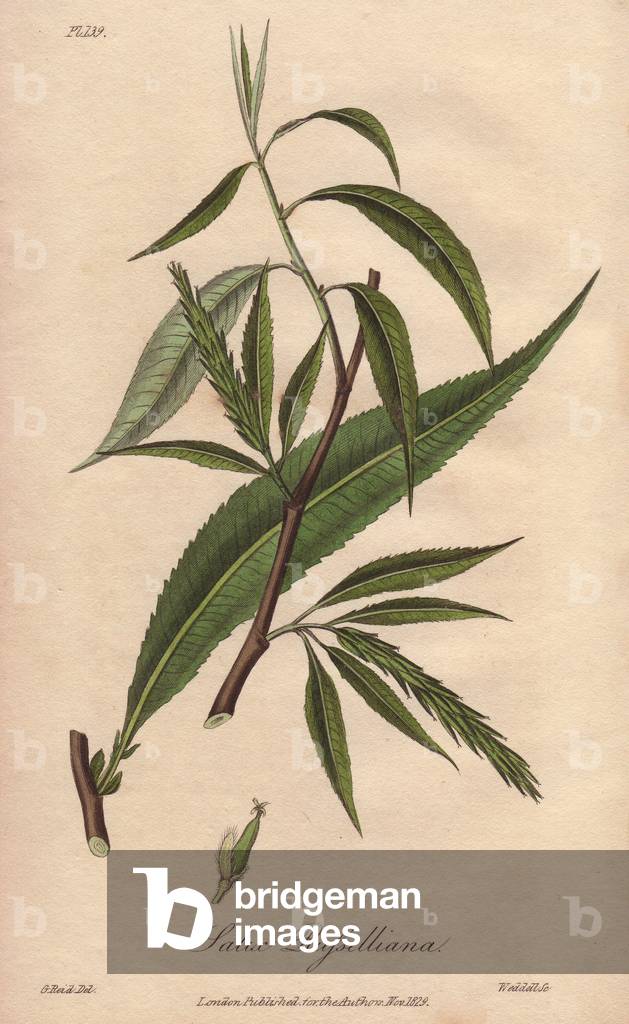
Fragile Willow (Salix fragilis) - Strong Water by William Clarke to illustrate “Medical Botanical, Description of the Medicinal Plants of London, Edinburgh and Dublin” by John Stephenson and James Morss Churchill, published in London by John Churchill in 1831

FLO4605595: Fragile Willow (Salix fragilis) - Strong Water by William Clarke to illustrate “Medical Botanical, Description of the Medicinal Plants of London, Edinburgh and Dublin” by John Stephenson and James Morss Churchill, published in London by John Churchill in 1831 / Bridgeman Images

Juniper or common juniper, sometimes called the peteron or petrot (Juniperus communis) - Strong water by William Clarke to illustrate “” Medical Botanical, Description of the Medicinal Plants of London, Edinburgh and Dublin” by John Stephenson and James Morss Churchill, published in London by John Churchill in 1831

FLO4605620: Juniper or common juniper, sometimes called the peteron or petrot (Juniperus communis) - Strong water by William Clarke to illustrate “” Medical Botanical, Description of the Medicinal Plants of London, Edinburgh and Dublin” by John Stephenson and James Morss Churchill, published in London by John Churchill in 1831 / Bridgeman Images

The Resurrection of Lazarus, 1461 (tempera on panel)

LRI4605665: The Resurrection of Lazarus, 1461 (tempera on panel), Froment, Nicolas (c.1425-c.83/86) / Bridgeman Images

Plastic intervention, exhibition of the monumental sculpture Clara Clara by Richard Serra in the Tuileries Garden in Paris. Photography 10/09/08.

TEC4605825: Plastic intervention, exhibition of the monumental sculpture Clara Clara by Richard Serra in the Tuileries Garden in Paris. Photography 10/09/08., Serra, Richard (b.1939) / Bridgeman Images
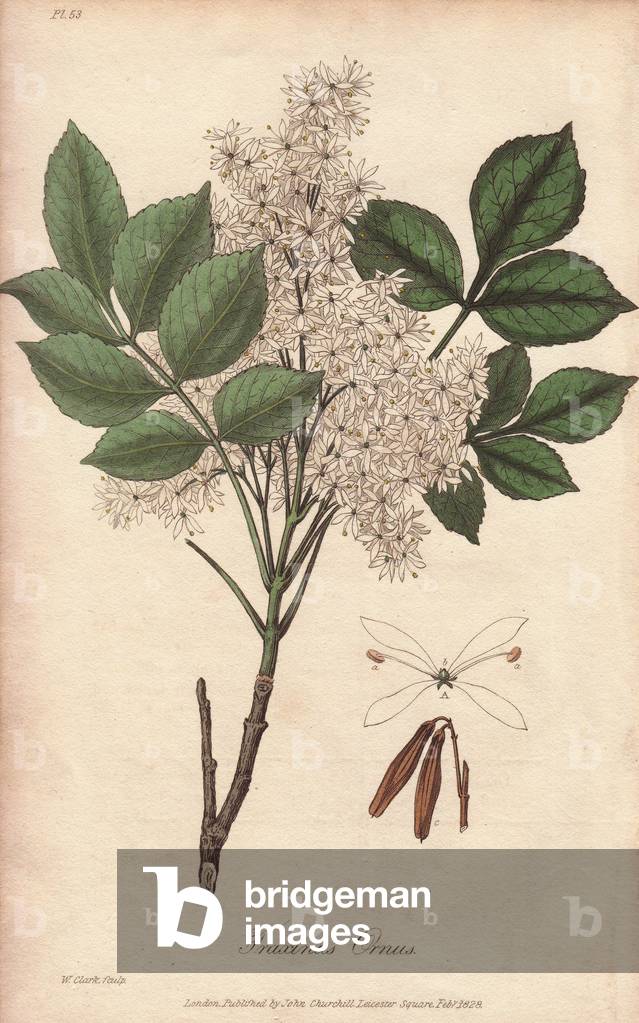
Fraxinus ornus (Fraxinus ornus) - Water by William Clarke to illustrate “Medical Botanical, Description of the Medicinal Plants of London, Edinburgh and Dublin” by John Stephenson and James Morss Churchill, published in London by John Churchill in 1831

FLO4605962: Fraxinus ornus (Fraxinus ornus) - Water by William Clarke to illustrate “Medical Botanical, Description of the Medicinal Plants of London, Edinburgh and Dublin” by John Stephenson and James Morss Churchill, published in London by John Churchill in 1831 / Bridgeman Images

View of Paris (oil on canvas, 1917)

LRI4603870: View of Paris (oil on canvas, 1917), Charchoune, Serge (1888-1975) / Bridgeman Images
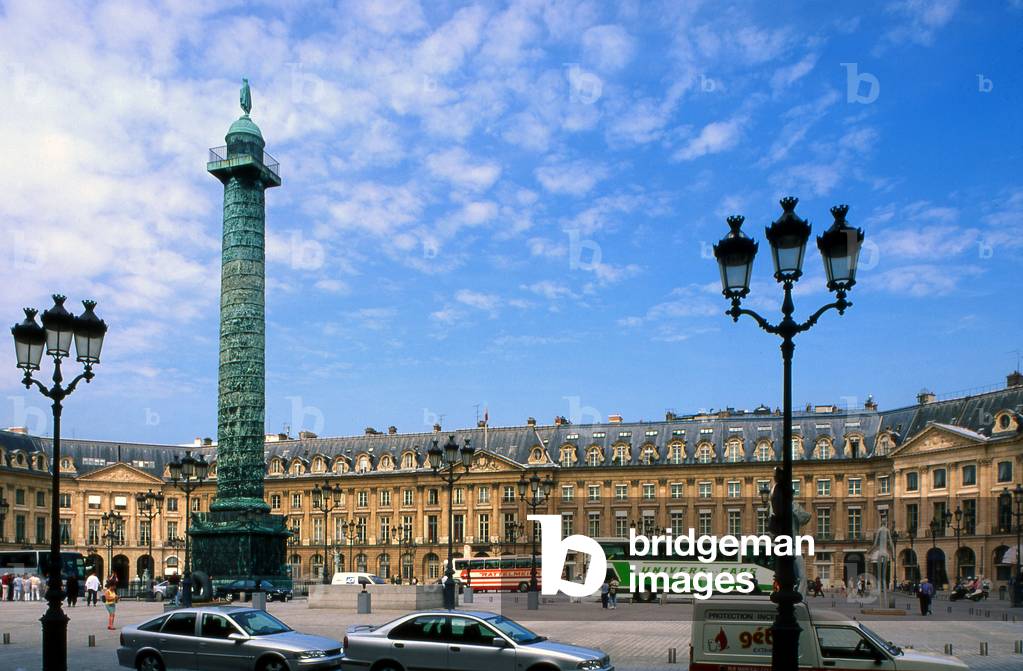
Place Vendome in Paris. The one we know today dates back to 1699 and was designed by Jules Hardouin Mansart. And it was only with the piercing of the Rue de la Paix that the Vendome Column was built in 1806 by Napoleon to the glory of the winners of Austerlitz. An admirer of Roman Antiquity, the Emperor took as model the Trajane column raised in Rome and erige his statue of Napoleon imperator by Chaudet. After the regime changes, Napoleon III installed a copy of the Emperor's statue by Dumont.

TEC4604341: Place Vendome in Paris. The one we know today dates back to 1699 and was designed by Jules Hardouin Mansart. And it was only with the piercing of the Rue de la Paix that the Vendome Column was built in 1806 by Napoleon to the glory of the winners of Austerlitz. An admirer of Roman Antiquity, the Emperor took as model the Trajane column raised in Rome and erige his statue of Napoleon imperator by Chaudet. After the regime changes, Napoleon III installed a copy of the Emperor's statue by Dumont. / Bridgeman Images
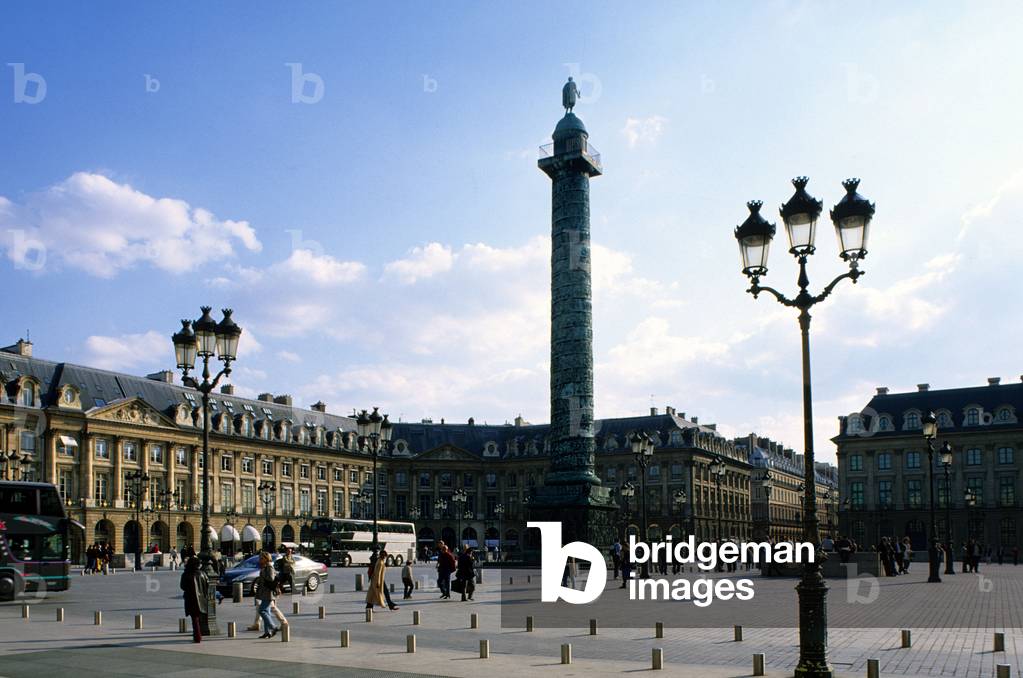
Place Vendome in Paris. The one we know today dates back to 1699 and was designed by Jules Hardouin Mansart. And it was only with the piercing of the Rue de la Paix that the Vendome Column was built in 1806 by Napoleon to the glory of the winners of Austerlitz. An admirer of Roman Antiquity, the Emperor took as model the Trajane column raised in Rome and erige his statue of Napoleon imperator by Chaudet. After the regime changes, Napoleon III installed a copy of the Emperor's statue by Dumont.

TEC4604345: Place Vendome in Paris. The one we know today dates back to 1699 and was designed by Jules Hardouin Mansart. And it was only with the piercing of the Rue de la Paix that the Vendome Column was built in 1806 by Napoleon to the glory of the winners of Austerlitz. An admirer of Roman Antiquity, the Emperor took as model the Trajane column raised in Rome and erige his statue of Napoleon imperator by Chaudet. After the regime changes, Napoleon III installed a copy of the Emperor's statue by Dumont. / Bridgeman Images

Anserine - Engraving by Pierre Jean Francois Turpin (1775-1840), from La flore medicale, by Chaumeton, Poiret et Chamberet, Paris 1830 - Shrubby goosefoot or American wormseed, Dysphania anthelmintica - Engraving by Lambert Junior from a drawing by P - J - F - Turpin from Chaumeton, Poiret et et Chamberet's “La Flore Medicale,” Paris, Panckoucke, 1830 -

FLO4604394: Anserine - Engraving by Pierre Jean Francois Turpin (1775-1840), from La flore medicale, by Chaumeton, Poiret et Chamberet, Paris 1830 - Shrubby goosefoot or American wormseed, Dysphania anthelmintica - Engraving by Lambert Junior from a drawing by P - J - F - Turpin from Chaumeton, Poiret et et Chamberet's “La Flore Medicale,” Paris, Panckoucke, 1830 - / Bridgeman Images

Sea squill, Drimia maritima, with bulb, leaf, stalk and flower. Handcoloured stipple copperplate engraving by Lambert Junior from a drawing by Pierre Jean-Francois Turpin from Chaumeton, Poiret and Chamberet's “” La Flore Medicale,”” Paris, Panckoucke, 1830.

FLO4604440: Sea squill, Drimia maritima, with bulb, leaf, stalk and flower. Handcoloured stipple copperplate engraving by Lambert Junior from a drawing by Pierre Jean-Francois Turpin from Chaumeton, Poiret and Chamberet's “” La Flore Medicale,”” Paris, Panckoucke, 1830., Turpin, Pierre Jean Francois (1775-1840) / Bridgeman Images

The solar system, showing the sun, Mercury, Venus, the earth, Mars, Juno, Pallas, Ceres, Jupiter, Saturn, the Georgian planet (Uranus) and Vesta (asteroid). Copperplate engraving by Wilson Lowry from Abraham Rees' Cyclopedia or Universal Dictionary of Arts, Sciences and Literature, Longman, Hurst, Rees, Orme and Brown, London, 1820.

FLO4594288: The solar system, showing the sun, Mercury, Venus, the earth, Mars, Juno, Pallas, Ceres, Jupiter, Saturn, the Georgian planet (Uranus) and Vesta (asteroid). Copperplate engraving by Wilson Lowry from Abraham Rees' Cyclopedia or Universal Dictionary of Arts, Sciences and Literature, Longman, Hurst, Rees, Orme and Brown, London, 1820. / Bridgeman Images
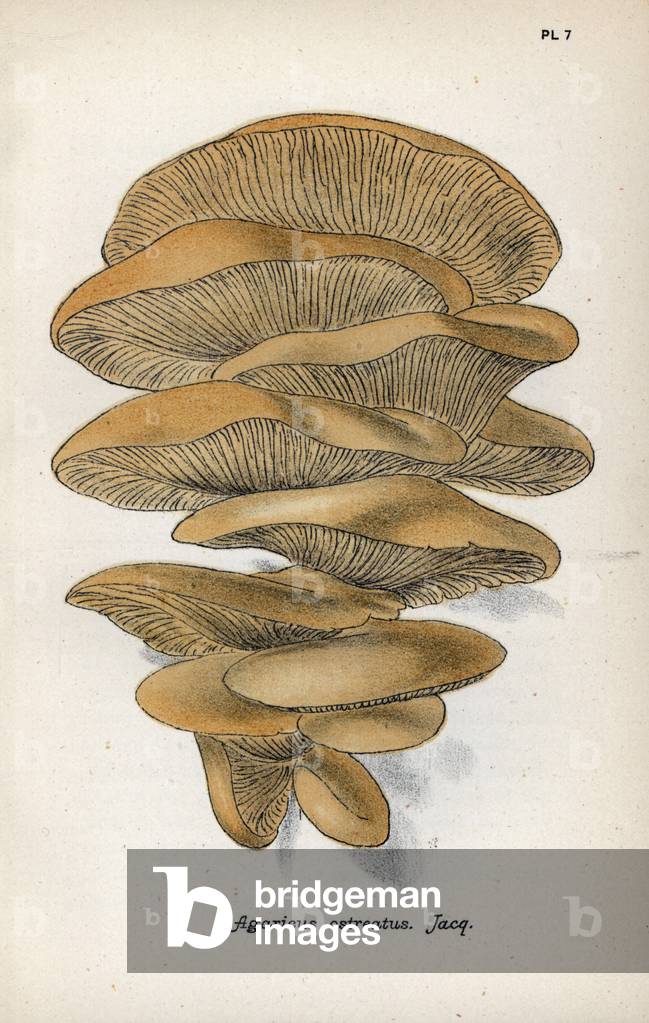
Oyster oyster oyster oyster, Agaricus ostreatus - Chromolithography based on a drawing by Mordecai Cubitt Cooke (1825-1914), published in “A Plain and Easy Account of British Fungi””, edition Robert Hardwicke, London, 1862

FLO4594392: Oyster oyster oyster oyster, Agaricus ostreatus - Chromolithography based on a drawing by Mordecai Cubitt Cooke (1825-1914), published in “A Plain and Easy Account of British Fungi””, edition Robert Hardwicke, London, 1862 / Bridgeman Images

Two angels, detail of the Reliquary of St. Zenobe. (Bronze relief,1432-1442)

LRI4594498: Two angels, detail of the Reliquary of St. Zenobe. (Bronze relief,1432-1442), Ghiberti, Lorenzo (1378-1455) / Bridgeman Images

Coulemelle ou lepiote elevee, Agaricus procerus (or Macrolepia procera) - Chromolithography based on a drawing by Mordecai Cubitt Cooke (1825-1914), published in “A Plain and Easy Account of British Fungi””, edition Robert Hardwicke, London, 1862

FLO4594366: Coulemelle ou lepiote elevee, Agaricus procerus (or Macrolepia procera) - Chromolithography based on a drawing by Mordecai Cubitt Cooke (1825-1914), published in “A Plain and Easy Account of British Fungi””, edition Robert Hardwicke, London, 1862 / Bridgeman Images
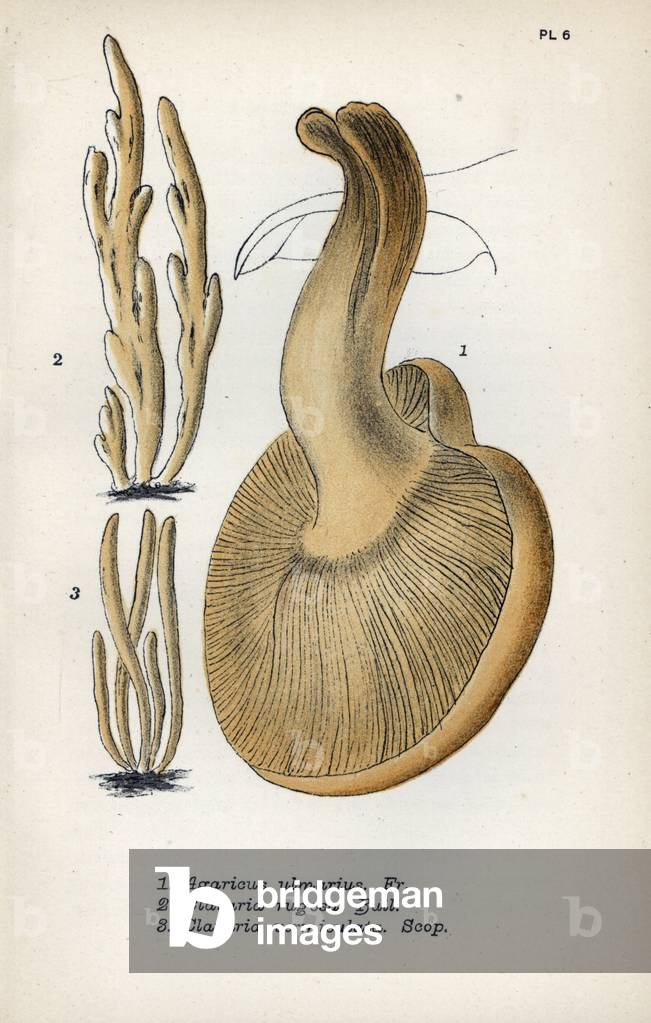
Elm oyster (Agaricus ulmarius, 1), rough clavary (Clavaria rugosa, 2), vermiculee clavary (Clavaria vermiculata, 3) - Chromolithography based on a drawing by Mordecai Cubitt Cooke (1825-1914), published in “A Plain and Easy Account of British Fungi”), edition Robert Hardwicke, London, 1862

FLO4594381: Elm oyster (Agaricus ulmarius, 1), rough clavary (Clavaria rugosa, 2), vermiculee clavary (Clavaria vermiculata, 3) - Chromolithography based on a drawing by Mordecai Cubitt Cooke (1825-1914), published in “A Plain and Easy Account of British Fungi”), edition Robert Hardwicke, London, 1862 / Bridgeman Images
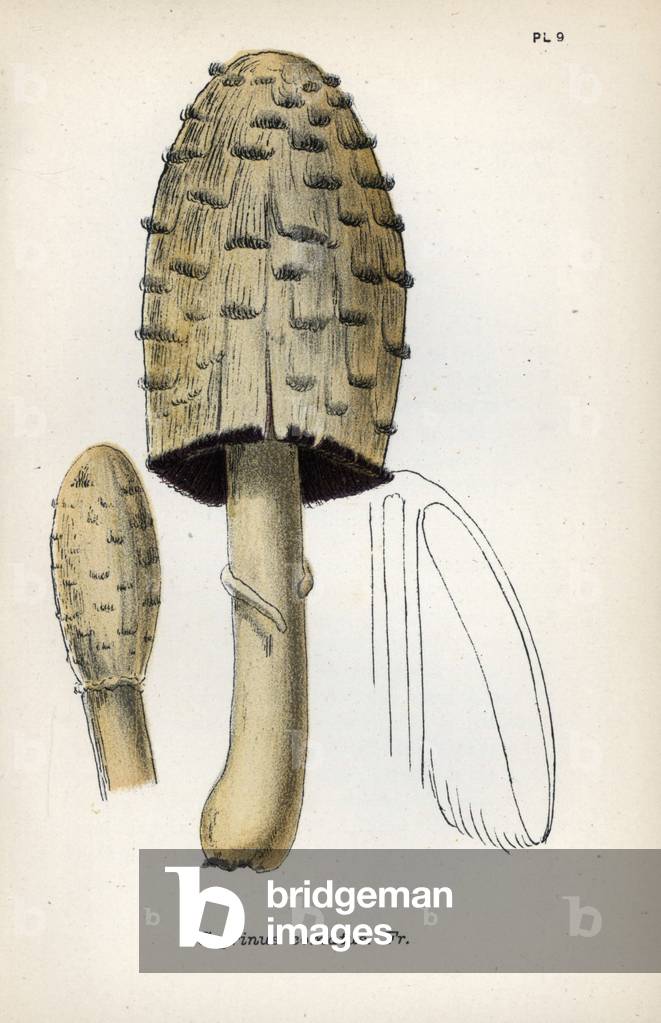
Chromolithography based on a drawing by Mordecai Cubitt Cooke (1825-1914), published in “A Plain and Easy Account of British Fungi”, edition Robert Hardwicke, London, 1862

FLO4594404: Chromolithography based on a drawing by Mordecai Cubitt Cooke (1825-1914), published in “A Plain and Easy Account of British Fungi”, edition Robert Hardwicke, London, 1862 / Bridgeman Images
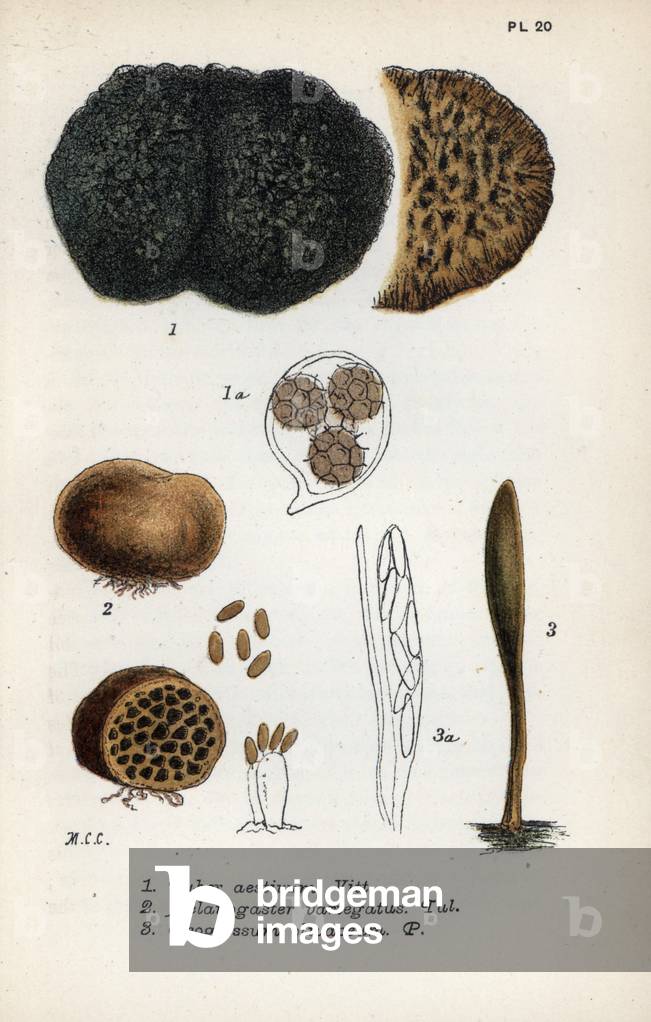
Summer truffle or St. John's truffle (Tuber aestivum 1), roge truffle (Melanogaster variegatus 2), geoglosse or tongue (Geoglossum olivaceum 3) -Chromolithography after drawing by Mordecai Cubitt Cooke (1825-1914), published in “A Plain and Easy Account of British Fungi” (English mushrooms), edition Robert Hardwicke, London, 1862

FLO4594463: Summer truffle or St. John's truffle (Tuber aestivum 1), roge truffle (Melanogaster variegatus 2), geoglosse or tongue (Geoglossum olivaceum 3) -Chromolithography after drawing by Mordecai Cubitt Cooke (1825-1914), published in “A Plain and Easy Account of British Fungi” (English mushrooms), edition Robert Hardwicke, London, 1862 / Bridgeman Images

Dress (Robe) of the reign of King William II, Rufus, 1087-1100. She wears a fur trimmed cloak over a full dress, and her hair long tied in ribbons. Illuminated manuscripts, Cotton MS Nero C.4 and psalter of the 12th century. Handcoloured lithograph from “” Costumes of British Ladies from the Time of William the First to the Reign of Queen Victoria”, London, Dickinson and Son, 1840.

FLO4594497: Dress (Robe) of the reign of King William II, Rufus, 1087-1100. She wears a fur trimmed cloak over a full dress, and her hair long tied in ribbons. Illuminated manuscripts, Cotton MS Nero C.4 and psalter of the 12th century. Handcoloured lithograph from “” Costumes of British Ladies from the Time of William the First to the Reign of Queen Victoria”, London, Dickinson and Son, 1840. / Bridgeman Images

Winter. Sculpture, 16th century

LRI4594549: Winter. Sculpture, 16th century, Giambologna (Giovanni da Bologna), (1529-1608) / Bridgeman Images

Dress (Robe) of the early part of the reign of Queen Mary, 1553-1558. She weasrs a lace headdress and collar, a bodice with puff shoulders and short sleeves decorated with jewels. Based on descriptions by Pedro de Gante, Stow, Hall, Strutt, and portraits. Handcoloured lithograph from “” Costumes of British Ladies from the Time of William the First to the Reign of Queen Victoria”, London, Dickinson and Son, 1840.

FLO4594665: Dress (Robe) of the early part of the reign of Queen Mary, 1553-1558. She weasrs a lace headdress and collar, a bodice with puff shoulders and short sleeves decorated with jewels. Based on descriptions by Pedro de Gante, Stow, Hall, Strutt, and portraits. Handcoloured lithograph from “” Costumes of British Ladies from the Time of William the First to the Reign of Queen Victoria”, London, Dickinson and Son, 1840. / Bridgeman Images

Dress (Dress) of the reign of King John, 1199-1216. She wears a green mantle fastened at the throat over a grey-blue dress, white embroidered veil with diadem and wimple. Based on an order by the king for a pelisson to be made for the queen, Du Cange, Matthew Paris, Sir Walter Scott's descriptions. Handcoloured lithograph from “” Costumes of British Ladies from the Time of William the First to the Reign of Queen Victoria”, London, Dickinson and Son, 1840.

FLO4594534: Dress (Dress) of the reign of King John, 1199-1216. She wears a green mantle fastened at the throat over a grey-blue dress, white embroidered veil with diadem and wimple. Based on an order by the king for a pelisson to be made for the queen, Du Cange, Matthew Paris, Sir Walter Scott's descriptions. Handcoloured lithograph from “” Costumes of British Ladies from the Time of William the First to the Reign of Queen Victoria”, London, Dickinson and Son, 1840. / Bridgeman Images

Dress (Dress) of the reign of King George III, 1760-1820. She wears a tropical bird in her powdered hair, a crucifix around her neck, silk embroidered dress and petticoats, white gloves and fan. Based on a miniature by Christian Friedrich Zincke of Mrs. Elizabeth Montagu, print of the Duchess of Devonshire by Bartolozzi, and “” The Maiden Aunt””” 1776. Handcoloured lithograph from “” Costumes of British Ladies from the Time of William the First to the Reign of Queen Victoria”, London, Dickinson and Son, 1840.

FLO4594776: Dress (Dress) of the reign of King George III, 1760-1820. She wears a tropical bird in her powdered hair, a crucifix around her neck, silk embroidered dress and petticoats, white gloves and fan. Based on a miniature by Christian Friedrich Zincke of Mrs. Elizabeth Montagu, print of the Duchess of Devonshire by Bartolozzi, and “” The Maiden Aunt””” 1776. Handcoloured lithograph from “” Costumes of British Ladies from the Time of William the First to the Reign of Queen Victoria”, London, Dickinson and Son, 1840. / Bridgeman Images

Dress (Robe) of the reign of King Richard III, 1483-1485. Blue and gold embroidered dress with white puff sleeves, jeweled necklace and belt, headdress with upright veil. Based on illuminated Royal manuscript 16F2, Harleian manuscript 4425, “” Roman de la Rose,””” Strutt's Habits. Handcoloured lithograph from “” Costumes of British Ladies from the Time of William the First to the Reign of Queen Victoria”, London, Dickinson and Son, 1840.

FLO4594621: Dress (Robe) of the reign of King Richard III, 1483-1485. Blue and gold embroidered dress with white puff sleeves, jeweled necklace and belt, headdress with upright veil. Based on illuminated Royal manuscript 16F2, Harleian manuscript 4425, “” Roman de la Rose,””” Strutt's Habits. Handcoloured lithograph from “” Costumes of British Ladies from the Time of William the First to the Reign of Queen Victoria”, London, Dickinson and Son, 1840. / Bridgeman Images

Dress (Dress) of the reign of James I and Charles I, 1603-1649. She wears a black hat, tall lace collar, necklace, black mantle over a green puff-sleeved dress with lace cuffs, and carries a peacock feather fan. Portrait of James I's daughter, Elizabeth, Queen of Bohemia, Speed's Map of England, Vansomer's portrait of the time. Handcoloured lithograph from “” Costumes of British Ladies from the Time of William the First to the Reign of Queen Victoria”, London, Dickinson and Son, 1840.

FLO4594690: Dress (Dress) of the reign of James I and Charles I, 1603-1649. She wears a black hat, tall lace collar, necklace, black mantle over a green puff-sleeved dress with lace cuffs, and carries a peacock feather fan. Portrait of James I's daughter, Elizabeth, Queen of Bohemia, Speed's Map of England, Vansomer's portrait of the time. Handcoloured lithograph from “” Costumes of British Ladies from the Time of William the First to the Reign of Queen Victoria”, London, Dickinson and Son, 1840. / Bridgeman Images
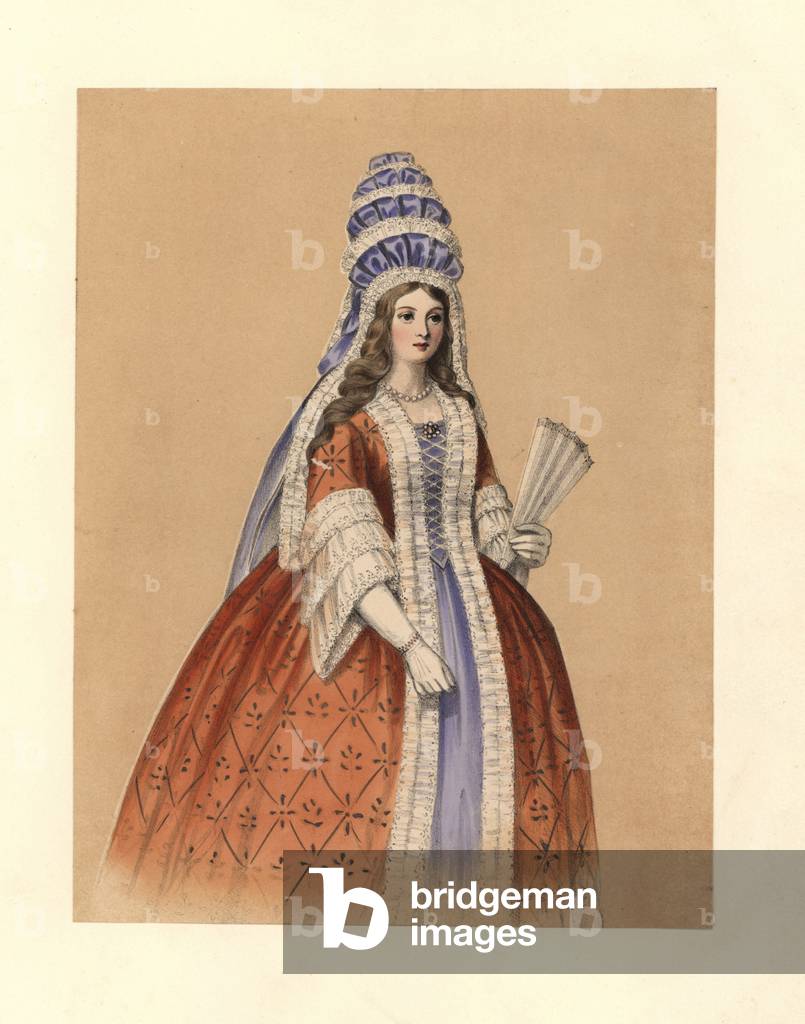
Dress (Dress) of the reign of Queen Anne, 1702-1714. She wears a tall hat of ribbon and lace, a dress trimmed with lace, white gloves, and carries a lace fan. Addison's Spectator, prints and portraits, Horace Walpole. Handcoloured lithograph from “” Costumes of British Ladies from the Time of William the First to the Reign of Queen Victoria”, London, Dickinson and Son, 1840.

FLO4594718: Dress (Dress) of the reign of Queen Anne, 1702-1714. She wears a tall hat of ribbon and lace, a dress trimmed with lace, white gloves, and carries a lace fan. Addison's Spectator, prints and portraits, Horace Walpole. Handcoloured lithograph from “” Costumes of British Ladies from the Time of William the First to the Reign of Queen Victoria”, London, Dickinson and Son, 1840. / Bridgeman Images

Dress (Robe) of the reign of George II, 1727-1760. She wears a headdress in the shape of a carriage, beauty spots, necklaces and chokers, a dress with fitted bodice, short sleeves and long lace cuffs, a lace apron, and a watch hanging from her belt. Based on Hogarth, Gray's Inn Journal, Thomas Jefferys Collection of Dresses, and “” The Connoisseur.” Handcoloured lithograph from “” Costumes of British Ladies from the Time of William the First to the Reign of Queen Victoria”, London, Dickinson and Son, 1840.

FLO4594747: Dress (Robe) of the reign of George II, 1727-1760. She wears a headdress in the shape of a carriage, beauty spots, necklaces and chokers, a dress with fitted bodice, short sleeves and long lace cuffs, a lace apron, and a watch hanging from her belt. Based on Hogarth, Gray's Inn Journal, Thomas Jefferys Collection of Dresses, and “” The Connoisseur.” Handcoloured lithograph from “” Costumes of British Ladies from the Time of William the First to the Reign of Queen Victoria”, London, Dickinson and Son, 1840. / Bridgeman Images

Miss Frances Copeland as Fanny in “Maid or Wife” the Theatre Royal Drury Lane. Handcoloured stipple copperplate engraving by Robert Cooper after a painting by Frederic de Waldeck. From D. Terry's “” British Theatrical Gallery,” London, Henry Berthoud Jr., 1825.

FLO4594958: Miss Frances Copeland as Fanny in “Maid or Wife” the Theatre Royal Drury Lane. Handcoloured stipple copperplate engraving by Robert Cooper after a painting by Frederic de Waldeck. From D. Terry's “” British Theatrical Gallery,” London, Henry Berthoud Jr., 1825. / Bridgeman Images
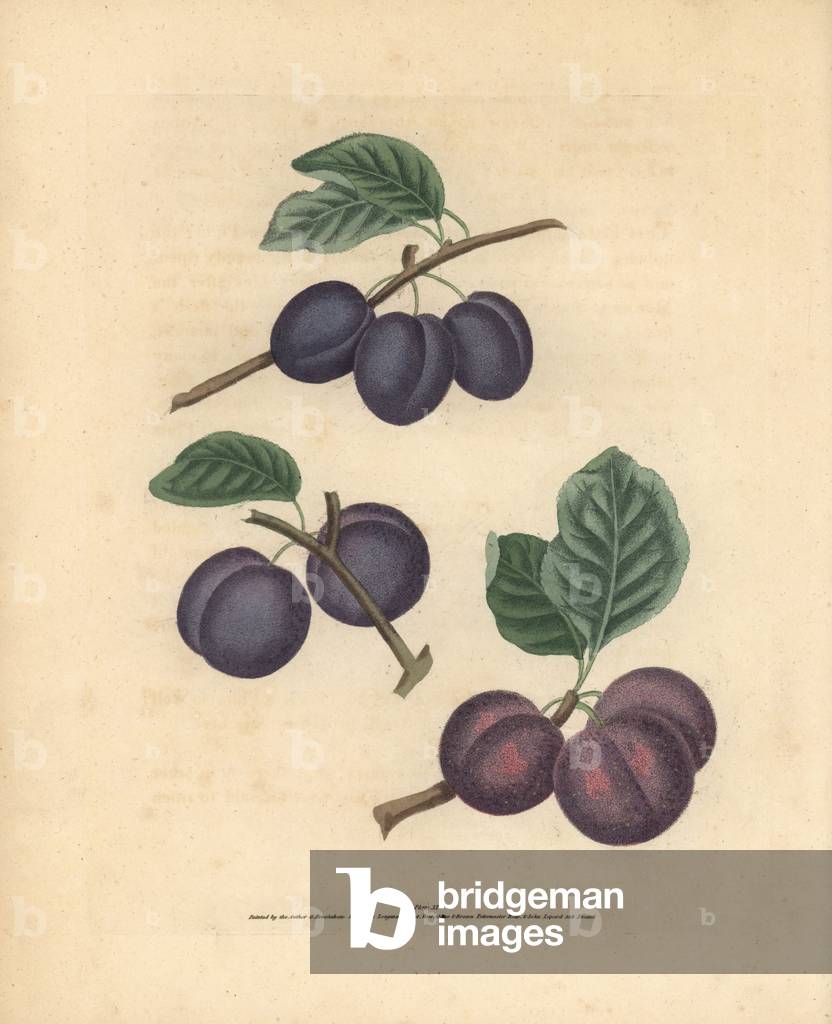
Plum varieties, Prunus domestica: Tours, Lawrane's Early Plum and Orleans. Handcoloured stipple engraving of an illustration by George Brookshaw from his own “” Pomona Britannica,”” London, Longman, Hurst, etc., 1817. The quarto edition of the original folio edition published from 1804-1812. Brookshaw (1751-1823) was a successful cabinet maker who disappeared in the 1790s before returning as a flower painter with the anonymous “” New Treatise on Flower Painting,””” 1797. Â

FLO4594995: Plum varieties, Prunus domestica: Tours, Lawrane's Early Plum and Orleans. Handcoloured stipple engraving of an illustration by George Brookshaw from his own “” Pomona Britannica,”” London, Longman, Hurst, etc., 1817. The quarto edition of the original folio edition published from 1804-1812. Brookshaw (1751-1823) was a successful cabinet maker who disappeared in the 1790s before returning as a flower painter with the anonymous “” New Treatise on Flower Painting,””” 1797. Â / Bridgeman Images
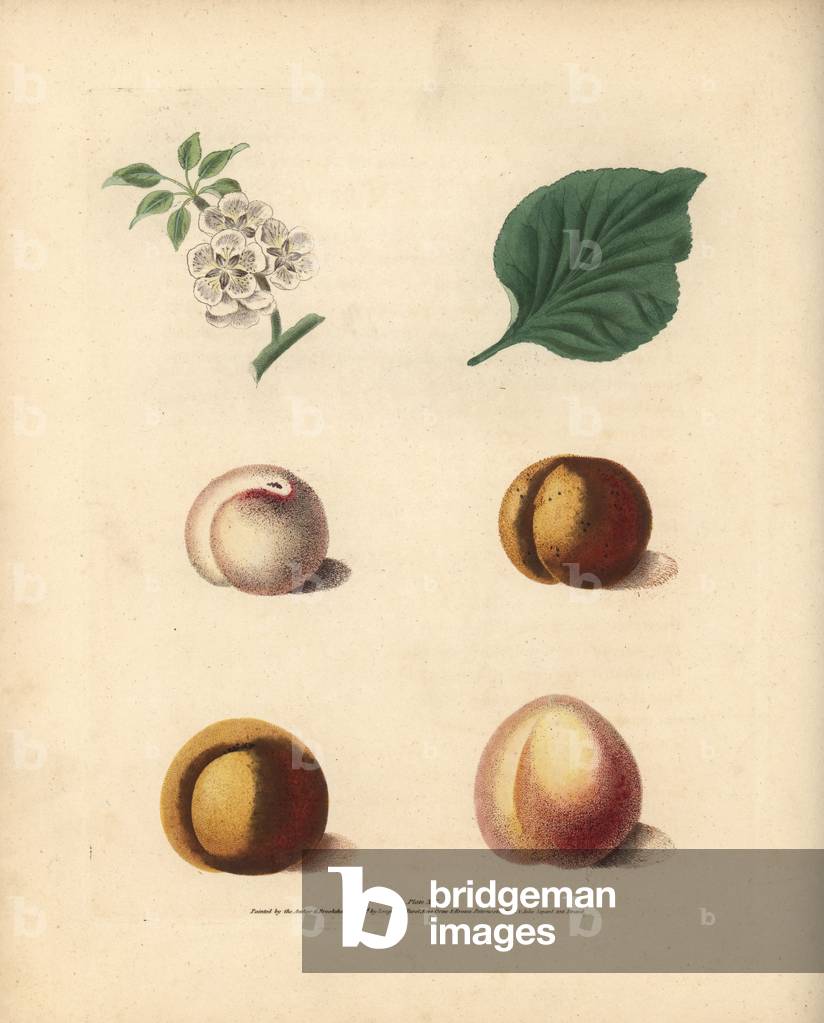
Apricot varieties, Prunus armeniaca: blossom, leaf, White Masculine, Red Masculine, Orange Apricot and Turkey Apricot. Handcoloured stipple engraving of an illustration by George Brookshaw from his own “” Pomona Britannica,”” London, Longman, Hurst, etc., 1817. The quarto edition of the original folio edition published from 1804-1812. Brookshaw (1751-1823) was a successful cabinet maker who disappeared in the 1790s before returning as a flower painter with the anonymous “” New Treatise on Flower Painting,””” 1797.

FLO4595036: Apricot varieties, Prunus armeniaca: blossom, leaf, White Masculine, Red Masculine, Orange Apricot and Turkey Apricot. Handcoloured stipple engraving of an illustration by George Brookshaw from his own “” Pomona Britannica,”” London, Longman, Hurst, etc., 1817. The quarto edition of the original folio edition published from 1804-1812. Brookshaw (1751-1823) was a successful cabinet maker who disappeared in the 1790s before returning as a flower painter with the anonymous “” New Treatise on Flower Painting,””” 1797. / Bridgeman Images

Green flesh or Candia melon, Cucumis melo. Handcoloured stipple engraving of an illustration by George Brookshaw from his own “” Pomona Britannica,”” London, Longman, Hurst, etc., 1817. The quarto edition of the original folio edition published from 1804-1812. Brookshaw (1751-1823) was a successful cabinet maker who disappeared in the 1790s before returning as a flower painter with the anonymous “” New Treatise on Flower Painting,””” 1797.

FLO4595223: Green flesh or Candia melon, Cucumis melo. Handcoloured stipple engraving of an illustration by George Brookshaw from his own “” Pomona Britannica,”” London, Longman, Hurst, etc., 1817. The quarto edition of the original folio edition published from 1804-1812. Brookshaw (1751-1823) was a successful cabinet maker who disappeared in the 1790s before returning as a flower painter with the anonymous “” New Treatise on Flower Painting,””” 1797. / Bridgeman Images

Pear varieties, Pyrus communis: Cressan, Gansell's Bergamot and Summer Bon Chretien. Handcoloured stipple engraving of an illustration by George Brookshaw from his own “” Pomona Britannica,”” London, Longman, Hurst, etc., 1817. The quarto edition of the original folio edition published from 1804-1812. Brookshaw (1751-1823) was a successful cabinet maker who disappeared in the 1790s before returning as a flower painter with the anonymous “” New Treatise on Flower Painting,””” 1797.

FLO4595286: Pear varieties, Pyrus communis: Cressan, Gansell's Bergamot and Summer Bon Chretien. Handcoloured stipple engraving of an illustration by George Brookshaw from his own “” Pomona Britannica,”” London, Longman, Hurst, etc., 1817. The quarto edition of the original folio edition published from 1804-1812. Brookshaw (1751-1823) was a successful cabinet maker who disappeared in the 1790s before returning as a flower painter with the anonymous “” New Treatise on Flower Painting,””” 1797. / Bridgeman Images


Back to top