Unknown Artist, (19th century) Assets (17900 in total)
Results

XEE4136408: Members of the Academy Francaise in 1895: portrait of Octave Greard (1828-1904), senior official and literary historian, French literary critic., Unknown Artist, (19th century) / Bridgeman Images
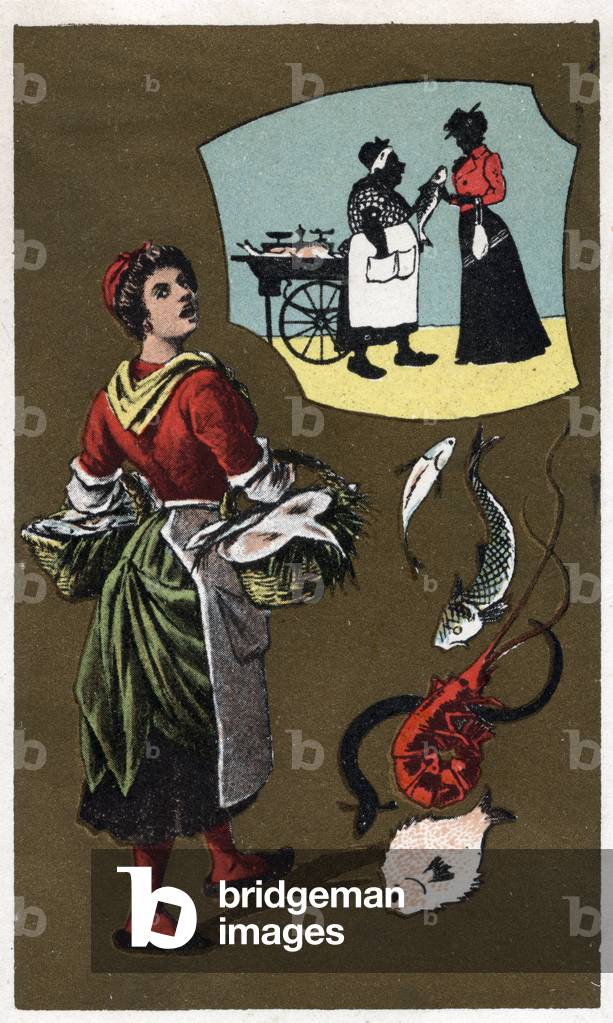
XEE4136435: Anonymous chromolithography, late 19th century., Unknown Artist, (19th century) / Bridgeman Images
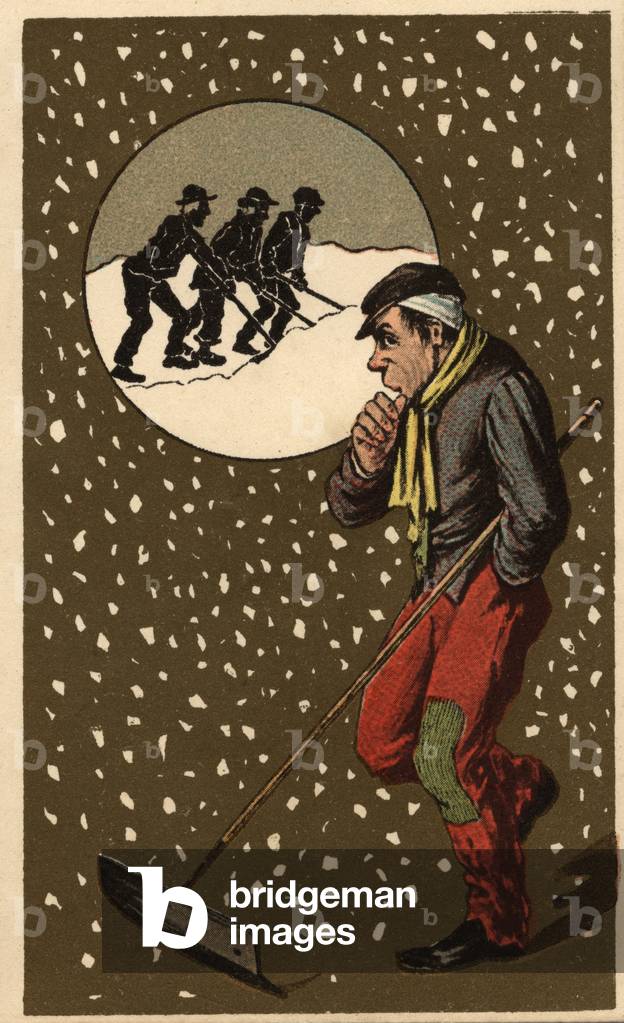
XEE4136442: A snow collector with his shovel. Anonymous chromolithography, late 19th century., Unknown Artist, (19th century) / Bridgeman Images
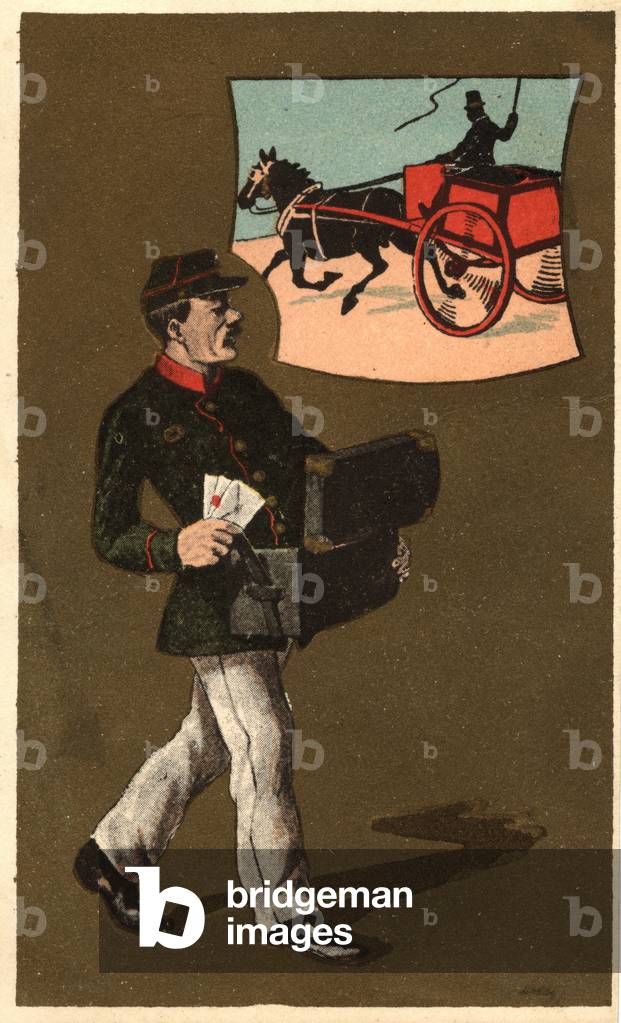
XEE4136449: Anonymous chromolithography, late 19th century., Unknown Artist, (19th century) / Bridgeman Images

XEE4136702: Portraits of scientists Georges Cuvier (1764-1832), Alessandro (Alexandre) Volta (1745-1827), Alexander Von Humboldt (Alexandre de Humboldt, 1769-1859), Sir William Herschel (1738-1822) and Robert Fulton (1765-1815). Engraving from 1856 in “” Le Musee Des Sciences””, Unknown Artist, (19th century) / Bridgeman Images

LSE4335394: Montagnards (1848). Eau forte en couleurs, pour illustration “” Histoire du corps des gardiens de la paix””” book published under the auspices of Louis Lepine (1846-1933) prefet de police de la Seine, by Alfred Rey (1864-?) and Louis Feron (1862-?) , edition Firmin Didot et Cie, 1896, Paris., Unknown Artist, (19th century) / Bridgeman Images

LSE4335423: Officer of the Peace, Great Second Empire (1852-1870). Eau forte en couleurs, pour illustration “” Histoire du corps des gardiens de la paix””” book published under the auspices of Louis Lepine (1846-1933) prefet de police de la Seine, by Alfred Rey (1864-?) and Louis Feron (1862-?) , edition Firmin Didot et Cie, 1896, Paris., Unknown Artist, (19th century) / Bridgeman Images

XEE4137493: Dreyfus case: The duel between Lieutenant-Colonel Georges Picquart (1854-1914) and Hubert Henry (1846-1898), Unknown Artist, (19th century) / Bridgeman Images

XEE4137873: Illustration for the Royaumont Bible, 1811 (engraving), Unknown Artist, (19th century) / Bridgeman Images

XEE4137923: Illustration for the Royaumont Bible, 1811 (engraving), Unknown Artist, (19th century) / Bridgeman Images

XEE4137987: Illustration for the Royaumont Bible, 1811 (engraving), Unknown Artist, (19th century) / Bridgeman Images

XEE4138058: Illustration for the Royaumont Bible, 1811 (engraving), Unknown Artist, (19th century) / Bridgeman Images

XEE4138076: Illustration for the Royaumont Bible, 1811 (engraving), Unknown Artist, (19th century) / Bridgeman Images

XEE4138091: Illustration for the Royaumont Bible, 1811 (engraving), Unknown Artist, (19th century) / Bridgeman Images

XEE4138218: Illustration for the Royaumont Bible, 1811 (engraving), Unknown Artist, (19th century) / Bridgeman Images

XEE4138371: Illustration for the Royaumont Bible, 1811 (engraving), Unknown Artist, (19th century) / Bridgeman Images

XEE4138479: Illustration for the Royaumont Bible, 1811 (engraving), Unknown Artist, (19th century) / Bridgeman Images

XEE4138504: Illustration for the Royaumont Bible, 1811 (engraving), Unknown Artist, (19th century) / Bridgeman Images

XEE4138574: Illustration for the Royaumont Bible, 1811 (engraving), Unknown Artist, (19th century) / Bridgeman Images

XEE4138766: History of France: War of the Succession of Mantua (1628-1631) during the Thirty-Year War. The battle of the Pas de Suze (Susa) representing King Louis XIII (1601-1643) and Cardinal Richelieu (Armand Jean du Plessis, 1585-1642) during the invasion of the Duche of Savoy in 1629. In General History of Coins. Chocolate-foal chromolithography of the end of the 19th century. Private collection., Unknown Artist, (19th century) / Bridgeman Images

LSE4401837: Part of whist, 1858-1860, Saint Petersburg. From left to right: Countess Komaroffsky, General Philosofov, Countess Rozumowsky, Prince Galitzin - Reproduction of a photograph by Klepawewsky, Unknown Artist, (19th century) / Bridgeman Images

LSE4401872: Irielle: American sail sleigh - lithography in “” Le Centaure””, Bibl. de la ville de Paris, 1869., Unknown Artist, (19th century) / Bridgeman Images

LSE4401919: Jeux du Nord: skiers down a track - engraving, late 19th century., Unknown Artist, (19th century) / Bridgeman Images

LSE4402025: Theatre: the Dramatic Gymnasium of Boulevard Bonne Nouvelle - engraving, 19th century, Carnavalet museum., Unknown Artist, (19th century) / Bridgeman Images

LSE4402330: Swimming is a useful and healthy exercise: a humorous exercise on the learning of swimming - Musee Carnavalet, sd, about 1850, Unknown Artist, (19th century) / Bridgeman Images

XEE4403666: Portrait of Confucius in Chinese Kong Qiu, known as Kongzi, or Kongfuzi (v. 551 to v. 479 BC). Barcelona 1877., Unknown Artist, (19th century) / Bridgeman Images

XEE4403686: Portrait of Louis XVI (1754 - 1793) King of France after “hombres y Mujeres celebres””. Barcelona 1877., Unknown Artist, (19th century) / Bridgeman Images

XEE4403715: Pliny The Elder (23-79) - portrait of Pliny the Elder. in Latin Caius Plinius Secundus Latin writer (Como, 23 AD in Stabies, 79 AD). based on hombres y Mujeres celebres. Barcelona 1877., Unknown Artist, (19th century) / Bridgeman Images

XEE4143076: Saint Clotilde, Queen of the Francs (v. 475-545), wife of Clovis 1st., Unknown Artist, (19th century) / Bridgeman Images

LSE4325522: A well in the desert, between Samarkand and Karshi (cities of present-day Uzbekistan). Drawing by Emile Bayard (1837-1891), to illustrate the journey to Central Asia, in 1863, by Arminius Vambery (Hungarian scientist disguise in dervish). Engraving in “” Le tour du monde””, edited by Edouard Charton, 1865. Selva's collection., Unknown Artist, (19th century) / Bridgeman Images
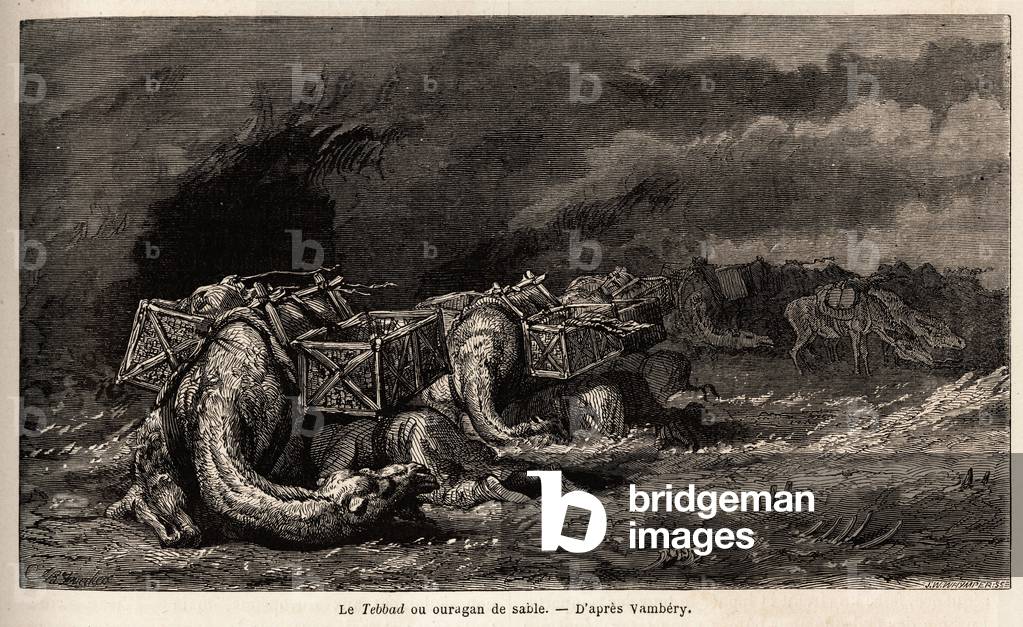
LSE4325548: The camel caravan caught in a sand hurricane calls tebbad. Drawing by Emile Bayard (1837-1891), to illustrate the journey to Central Asia, in 1863, by Arminius Vambery (Hungarian scientist disguise in dervish). Engraving in “” Le tour du monde””, edited by Edouard Charton, 1865. Selva's collection., Unknown Artist, (19th century) / Bridgeman Images

LSE4325745: A woman grinding grain in a burner, the mill consists of a stationary block of granite in the shape of a trough and a piece of quartz convex. Engravure to illustrate Dr. Livingstone's first voyages to Southern Africa from 1840 to 1856, in “Le tour du monde, nouveau journal des voyages”” published under the direction of Edouard Charton, 1866, Paris. Selva Collection., Unknown Artist, (19th century) / Bridgeman Images

LSE4325776: The arrival of a Turkish (Turkmenistan) wife in her husband's family; daughters do not marry before the age of 17, are chosen by the husband who negociates the dowry (which he provides to his future wife's family) and the conditions of marriage. Engraving to illustrate the story of Henri de Blocqueville “14 mois de captivite chez les turcomans”” between 1860 and 1861, in “Le tour du monde, nouveau journal des voyages”” published under the direction of Edouard Charton, 1866, Paris. Selva Collection., Unknown Artist, (19th century) / Bridgeman Images

LSE4325855: Scene of rest of the country, in the moonlight, mats are erected on the ground after the day of work. Engraving to illustrate the voyage to Japan in 1863-1864, by Aime Humbert, minister of the Swiss Confederation, in “Le tour du monde, nouveau journal des voyages”, published under the direction of Edouard Charton, 1866, Paris. Selva Collection., Unknown Artist, (19th century) / Bridgeman Images

LSE4325896: Mirror polisher. Engraving to illustrate the voyage to Japan in 1863-1864, by Aime Humbert, minister of the Swiss Confederation, in “Le tour du monde, nouveau journal des voyages”, published under the direction of Edouard Charton, 1866, Paris. Selva Collection., Unknown Artist, (19th century) / Bridgeman Images

LSE4326010: A dancer at the court of Kamakura, a city that shogun Minamoto no Yorimoto (1147-1199) chose as its capital at a time when its political power exceeded that of Mikado (the Emperor of Japan), creating a new political, economic and artistic centre on the Pacific Ocean. Engraving to illustrate the voyage to Japan in 1863-1864, by Aime Humbert, minister of the Swiss Confederation, in “Le tour du monde, nouveau journal des voyages”, published under the direction of Edouard Charton, 1866, Paris. Selva Collection., Unknown Artist, (19th century) / Bridgeman Images