2502300 Search Results

ELD4960334: Portrait of Louis I King of Hungary (Louis I the Great) (1326-1382) (Portrait of Louis I of Hungary) engraving from “” La Hungary historique”” 1851 / Bridgeman Images

ELD4960361: Third Crusade: Margaret of France (1158-1197) Queen of Hungary leading the Hungarians the Crusade of 1197 (Margaret of France, Queen of England and Hungary during the 3rd Crusade, 1197) Engraving from “” La hongrie historique”” 1851 / Bridgeman Images

ELD4960391: Portrait of Arpad Grand Prince of the Magyars from 896 to 907, founder of the Arpad dynasty, who regained over Hungary from 896 to 1301 (Portrait of Arpad (845-907) head of the confederation of the Hungarian tribes at the turn of the 9th and 10th centuries) engraving from “” La Hungary historique”” 1851 / Bridgeman Images

ELD4963749: Portrait of a Scottish clan leader (clan leader in Scotland) Engraving from “History of England” by Augustin Thierry 1867 / Bridgeman Images

ELD4961977: Jules Cesar crosses the river of Rubicon with his legions in arms on January 10, 49 BC in the footsteps of Pompee the Great (Gneo Pompeo Magno or Gnaeus Pompeius Magnus, 106-48 BC) and violates the law of the Roman Senate which prohibited a Roman general from crossing the border river of Cisalpine Gaul - Crossing the river, Jules Cesar prononca The famous formula “” Alea jacta est”” (Julius Caesar (100-44 BC) Crossing the Rubicon in 49 BC from Cisalpine Gaul to Italy to make his way to Rome - Caesar uttered the famous phrase alea iacta est (“the die has been cast”)) Engraving from “” Storia di Roma by Francesco Bertolini / Bridgeman Images

ELD4963974: Portrait of Louis-Philippe d'Orleans Duke of Chartres known as Philippe Egalite (1747-1793) with his wife Marie Adelaide de Bourbon (1753-1821), the governess of the children and mistress of Philippe egalite, Felicite de Genlis (1746-1830) and the four children (including Louis-Philippe d'Orleans (1773-1850) who came to visit the prisons of Mont Saint Michel destroying the Iron cage (girl) set up by King Louis XI around 1788 (Portrait of Louis Philippe II, Duke of Orleans with his family and his mistress Stephanie Felicite, Countess de Genlis in the prisons of the Mont-Saint-Michel, destroying the iron cage of Louis XI, 1788) Engraving from “Histoire de la vie politique et de Louis-Philippe” by Alexandre Dumas, 1852 / Bridgeman Images

ELD4963958: Portrait of the eight children of Louis-Philippe d'Orleans (1773-1850) and Marie-Amelie de Bourbon-Sicilies: Ferdinand-Philippe, Louise, Marie, Louis, Clementine, Francois, Charles, Henri and Antoine circa 1836-1837 (Portrait of the eight sons of Louis Philippe I with his wife Maria Amalia of Naples and Sicily) political and by Louis-Philippe”” by Alexandre Dumas, 1852 / Bridgeman Images

JEB4960026: Portrait of Honore Gabriel (Honore-Gabriel) Riqueti, Count of Mirabeau (1749-1791), apostrophant Henri Evrard (Henri Evrard), Marquis of Dreux Breze (Dreux Breze) (1762-1829) on 23/06/1789. Painting by Joseph Boze (1745-1826). Oil on canvas. Musee Granet, Aix en Provence., Boze, Joseph (1745-1825) / Bridgeman Images

JEB4960062: Portrait of an eveque in clothing. Anonymous painting. Musee Granet, Aix en provence / Bridgeman Images

ELD4960236: Catherine Henriette de Balzac d'Entragues Marquise de Verneuil (1579-1633) receiving Claude de Lorraine, Duke of Chevreuse at home after learning the marriage of Henri IV and Marie de Medicis in 1600 (Catherine Henriette de Balzac d'Entragues, Marquise de Verneuil and Claude, Duke of Chevreuse 1600) Engraving from “Histoire de la Bastille” by Arnould Maquet, c.1844 / Bridgeman Images

ELD4962517: Milenary of Rome: From 21 April 247 to 21 April 248, Philippe l'Arabe marks the tenth secular games for a year of grand celebrations (Ludi Saeculares, celebrated under the reign of Philip the arab, coincided with the one thousandth anniversary of the foundation of Rome, 247-248 AD) Engraving from “Storia di Roma” by Francesco Bertolini / Bridgeman Images

ELD4962571: Roman Antiquite “” Emperor Probus (232-282) allowing families of Germans, Francs and Alamans to settle on abandoned agricultural lands - these settlers are known as deditices, lets, gentiles vers 280” (Laeti, communities of barbari (“barbarians”) foreigners, or people from outside the Empire, allowed to settle on, and granted land in, imperial territory on condition that they provide recruits for the Roman military under the reign of Probus, 280 ca) Engraving from “Storia di Roma” by Francesco Bertolini / Bridgeman Images

ELD4962853: View of Saint-Quay-Portrieux (Saint Quay Portrieux) in Cotes d'armor, Brittany - postcard ca. 1910 / Bridgeman Images

ELD4962910: Scene taken from “Britannicus” representing Neron imprisoning Britannicus (Nero and Britannicus. By Staal 19th century (engraving from works by Jean Racine (1639-1699)) / Bridgeman Images

ELD4963190: View of the beach of Ostend in Belgium (View of the beach of Ostend, belgium) Postcard ca. 1910 / Bridgeman Images

JEB4963340: Gothic architecture: the three porches of the royal portal of the Cathedrale Notre Dame de Chartres (Eure and Loire) / Bridgeman Images

ELD4963415: Ancient Rome: “” Domitia Longina (53-128) reading his name on the lists of proscription that his wife the Emperor Domitian had established, in 96” (Roman empress Domitia chanced upon a list of brokers Domitian intended to put to death 96) Engraving from “Storia di Roma” by Francesco Bertolini / Bridgeman Images

ELD4963451: Ancient Rome: The Triumph of Diocletian (244-311) - Engraving from “Storia di Roma” by Francesco Bertolini / Bridgeman Images

ELD4963586: En fevrier 1420, l'ambitieuse marguerite de Clisson comtesse de Penthievre (1372-1441) qui residait dans la citadelle de Chateauceaux (devenue Champtoceaux), tendit un piege au duc Jean V de Bretagne, ainsi qu'a son frere Richard Montfort comte d'Etampes, et les fit prisonniers (Abduction of John V, Duke of Brittany and Richard, Count of etampes by the Counts of Penthievre 1420) Gravure tiree de ""Histoire de la Bretagne"" de Jules-Janin 19eme siecle / Bridgeman Images

ELD4963589: Creation of the order of the garter, 19th century (engraving), French School, (19th century) / Bridgeman Images

ELD4960260: Catherine de Lorraine (1552-1596) Duchess of Montpensier learning about the death of her brother Henry of Lorraine the Duke of Guise in 1588 (Princess of Guise Catherine of Lorraine when she knows about the death of her brother Henry I, Duke of Guise (1550Ð88) 1588) Engraving from Histoire de la Bastille” by Arnould Maquet, c.1844 / Bridgeman Images

JEB4960356: Anonymous painting of the 16th century Musee Granet, Aix en Provence. / Bridgeman Images

ELD4960374: Portrait of Stephen I of Hungary (975-1038) founder of the Kingdom of Hungary (Portrait of Stephen I, also known as King Saint Stephen of Hungary) engraving from “” La Hungary historique”” 1851 / Bridgeman Images

ELD4961225: The Sacred Mistletoe - The Gauls and their priests or Druids - Picking mistletoe from the druids in Gaul - Druids Cutting the Mistletoe - Engraving from Clavel 1844 “Picturesque History of Religions” / Bridgeman Images

ELD4961270: Celebration of the fete dieu instituted by King Rene of Anjou in 1462 in Provence, mixing the sacred and the profane with the donkey (French celebration of the Corpus Christi with a donkey, 15th century) Engraving taken from “” Histoire picturesque des religions”” by Clavel 1844 Collection privee / Bridgeman Images

JEB4961324: Art Nouveau: view of a stained glass window of the villa by Louis Majorelle (1859-1926) (or villa Jika) made by the architect Henri Sauvage (1873-1932) in 1901-1902 Nancy (Moselle) / Bridgeman Images
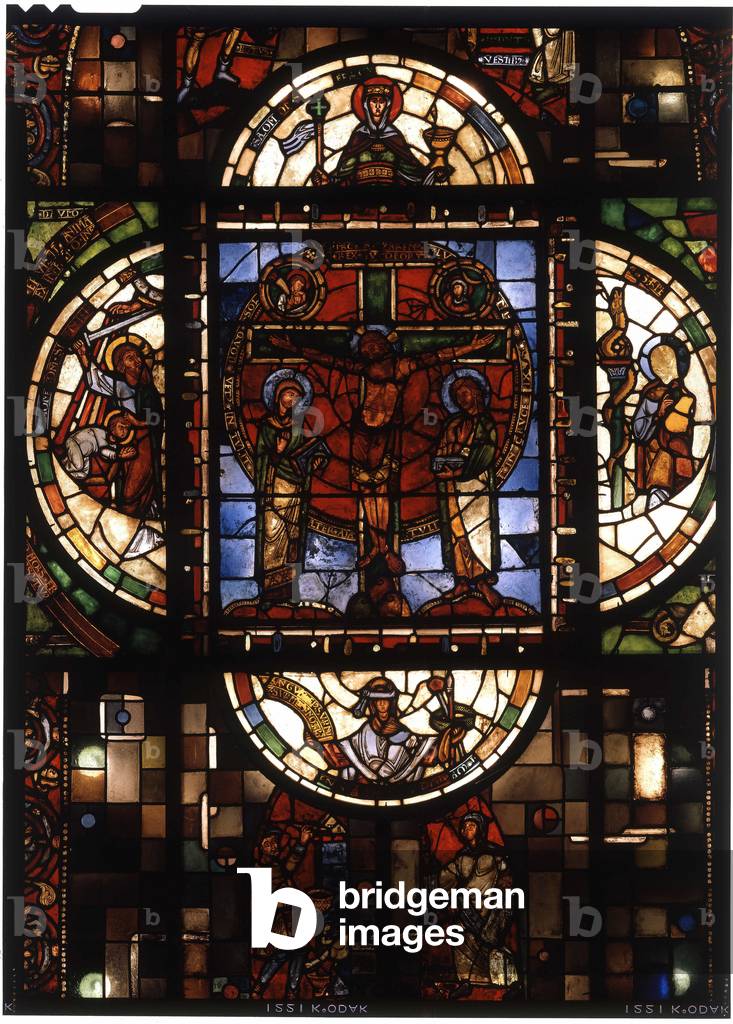
JEB4961360: Stained glass of the Crucifixion. Cathedrale, Chalon sur Marne (Chalon-sur-Marne). / Bridgeman Images

JEB4961489: Art Nouveau: The entrance gate of 29 avenue Rapp in the 7th arrondissement of Paris (photo), Lavirotte, Jules (1864-1924) / Bridgeman Images

JEB4961546: Art Nouveau architecture: view of the entrance door of the Castel Beranger located at 14, rue de la Fontaine in the 16th arrondissement of Paris. Designed by the architect Hector Guimard (1867-1942) DR, Guimard, Hector (1867-1942) / Bridgeman Images

ELD4961939: Roman Antiquite Second Punic War “” the Carthaginian ambassadors facing the Roman consuls, 203 BC” (Second Punic War, carthaginian embassy received by the roman consuls 203 BC) Engraving from “” Storia di Roma” by Francesco Bertolini / Bridgeman Images
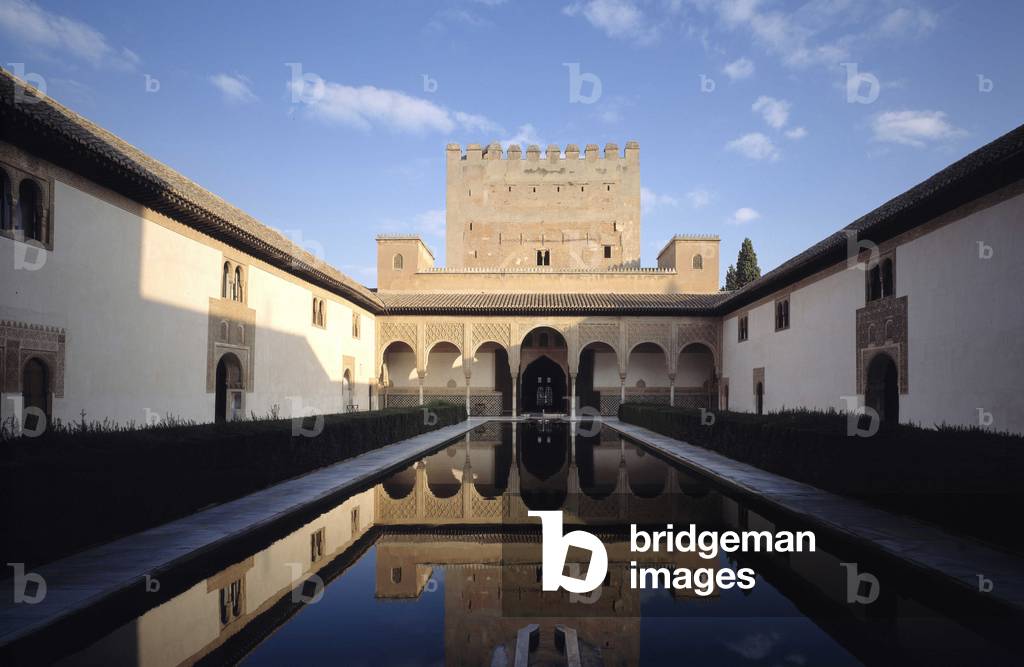
JEB4961984: Islamic architecture, Moorish art. View of the Myrtes basin in the courtyard of the Myrtes (patio of los Arrayanes), palace Comares, one of the Nasrid palaces of the Alhambra. 14th century Granada Spain / Bridgeman Images

ELD4962065: Roman Antiquite “” the funeral of Jules Cesar (100-44 BC) in 44 BC” (Julius Caesar's funeral 44 BC) Engraving from “Storia di Roma” by Francesco Bertolini / Bridgeman Images

ELD4960404: Portrait of Sicules (or Szeklers) in Transylvania in Hungary (Szekelys, Hungarian people living mostly in the Szekely Land in Romania) Engraving from “” La hongrie historique””” 1851 / Bridgeman Images

JEB4960635: View of the Romanesque pillars. 11th century Abbey of Mont Saint Michel (Manche) / Bridgeman Images

ELD4960874: Mesmerism: a tree used as a baquet by Mesmer, late 18th century (engraving) / Bridgeman Images

ELD4960928: Portrait of Lorenza Feliciani known as Serafina (born 1754), Countess of Cagliostro, wife of Count Alessandro of Cagliostro - Engraving of the 19th century Private Collection / Bridgeman Images
