Search options

Orientation
Colour

Display options

View

Print

To print search results, use print friendly version of this page.

2497525 Search Results

Portrait of Sidney Godolphin, Earl of Godolphin, 1835 (litho)

XJF4070963: Portrait of Sidney Godolphin, Earl of Godolphin, 1835 (litho), English School, (19th century) / Bridgeman Images

Portrait of Archibald Campbell, 9th Earl of Argyll, 1835 (litho)

XJF4070947: Portrait of Archibald Campbell, 9th Earl of Argyll, 1835 (litho), English School, (19th century) / Bridgeman Images
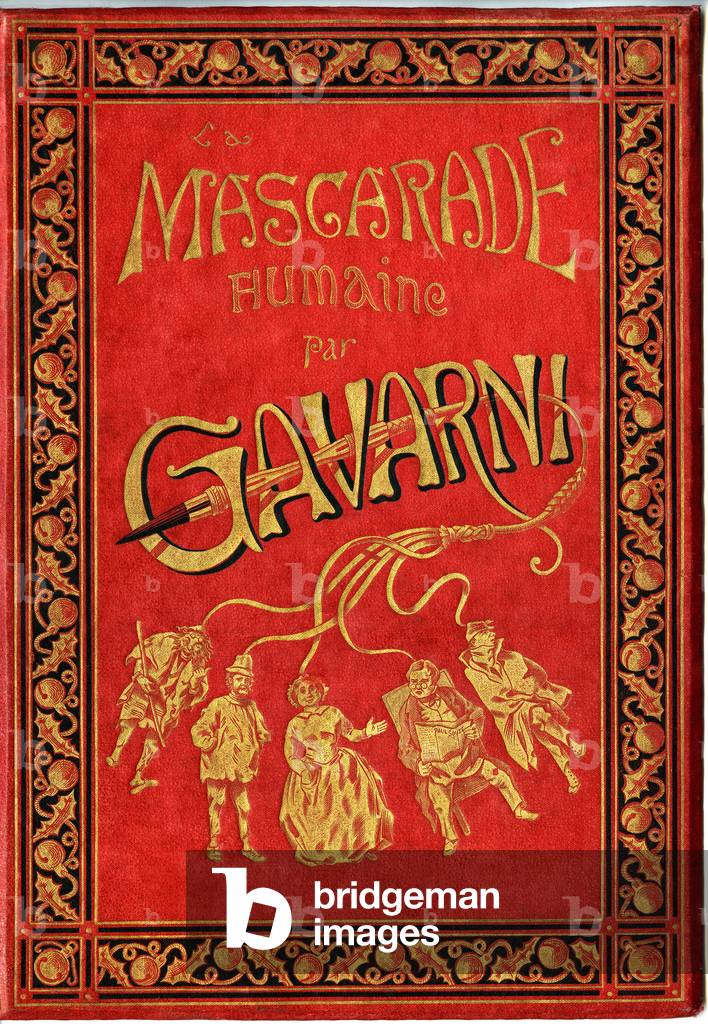
Cover of the book “” The Human Masquerade””, caricatures by Gavarni (Sulpic-Guillaume Chevalier 1804-1866 dit Paul Gavarni). Editions Calmann Levy 1881, cardboard by Paul Souze, binding and gilding C. Magnier - characters at the end of a swift (whip): “” who likes chatie well””” -

PCT4297613: Cover of the book “” The Human Masquerade””, caricatures by Gavarni (Sulpic-Guillaume Chevalier 1804-1866 dit Paul Gavarni). Editions Calmann Levy 1881, cardboard by Paul Souze, binding and gilding C. Magnier - characters at the end of a swift (whip): “” who likes chatie well””” -, Cartier, Patrice / Bridgeman Images

Greek comb
Greek comb

PCT4297665: Greek comb, Cartier, Patrice / Bridgeman Images

Representation of a Greek theatre mask in white marble, Roman period. The reliefs evoke the leather masks worn by comedy and tragedie actors - Musee St Raymond, Toulouse -

PCT4297680: Representation of a Greek theatre mask in white marble, Roman period. The reliefs evoke the leather masks worn by comedy and tragedie actors - Musee St Raymond, Toulouse -, Cartier, Patrice / Bridgeman Images

Carnival of Limoux Languedoc-Roussillon, France - Carnival of Limoux (11, Aude, Languedoc, Occitanie): exit of the Meuniers (with their whips) in the city center, the first day of Carnival - mask, disguise - Photo Patrice Cartier -

PCT4297436: Carnival of Limoux Languedoc-Roussillon, France - Carnival of Limoux (11, Aude, Languedoc, Occitanie): exit of the Meuniers (with their whips) in the city center, the first day of Carnival - mask, disguise - Photo Patrice Cartier -, Cartier, Patrice / Bridgeman Images
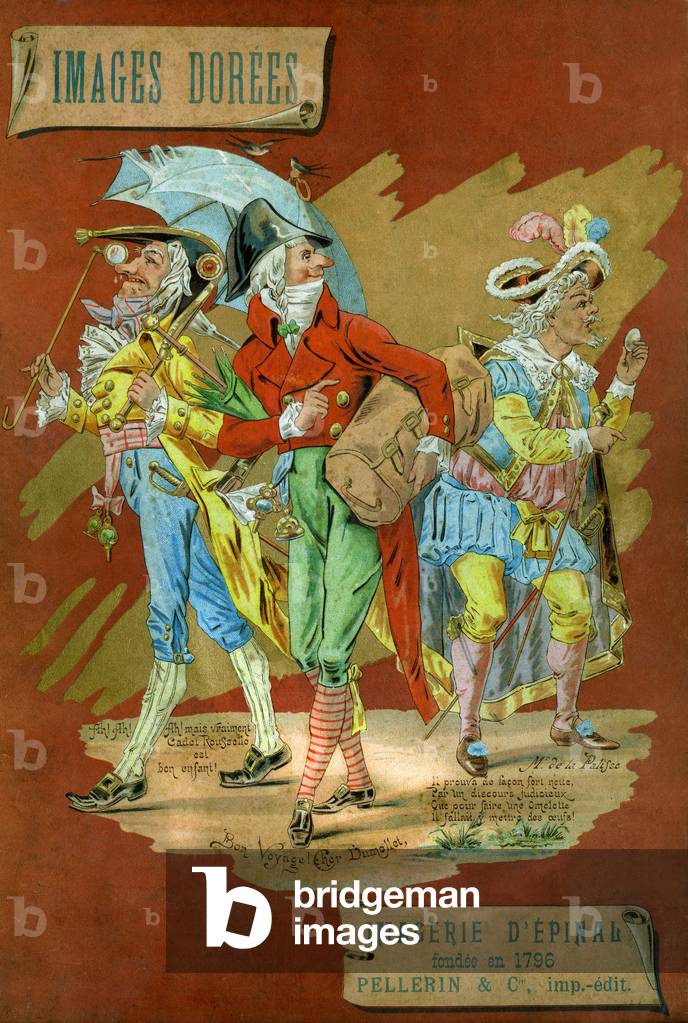
Cover of an album of dorees images of Epinal - imagery Pellerin 19th century - famous stories characters and popular songs: Cadet Rousselle, Monsieur de la Palisse, Bon voyage Monsieur Dumollet -

PCT4297608: Cover of an album of dorees images of Epinal - imagery Pellerin 19th century - famous stories characters and popular songs: Cadet Rousselle, Monsieur de la Palisse, Bon voyage Monsieur Dumollet -, Cartier, Patrice / Bridgeman Images

Detail of a 4th or 5th century mosaic discovered in 1833 in a Roman villa in Saint-Rustice (Haute-Garonne, Occitanie)

PCT4297721: Detail of a 4th or 5th century mosaic discovered in 1833 in a Roman villa in Saint-Rustice (Haute-Garonne, Occitanie) / Bridgeman Images

French postage stamp with the effigy of the Marshal Philippe Petain, 1941 (engraving)

PCT4297787: French postage stamp with the effigy of the Marshal Philippe Petain, 1941 (engraving), Piel, Jules (1882-1978) / Bridgeman Images

A dish from the south of France: Cassoulet, a traditional recipe for stew from the south west (Southwest, Languedoc, Midi-Pyrenees, Occitanie) - beans (white bean), Toulouse sausage, poultry confit and pork meat, cooked in a terrine (cassole). There are special recipes for three cities competing for the paternity of this Occitan feast: Castelnaudary, Carcassonne and Toulouse - meals, local cuisine, tradition, Midi - photo Patrice Cartier - see also GUT2289, 2290 and 2291 -

PCT4297802: A dish from the south of France: Cassoulet, a traditional recipe for stew from the south west (Southwest, Languedoc, Midi-Pyrenees, Occitanie) - beans (white bean), Toulouse sausage, poultry confit and pork meat, cooked in a terrine (cassole). There are special recipes for three cities competing for the paternity of this Occitan feast: Castelnaudary, Carcassonne and Toulouse - meals, local cuisine, tradition, Midi - photo Patrice Cartier - see also GUT2289, 2290 and 2291 -, Cartier, Patrice / Bridgeman Images

First World War 14-18 (1914-1918): the French general Paul Pau (1848-1932) climbs on a white horse passes in front of a German convoy - glass plate (circa 1914) broadcast by the Maison de la Bonne Presse, rue Bayard in Paris -

PCT4297704: First World War 14-18 (1914-1918): the French general Paul Pau (1848-1932) climbs on a white horse passes in front of a German convoy - glass plate (circa 1914) broadcast by the Maison de la Bonne Presse, rue Bayard in Paris -, Cartier, Patrice / Bridgeman Images

Claim for the beauty product “” Creme Simon”” published in the women's press (Femina magazine's agenda) in 1921 (engraving)

PCT4297762: Claim for the beauty product “” Creme Simon”” published in the women's press (Femina magazine's agenda) in 1921 (engraving) / Bridgeman Images

Fake news: registration made with the cubes of a board game on a computer keyboard. Information, information, false news, false news - photo Patrice Cartier - see also GUT9377 and GUT9426 -

PCT4297820: Fake news: registration made with the cubes of a board game on a computer keyboard. Information, information, false news, false news - photo Patrice Cartier - see also GUT9377 and GUT9426 -, Cartier, Patrice / Bridgeman Images

Azulejos (ceramic, mosaic) from the Plaza de Espana (Spanish Steps) in Sevilla (Seville, Spain), designed for the Ibero American Exhibition of 1929-1930, by architect Anibal Gonzalez (1876-1929) (photo)

PCT4297942: Azulejos (ceramic, mosaic) from the Plaza de Espana (Spanish Steps) in Sevilla (Seville, Spain), designed for the Ibero American Exhibition of 1929-1930, by architect Anibal Gonzalez (1876-1929) (photo), Cartier, Patrice / Bridgeman Images

First World War 14-18 (1914-1918): moment of relaxation. A French soldier on the front takes advantage of a lull during the fighting to hunt the rabbit (or hare). He poses for the photographer with his two trophees, in front of a wall hole by an explosion, on which is written “Dangerous”! - photograph on glass plate -

PCT4297740: First World War 14-18 (1914-1918): moment of relaxation. A French soldier on the front takes advantage of a lull during the fighting to hunt the rabbit (or hare). He poses for the photographer with his two trophees, in front of a wall hole by an explosion, on which is written “Dangerous”! - photograph on glass plate -, Cartier, Patrice / Bridgeman Images

A FRENCH PAINTED BY HIS: cartoon by Daumier in Le Charivari no. 88 of 29 March 1849. In the Scenes d'ateliers (four boards published in January 1848 and April 1850), then in Les Artistes, as in other posterieure series, Daumier mocked the flaws of his confreres. The legende alludes to the “” Francais painted par eux-memes”, a collective publication illustree, published by Curmer, between 1839 and 1842, in which Daumier a participates - autoportrait d'un peintre - A painter working on his self-portrait, seen from behind while posing in front of a mirror to right, pulling a grimace; paintings on the walls in the background; published in 'Le Charivari'. 29 March 1849 -

PCT4297806: A FRENCH PAINTED BY HIS: cartoon by Daumier in Le Charivari no. 88 of 29 March 1849. In the Scenes d'ateliers (four boards published in January 1848 and April 1850), then in Les Artistes, as in other posterieure series, Daumier mocked the flaws of his confreres. The legende alludes to the “” Francais painted par eux-memes”, a collective publication illustree, published by Curmer, between 1839 and 1842, in which Daumier a participates - autoportrait d'un peintre - A painter working on his self-portrait, seen from behind while posing in front of a mirror to right, pulling a grimace; paintings on the walls in the background; published in 'Le Charivari'. 29 March 1849 -, Daumier, Honore (1808-79) / Bridgeman Images

Printing: pedal printing machine Charles Doublet 1900 - printer -

PCT4297863: Printing: pedal printing machine Charles Doublet 1900 - printer - / Bridgeman Images

Page of a catalogue (1977) of Citroen cars: the LN, the first model resulting from the absorption of the car manufacturer Citroen by Peugeot (PSA), produced from 1976 to 1986 - three-door mini-city car - automobile industry in France -

PCT4297897: Page of a catalogue (1977) of Citroen cars: the LN, the first model resulting from the absorption of the car manufacturer Citroen by Peugeot (PSA), produced from 1976 to 1986 - three-door mini-city car - automobile industry in France - / Bridgeman Images

Reclame published in February 1905 in the magazine “Je sais tout” for the dictionary “Nouveau Larousse illustrious ” (engraving)

PCT4298015: Reclame published in February 1905 in the magazine “Je sais tout” for the dictionary “Nouveau Larousse illustrious ” (engraving) / Bridgeman Images

Forestry exploitation in France: cutting sempervirens sequoias. Geree forest, planted 30 years ago (photo)

PCT4298046: Forestry exploitation in France: cutting sempervirens sequoias. Geree forest, planted 30 years ago (photo), Cartier, Patrice / Bridgeman Images

Human head: drawing from the work by Fra Luca Pacioli di Borgo San Sepolcro (Luca Bartolomes Pacioli dit Luca di Borgo, Italian ecclesiastic and mathematician around 1445-1517) “De divina proportione” (divine proportion) written in Milan between 1496 and 1498 and published in Venice in 1509. Proportio, proportions, measurement, measurements, skull, face, human face, man, eye, look, vision -

PCT4298095: Human head: drawing from the work by Fra Luca Pacioli di Borgo San Sepolcro (Luca Bartolomes Pacioli dit Luca di Borgo, Italian ecclesiastic and mathematician around 1445-1517) “De divina proportione” (divine proportion) written in Milan between 1496 and 1498 and published in Venice in 1509. Proportio, proportions, measurement, measurements, skull, face, human face, man, eye, look, vision - / Bridgeman Images

colorized postcard of the First World War in France representing the leaders (postcard)

PCT4298142: colorized postcard of the First World War in France representing the leaders (postcard) / Bridgeman Images
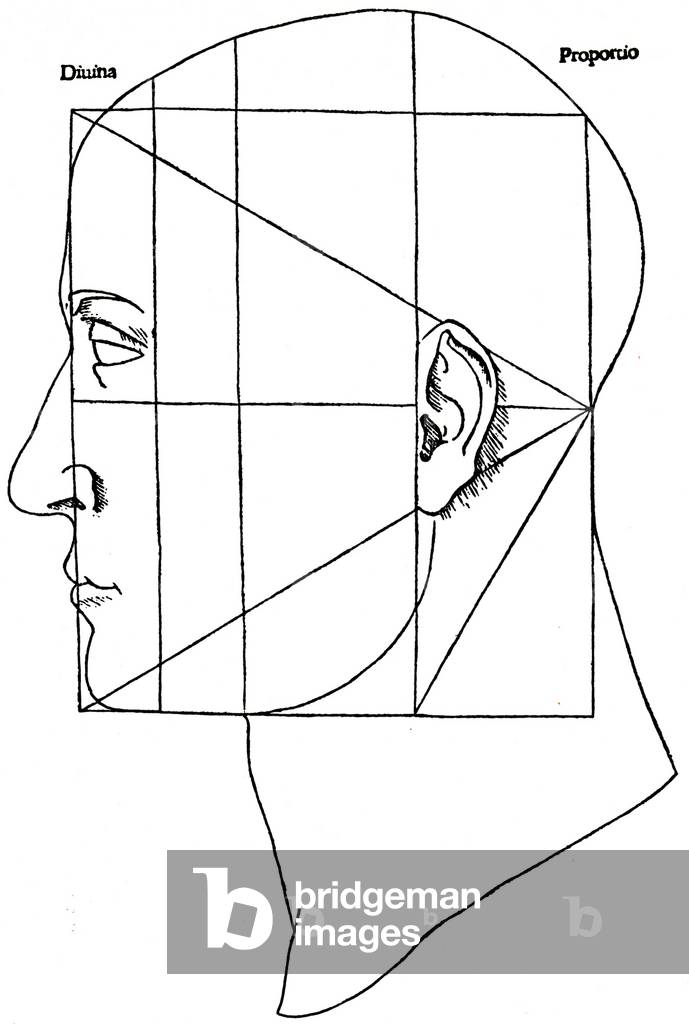
Human head: drawing from the work by Fra Luca Pacioli di Borgo San Sepolcro (engraving)

PCT4298075: Human head: drawing from the work by Fra Luca Pacioli di Borgo San Sepolcro (engraving) / Bridgeman Images

A French wounded soldier (colorized postcard)

PCT4298131: A French wounded soldier (colorized postcard) / Bridgeman Images

Unusual: molding of a hand made at the petrifying fountain of Saint-Nectaire (63, Puy-de-Dome, Auvergne) - deposit of natural limestone in a silicone mold - Photo Patrice Cartier 2017 -

PCT4296183: Unusual: molding of a hand made at the petrifying fountain of Saint-Nectaire (63, Puy-de-Dome, Auvergne) - deposit of natural limestone in a silicone mold - Photo Patrice Cartier 2017 -, Cartier, Patrice / Bridgeman Images

Iran, art of qalamkar: detail of an Iranian textile piece from Isfahan, 19th century, cotton weave - picking scene (grapes, grapes, harvest, harvest) - vines and wine have been present in Persian culture since the Rouenid period (first millennia before the Christian era). It was only in the 7th century, after the Muslim conquete, that the consumption of alcohol was prohibited and grapes were intended for the table only - private collection -

PCT4296245: Iran, art of qalamkar: detail of an Iranian textile piece from Isfahan, 19th century, cotton weave - picking scene (grapes, grapes, harvest, harvest) - vines and wine have been present in Persian culture since the Rouenid period (first millennia before the Christian era). It was only in the 7th century, after the Muslim conquete, that the consumption of alcohol was prohibited and grapes were intended for the table only - private collection - / Bridgeman Images

Statuettes of elephants being processed at the petrifying fountain of Saint-Nectaire (63, Puy-de-Dome, Auvergne) - the objects are placed on scales along which water loaded with limestone flows - Photo Patrice Cartier 2017 -

PCT4296158: Statuettes of elephants being processed at the petrifying fountain of Saint-Nectaire (63, Puy-de-Dome, Auvergne) - the objects are placed on scales along which water loaded with limestone flows - Photo Patrice Cartier 2017 -, Cartier, Patrice / Bridgeman Images

Iran, art of qalamkar: detail of an Iranian textile piece from Isfahan, early 20th century, cotton - a party at the court: maids offer drinks and food to the king (above) and the queen (below). An orchestra of musicians and dancers entertain monarchs. Fruits (apples and pears) furnish the space between the characters - private collection -

PCT4296269: Iran, art of qalamkar: detail of an Iranian textile piece from Isfahan, early 20th century, cotton - a party at the court: maids offer drinks and food to the king (above) and the queen (below). An orchestra of musicians and dancers entertain monarchs. Fruits (apples and pears) furnish the space between the characters - private collection - / Bridgeman Images

Via Domitia (Via Domitienne or Via Domizia); part of the Roman road pave discovered in 1997 during works at a depth of 2 metres under the square of the town hall of Narbonne (Aude, 11, Languedoc, Occitanie, France). Photo Patrice Cartier - see also GUT5260 a GUT5270 -

PCT4296442: Via Domitia (Via Domitienne or Via Domizia); part of the Roman road pave discovered in 1997 during works at a depth of 2 metres under the square of the town hall of Narbonne (Aude, 11, Languedoc, Occitanie, France). Photo Patrice Cartier - see also GUT5260 a GUT5270 -, Cartier, Patrice / Bridgeman Images

Detail of a Roman house fresco in Narbonne (Aude, 11, Languedoc, Occitanie). Head of Apollo covered with laurels (2nd century, 130/140), domus du clos de la Lombarde, bordering the road domicienne, torn by fire around the year 200 - Musee archeologique de Narbonne - antique Roman art, antiquite - Photo Patrice Cartier - see also GUT1702, GUT1710, GUT1711 and GUT1731 -

PCT4296462: Detail of a Roman house fresco in Narbonne (Aude, 11, Languedoc, Occitanie). Head of Apollo covered with laurels (2nd century, 130/140), domus du clos de la Lombarde, bordering the road domicienne, torn by fire around the year 200 - Musee archeologique de Narbonne - antique Roman art, antiquite - Photo Patrice Cartier - see also GUT1702, GUT1710, GUT1711 and GUT1731 -, Cartier, Patrice / Bridgeman Images

Postcard beginning 20th century, sent in 1915: Castelnaudary (Aude, Occitanie), large basin of the Canal du Midi. Vinegar, tour of the former national mill (flour mill), gateway and island of Cibelle - Phototypie Tarnaise, Poux a Albi - postage, postage stamp: sower - See same point of view realised from this map by an amateur painter around 1928: ref. GUT...

PCT4296294: Postcard beginning 20th century, sent in 1915: Castelnaudary (Aude, Occitanie), large basin of the Canal du Midi. Vinegar, tour of the former national mill (flour mill), gateway and island of Cibelle - Phototypie Tarnaise, Poux a Albi - postage, postage stamp: sower - See same point of view realised from this map by an amateur painter around 1928: ref. GUT... / Bridgeman Images

Saint just of Saint Pastor, 14th century, France (fresco)

PCT4296473: Saint just of Saint Pastor, 14th century, France (fresco), French School, (14th century) / Bridgeman Images

Pau (Bearn) at the beginning of the 20th century the Villa Navarre - postcard sent in 1907 - the region of Pau was very popular among Anglo-Saxons (English and American) at the end of the nineteenth and the beginning of the twentieth centuries. Many villas were built throughout the region for them. They're called English villas. They were the place of worldly rendezvous - Villa Navarre, located at 59 avenue Trespoey, was built in 1870. Former property of the American Mrs. Ridgway from 1923 to 1930, it later belonged to the old Beigbeder family for a long time. Frederic Beigbeder, a famous publicist and writer, played in his park as a child.

PCT4296514: Pau (Bearn) at the beginning of the 20th century the Villa Navarre - postcard sent in 1907 - the region of Pau was very popular among Anglo-Saxons (English and American) at the end of the nineteenth and the beginning of the twentieth centuries. Many villas were built throughout the region for them. They're called English villas. They were the place of worldly rendezvous - Villa Navarre, located at 59 avenue Trespoey, was built in 1870. Former property of the American Mrs. Ridgway from 1923 to 1930, it later belonged to the old Beigbeder family for a long time. Frederic Beigbeder, a famous publicist and writer, played in his park as a child. / Bridgeman Images

Pau (Bearn) at the beginning of the 20th century: Villa Beatrix - postcard Ribaut sent in 1906 - the region of Pau was very popular among Anglo-Saxons (English and American) at the end of the nineteenth and early twentieth centuries. Many villas were built throughout the region for the rich bitannic in the town. They're called English villas. They were the place of worldly rendezvous -

PCT4296560: Pau (Bearn) at the beginning of the 20th century: Villa Beatrix - postcard Ribaut sent in 1906 - the region of Pau was very popular among Anglo-Saxons (English and American) at the end of the nineteenth and early twentieth centuries. Many villas were built throughout the region for the rich bitannic in the town. They're called English villas. They were the place of worldly rendezvous - / Bridgeman Images

Fighting feroces in the arena in Rome, circus games: wild animals and African animals - Illustration by Minnard for “Quo vadis” (a history of the time of Neron), historical novel by Polish writer Henryk Sienkiewicz, beginning 20th century -

PCT4296653: Fighting feroces in the arena in Rome, circus games: wild animals and African animals - Illustration by Minnard for “Quo vadis” (a history of the time of Neron), historical novel by Polish writer Henryk Sienkiewicz, beginning 20th century - / Bridgeman Images

Construction of the World Trade Center building, New York, United States of America, May 1972: finishing of the top floor of a tower (roof) - Building complex deconstructed on September 11, 2001 following an attack by the impact of two warplanes - Building of WTC, New York City, USA, May 1972 - top floor (roof), one of the two Twin Towers destroyed september 11, 2001 - photo Urve Kuusik -

PCT4296671: Construction of the World Trade Center building, New York, United States of America, May 1972: finishing of the top floor of a tower (roof) - Building complex deconstructed on September 11, 2001 following an attack by the impact of two warplanes - Building of WTC, New York City, USA, May 1972 - top floor (roof), one of the two Twin Towers destroyed september 11, 2001 - photo Urve Kuusik -, Cartier, Patrice / Bridgeman Images


Back to top