
Print this page or go back to standard view.

PIX4631806: Earth by satellite - Ocean Atlantique - Earth from space. Atlantic ocean - Image of the Earth recomposed from data obtained from different satellites. Earth view centered on atlantic ocean. Composite night - day image of the Earth combining data from different satellite sensors / Bridgeman Images

LRI4631820: Order of Merite of the Crown of Prussia : insignia, early 19th century, Anonymous / Bridgeman Images

LRI4631842: Kingdom of Prussia - Royal Chamberlain - mid 19th century, Anonymous / Bridgeman Images

LRI4631881: Order of St. Alexander (Bulgaria): Insignia of great cross, beginning 20th century - 1st class badge (grand cross), late 19th century - 2nd class plate (Grand Officer), end of the 19th century - plate of the Order's large cross, beginning of the 20th century - Large Cross plate War Decoration, 1916, Anonymous / Bridgeman Images

LRI4631966: Afghanistan - Order of the Empire Durrani : 1st class plate, 2nd third of the 19th century - 1st class badge, 2nd third of 19th century - 1st class badge, 2nd third of the 19th century - 2nd class breast insignia, 2nd century third of the 19th century, Anonymous / Bridgeman Images

LBY4631979: Vals in Switzerland. / Bridgeman Images

LBY4631688: Mumbai (Bombay), India. / Bridgeman Images

LBY4631758: The city of Zurich in Switzerland. Advertising somise a atorisation prealable 03/03/08. / Bridgeman Images

LRI4631808: Military Order of Saint Henri : plate of large cross, beginning 19th century, Anonymous / Bridgeman Images

LBY4631924: Vals in Switzerland. / Bridgeman Images

PIX4631984: Hurricanes on Earth - 07/2012 - Tropical Cyclones Chase Tropical Storm Daniel - 07/2012 - Image of Earth obtained by GOES satellites - 15 July 10, 2012. Three hurricanes are visible; Hurricane Daniel near the central Pacific Ocean, Hurricane Emilia off Mexico, and a system forming further east. Noaa's GOES - 15 satellite captured the three tropical cyclones spinning in the eastern Pacific Ocean today, July 10, 2012 at 1200 UTC (8 a.m. EDT). Tropical Storm Daniel is farthest west, followed by major hurricane Emilia, and developing low pressure System 98E / Bridgeman Images

LBY4633040: Tourist facilities, metallic bridge in Norway. Architects Haga Grov and Helge Schelderup, 2006. Photography 03/07/08. / Bridgeman Images

PIX4633177: 100m ocean level rise - Asia - Asia with sea level+100m - Artist's view showing Asia as it would appear if ocean level increased by 100 metres. This would happen if all glaciers on Earth melt. This is how Asia may appear with mean sea level about 100 meters (330 feet) above today's. Such a dramatic rise in sea level could occur if all of the Earth's glaciers were to melt. In this image the Gulf of Thailand now cleaves that country in two while submerging almost all of Cambodia. The Gulf of Tonkin has claimed much of North Viet Nam. Ocean waters have claimed much of South Korea and some of North Korea and Eastern China. To the south much of Malaysia and the Indonesian archipelago have been claimed by the higher waters / Bridgeman Images

LRI4633226: A human figure. Stone Age 5000-2000 BC. (engraved rock), Prehistoric / Bridgeman Images

LBY4633267: Tourist facilities, national road 18, in Norway. Architects Todd Saunders and Tommie Wilhelmsen, 2006. Photography 03/07/08. / Bridgeman Images

LBY4633319: Tourist facilities, walkway in Norway. Architects Haga Grov and Helge Schelderup, 2006. Photography 03/07/08. / Bridgeman Images

LRI4633337: Greek Art: Torso de Discobole dit torso de Pollux, Marble sculpture, 5th-4th century BC, Dim. 1,23 m - Paris, musee du Louvre - Male torso, as known as Pollux torso - Marble sculpture (H. 123 cm), 5th-4th cent BC - Louvre Museum, Paris, Greek school, (5th century BC) / Bridgeman Images

LRI4633165: Representation of cattle. Stone Age 5000-2000 BC. (engraved rock), Prehistoric / Bridgeman Images

PIX4633182: The Earth about 70 million years ago - The Earth about 70 million years ago - Artist view - La Terre vue au Cretace superieur The Earth during late cretaceous epoch, about 70 million years ago / Bridgeman Images

LBY4633193: The standing wooden church of Borgund in Norway. / Bridgeman Images

PIX4633309: Anomalocaris - Anomalocaris was a prehistoric invertebrate forming part of the arthropods or more precisely the anomalocarid arthropods, Anomalocaris would be the Earth's first superpredator. He would have lived between 535 and 520 million years, at the beginning of the Cambrian. It was carnivorous and was up to one metre long. The image also shows a trilobite (Oleonides serratus), sponges (Vauxia and Wapkia), Dinomischus (flower-shaped animal) and a meduse. An anomalocaridid from the genus Anomalocaris cruises a Middle Cambrian ocean floor about 500 million years ago. Growing to over three feet long, Anomalocaris is believed to have been a predator whose diet included trilobites and may have been one of the earliest arthropods. This image includes a trilobite from the species Olenoides serratus and sponges from the genus Vauxia and Wapkia. The small, flower - like animals (yes, like the sponges they are rooted animals) are from the genus Dinomischus. Above and behind the Anomalocaris is an ancient jellyfish / Bridgeman Images

LBY4633066: Tourist facilities (2007) in Norway. Photography 03/07/08. / Bridgeman Images

PIX4633532: The End of the Earth - Artist's View - Earth's end - Artist view - Artist view from the Earth in 4 billion years. The Sun, becoming a red giant, will make life impossible on Earth. In about six billion years our sun is expected to dramatically expand and grow hotter as its helium core contracts and ignites the outer layers of hydrogen, eventually becoming a type of star called a “Red Giant.” In this image the Sun has just started its journey toward becoming a Red Giant, however the intense heat has already boiled off Earth's oceans and driven away most of the atmosphere leaving a lifeless, molten surface. The Sun will continue to bloom for the next few hundred million years until it fills the sky and eventually engulfs the Earth entirely / Bridgeman Images

LBY4633549: Stavanger in Norway. Photography 03/07/08. / Bridgeman Images
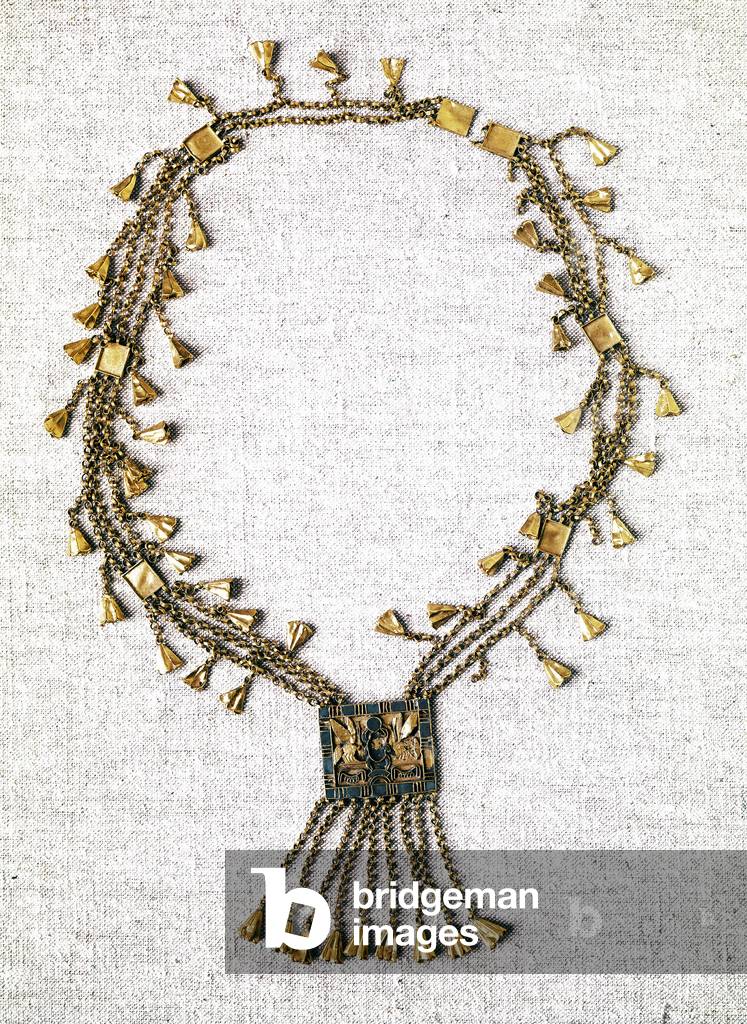
LRI4633569: Egyptian antiquite: gold necklace of Pharaoh Pinedjem. 21st dynasty (ca. 1069-945). Paris, Louvre Museum, Egyptian School / Bridgeman Images

LBY4633596: Stavanger in Norway. Photography 03/07/08 / Bridgeman Images

LBY4633639: Bergen in Norway. Photography 06/07/08. / Bridgeman Images
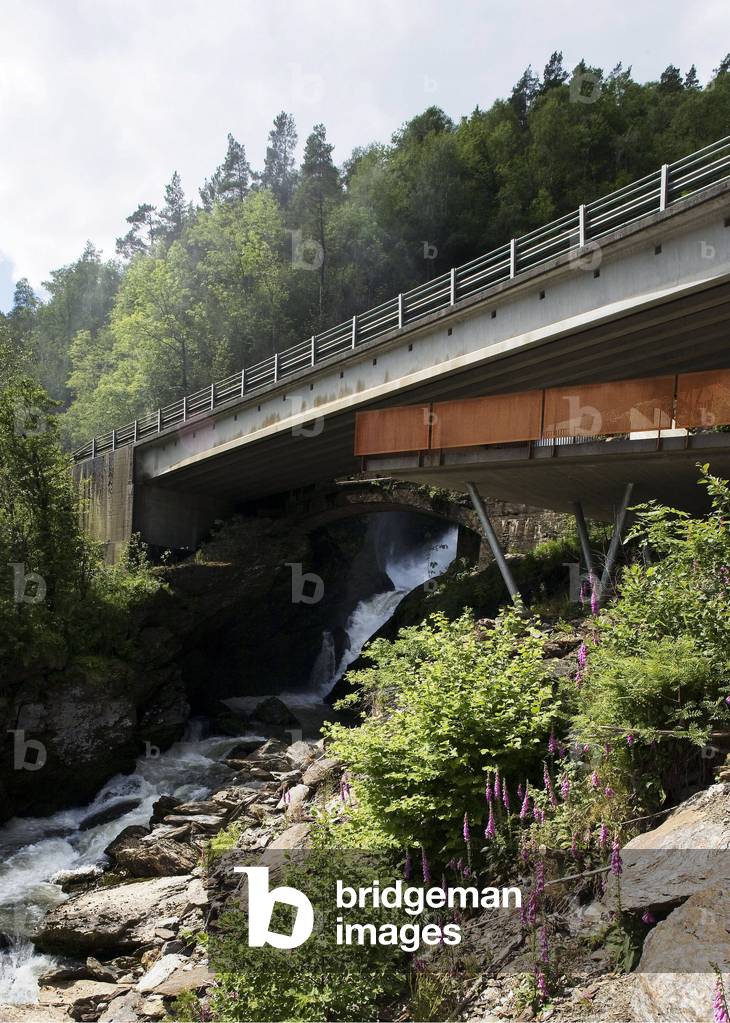
LBY4633357: Tourist facilities in Norway. Gateway, architects Haga Grov and Helge Schelderup, 2006. Photography 03/07/08. / Bridgeman Images

PIX4633391: Earth and Sun - artist view - Earth and Sun - Artwor / Bridgeman Images
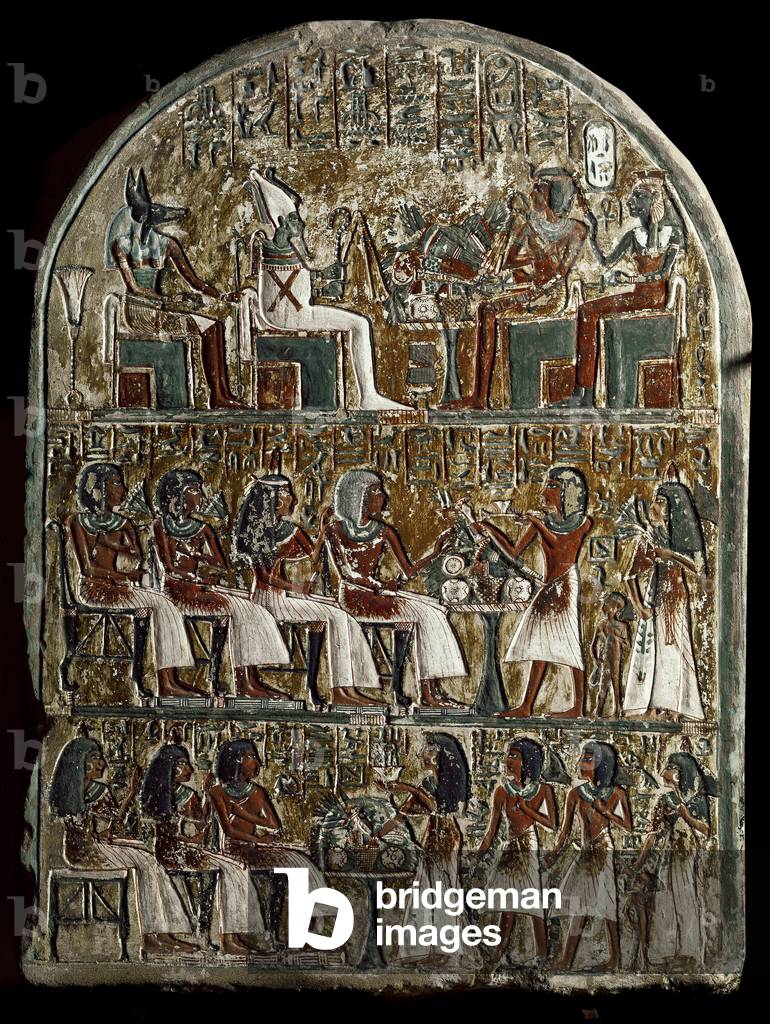
LRI4633559: Egyptian antiquite: stele of Irynefer, on top the gods Osiris and Anubis facing Amenophis I and Ahmes Nefertari divinises; in Irynefer center, his wife Mehytkhaty and their daughter Hathor make the funeral offering to their parents, in bottom Hathor adult makes offerings with his brothers to his parents. Reds of Sethi I and Ramases II. Around 1290-1220 BC. Painting on limestone from Deir el Medineh. Paris, Louvre Museum, Egyptian School / Bridgeman Images

PIX4633607: A couple watches an Aurora boreale - Norway - Lovers watching an Aurora - Norway / Bridgeman Images

LBY4633645: Bergen in Norway. Photography 06/07/08 / Bridgeman Images

OMG4631073: The Carrefour supermarket at the Mall of the Emirates in Dubai, UAE. Photography 17/12/09. / Bridgeman Images

OMG4631176: Palm Jumeirah Island in Dubai, United Arab Emirates. / Bridgeman Images

OMG4631188: Palm Jumeirah Island in Dubai, United Arab Emirates. / Bridgeman Images

LRI4631070: United Kingdom - Order of the Garter: coat plate - Motto “Honi est qui mal Thought” - Official model - beginning of the 19th century - Embroideries of gold, silver and silver blades, crantilla, pearls and silk velvet - Soul of large canvas and paper - H: 32,1 cm; w: 16,9 cm; weight: 70 g - Private collection, Anonymous / Bridgeman Images