
Print Friendly Version Page

2501741 Search Results

Planetary nebula M76 (NGC 650 - 51) in Persee - Planetary nebula M76 (NGC 650 - 51) in Persia

PIX4622876: Planetary nebula M76 (NGC 650 - 51) in Persee - Planetary nebula M76 (NGC 650 - 51) in Persia / Bridgeman Images

Rue de la Bucherie in Paris.

LBY4622987: Rue de la Bucherie in Paris. / Bridgeman Images

Planetary Owl Nebula - M97 (NGC 3587) in the Great Bear - Planetary Owl Nebula - M97 (NGC 3587) in the Great Bear

PIX4623012: Planetary Owl Nebula - M97 (NGC 3587) in the Great Bear - Planetary Owl Nebula - M97 (NGC 3587) in the Great Bear / Bridgeman Images

One of the three greenhouses of the garden of plants in Paris 75005.

ITR4623074: One of the three greenhouses of the garden of plants in Paris 75005. / Bridgeman Images

The National Gallery, Bodestrasse, Museum Island in Berlin (Germany). In 1841 King Friedrich Wilhelm IV of Prussia (1795-1861) designed a site that was to become an area dedicated to knowledge and art. In 90 years, this island became one of the largest spaces dedicated to art. The Nationalgalerie originally built to house Egyptian art collections. 1800 -1865).

TEC4620242: The National Gallery, Bodestrasse, Museum Island in Berlin (Germany). In 1841 King Friedrich Wilhelm IV of Prussia (1795-1861) designed a site that was to become an area dedicated to knowledge and art. In 90 years, this island became one of the largest spaces dedicated to art. The Nationalgalerie originally built to house Egyptian art collections. 1800 -1865). / Bridgeman Images

Altes Museum, Museum Island aae Berlin (Germany). Construction 1823-1828, architect Karl Friedrich Schinkel (1781-1841). Photography 2003.

TEC4620305: Altes Museum, Museum Island aae Berlin (Germany). Construction 1823-1828, architect Karl Friedrich Schinkel (1781-1841). Photography 2003. / Bridgeman Images

Landscape and animals. Painting by Nicolaes Berchem (1620-1683), Dutch painter, 1653. Dim: 130,5x195,5cm. Louvre Museum

LRI4620376: Landscape and animals. Painting by Nicolaes Berchem (1620-1683), Dutch painter, 1653. Dim: 130,5x195,5cm. Louvre Museum, Berchem, Nicolaes Pietersz. (1620-83) / Bridgeman Images

Nebula North America in the Swan - The North America Nebula - The North America Nebula (NGC 7000) is a large emission nebula located near the star Deneb in the constellation Swan. NGC 7000 is the North America Nebula in Cygnus. Located just 3 degrees east - southeast of Deneb, the brightest star in Cygnus, this large 2 x 3 degree area of red hydrogen - alpha emission nebulosity is a complex star - forming region choked with gas and obscuring dust. It is located about 1,500 light years away and is about 50 light years wide. Three open clusters are associated with the North America Nebula: NGC 6989 in the north - west part of the nebula, NGC 6996 in the north, and NGC 6997 in the west. LDN 935 is the dark nebula that makes up the Gulf of Mexico region, and B253 is the dark nebula at the top (north) of the image. The two brightest stars in the image are Xi Cygnii, the 3.7 magnitude red star at left, and 57 Cygnii, the 4.8 magnitude blue - white star at the right. The North America Nebula was first photographed by Max Wolf on December 12, 1890

PIX4620479: Nebula North America in the Swan - The North America Nebula - The North America Nebula (NGC 7000) is a large emission nebula located near the star Deneb in the constellation Swan. NGC 7000 is the North America Nebula in Cygnus. Located just 3 degrees east - southeast of Deneb, the brightest star in Cygnus, this large 2 x 3 degree area of red hydrogen - alpha emission nebulosity is a complex star - forming region choked with gas and obscuring dust. It is located about 1,500 light years away and is about 50 light years wide. Three open clusters are associated with the North America Nebula: NGC 6989 in the north - west part of the nebula, NGC 6996 in the north, and NGC 6997 in the west. LDN 935 is the dark nebula that makes up the Gulf of Mexico region, and B253 is the dark nebula at the top (north) of the image. The two brightest stars in the image are Xi Cygnii, the 3.7 magnitude red star at left, and 57 Cygnii, the 4.8 magnitude blue - white star at the right. The North America Nebula was first photographed by Max Wolf on December 12, 1890 / Bridgeman Images

Nebula NGC 6914 in the Cygn

PIX4620385: Nebula NGC 6914 in the Cygn / Bridgeman Images

The Marx Engels Forum, Mitteæa District Berlin (Germany). Construction 1986, architect Ludwig Engelhardt (1924-2001). Photography 10/08/03.

TEC4620394: The Marx Engels Forum, Mitteæa District Berlin (Germany). Construction 1986, architect Ludwig Engelhardt (1924-2001). Photography 10/08/03. / Bridgeman Images

Frankfurter Tor, Karl Marx Allee (formerly Stalinallee), Friedrichshain District in Berlin (Germany). Architect Hermann Henselmann (1905-1995), 1957-1961. Photography 10/08/03.

TEC4620424: Frankfurter Tor, Karl Marx Allee (formerly Stalinallee), Friedrichshain District in Berlin (Germany). Architect Hermann Henselmann (1905-1995), 1957-1961. Photography 10/08/03. / Bridgeman Images

Karl Marx Allee, Friedrichshain District, Berlin, Germany.

TEC4620461: Karl Marx Allee, Friedrichshain District, Berlin, Germany. / Bridgeman Images
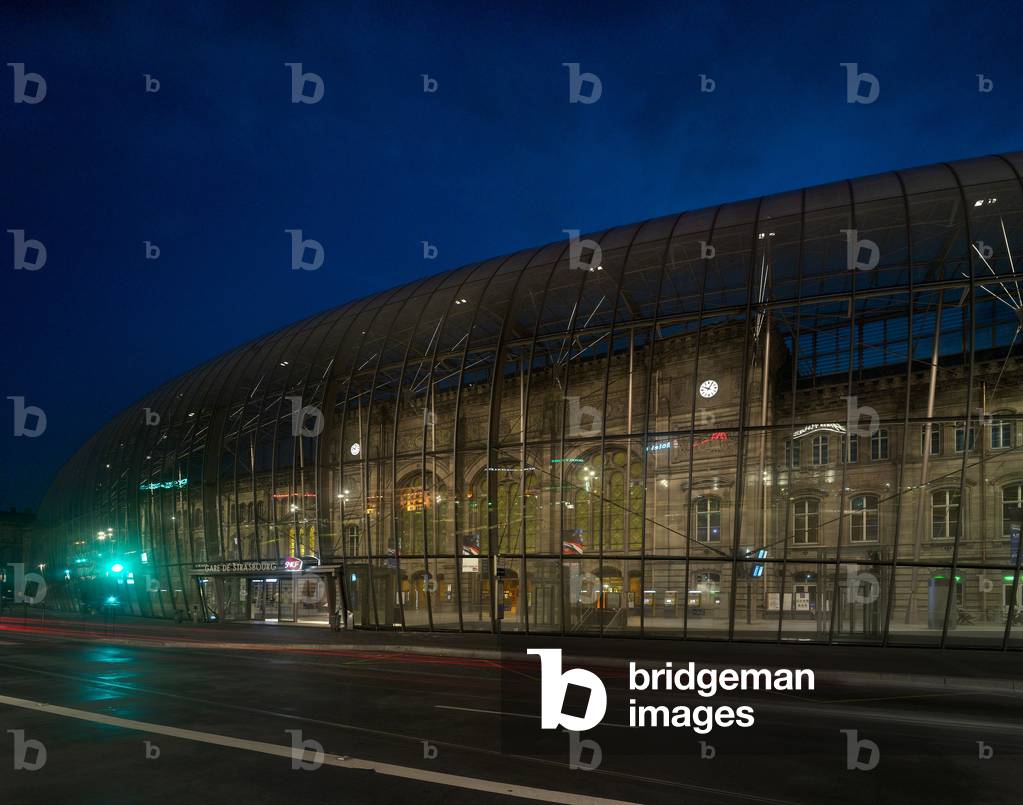
Strasbourg station (Bas Rhin, Alsace). Extension, Station Square. Architects Jean Marie Duthilleul and Etienne Tricaud, realisation 2007. Photography 30/07/08.

MDA4619627: Strasbourg station (Bas Rhin, Alsace). Extension, Station Square. Architects Jean Marie Duthilleul and Etienne Tricaud, realisation 2007. Photography 30/07/08., Duthilleul, Jean Marie (b.1952) / Bridgeman Images
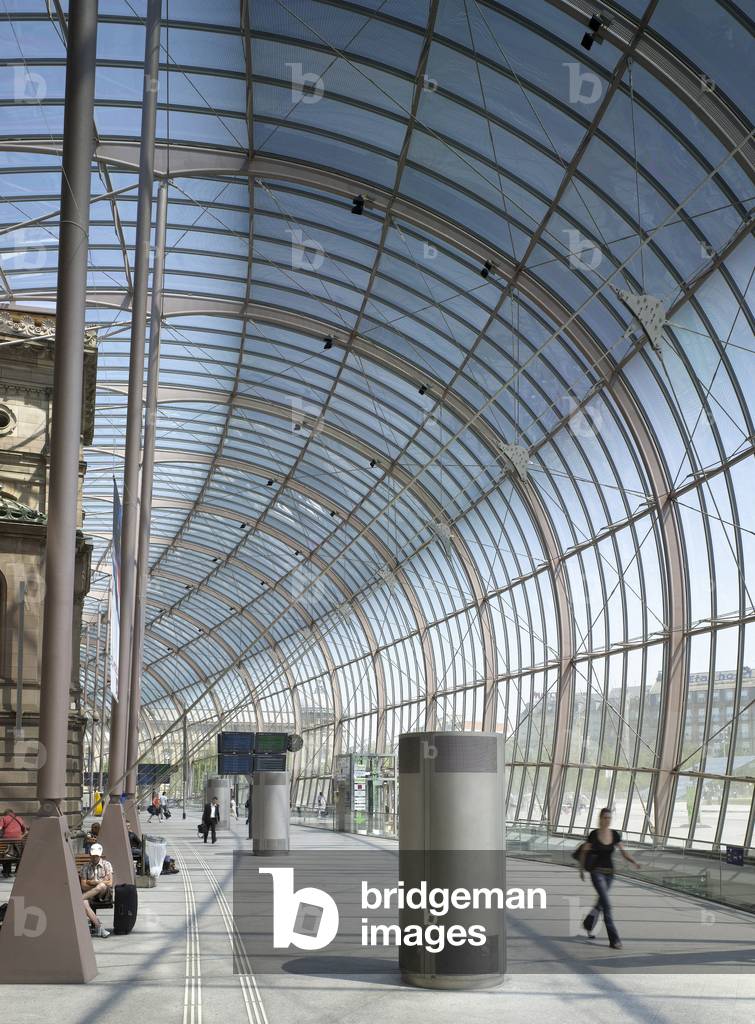
Strasbourg station (Bas Rhin, Alsace). Extension, Station Square. Architects Jean Marie Duthilleul and Etienne Tricaud, realisation 2007. Photography 30/07/08.

MDA4619668: Strasbourg station (Bas Rhin, Alsace). Extension, Station Square. Architects Jean Marie Duthilleul and Etienne Tricaud, realisation 2007. Photography 30/07/08., Duthilleul, Jean Marie (b.1952) / Bridgeman Images
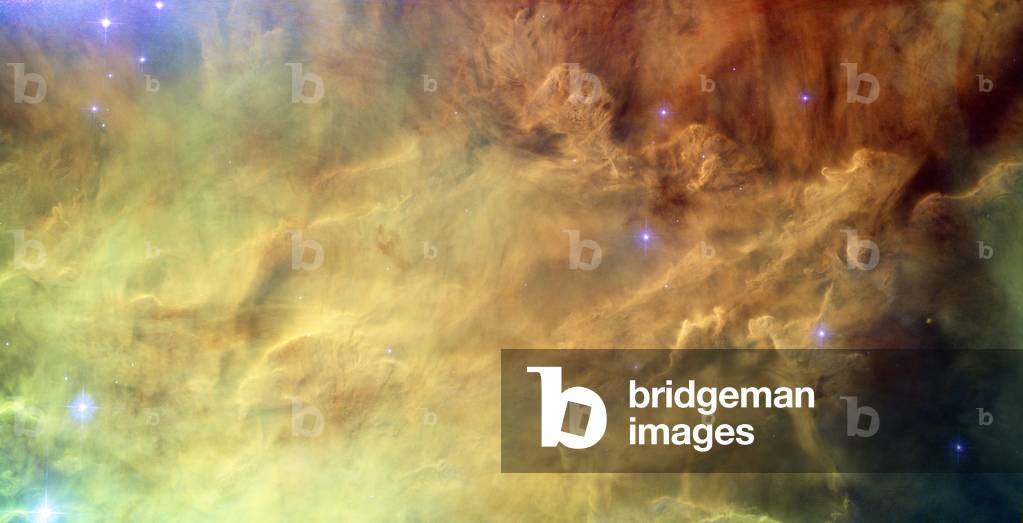
Centre de la nebula de la Lagoon (M8) dans le Sagittarius - In the heart of the Lagoon Nebula - Centre de la nebula de la Lagoon (M8) vue par le telescope Hubble (HST). This close - up shot of the centre of the Lagoon Nebula (Messier 8) clearly shows the delicate structures formed when the powerful radiation of young stars interacts with the hydrogen cloud they formed from. This image was created from exposures taken with the Wide Field Channel of the Advanced Camera for Surveys on Hubble. Light from glowing hydrogen (through the F658N filter) is coloured red. Light from ionised nitrogen (through the F660N filter) is coloured green and light through a yellow filter (F550M) is coloured blue. The exposure times through each filter are 1560 s, 1600 s and 400 s respectively. The blue - white flare at the upper - left of the image is scattered light from a bright star just outside the field of view. The field of view is about 3.3 by 1.7 arcminutes

PIX4619692: Centre de la nebula de la Lagoon (M8) dans le Sagittarius - In the heart of the Lagoon Nebula - Centre de la nebula de la Lagoon (M8) vue par le telescope Hubble (HST). This close - up shot of the centre of the Lagoon Nebula (Messier 8) clearly shows the delicate structures formed when the powerful radiation of young stars interacts with the hydrogen cloud they formed from. This image was created from exposures taken with the Wide Field Channel of the Advanced Camera for Surveys on Hubble. Light from glowing hydrogen (through the F658N filter) is coloured red. Light from ionised nitrogen (through the F660N filter) is coloured green and light through a yellow filter (F550M) is coloured blue. The exposure times through each filter are 1560 s, 1600 s and 400 s respectively. The blue - white flare at the upper - left of the image is scattered light from a bright star just outside the field of view. The field of view is about 3.3 by 1.7 arcminutes / Bridgeman Images

The Church of Remembrance in the Charlottenburg district of Berlin (Germany). Renovation1963, architect Eiermann Egon, construction 1895, architect Franz Schwechten. Photography 15/10/96.

TEC4619737: The Church of Remembrance in the Charlottenburg district of Berlin (Germany). Renovation1963, architect Eiermann Egon, construction 1895, architect Franz Schwechten. Photography 15/10/96. / Bridgeman Images

Cemetery in Berlin (Germany).

TEC4619751: Cemetery in Berlin (Germany). / Bridgeman Images

Kunstgewerbmuseum Martin Gropius Bau (former Museum of Decorative Arts) æa Kreutzberg, Stresemannstasse 110, Berlin, Germany. Construction 1877-1881, architects Martin Gropius (1824-1880) and Heino Schmieden (1835-1913). Photography 2003.

TEC4619774: Kunstgewerbmuseum Martin Gropius Bau (former Museum of Decorative Arts) æa Kreutzberg, Stresemannstasse 110, Berlin, Germany. Construction 1877-1881, architects Martin Gropius (1824-1880) and Heino Schmieden (1835-1913). Photography 2003. / Bridgeman Images

Nebula NGC 6559 in Sagittarius - Nebula NGC 6559 in Sagittarius - Located in Sagittarius, this nebula is located at a distance of about 5000 years - light from Earth. Mosaic of images obtained with a telescope of 35 cm, 22 hours of poses. This nebula is located at about 5000 light years from the Earth. Mosaic of images taken with 14.5”” RCOS telescope, 22 hours of exposure

PIX4619810: Nebula NGC 6559 in Sagittarius - Nebula NGC 6559 in Sagittarius - Located in Sagittarius, this nebula is located at a distance of about 5000 years - light from Earth. Mosaic of images obtained with a telescope of 35 cm, 22 hours of poses. This nebula is located at about 5000 light years from the Earth. Mosaic of images taken with 14.5”” RCOS telescope, 22 hours of exposure / Bridgeman Images

Wittenbergplatz Metro Station in Schoneberg, Berlin (Germany). First underground metro station in Berlin, on the first electric line. Built in reference to the classical buildings of the 18th century, especially Schinkel, it retains an abundant decor designed in a more contemporary style that survived the war. Architect Alfred Grenander (1863-1931), construction 1911-1913.

TEC4619833: Wittenbergplatz Metro Station in Schoneberg, Berlin (Germany). First underground metro station in Berlin, on the first electric line. Built in reference to the classical buildings of the 18th century, especially Schinkel, it retains an abundant decor designed in a more contemporary style that survived the war. Architect Alfred Grenander (1863-1931), construction 1911-1913. / Bridgeman Images

Dust in Iris Nebula - Dust in Iris Nebula - The Iris Nebula (NGC 7023) is a reflexion nebula illuminated by the star HD 200775. This image obtained by the Hubble Space Telescope shows a detail of the nebula or HD star 200775 (at the top of the image, out of the field) illuminates tiny particles of dust. This close - up of an area in the northwest region of the large Iris Nebula (NGC 7023) seems to be clogged with cosmic dust. With bright light from the nearby star HD 200775 illuminating it from above, the dust resemble thick mounds of billowing cotton. It is actually made up of tiny particles of solid matter, with sizes from ten to a hundred times smaller than those of the dust grains we find at home. Both background and foreground stars are dotted throughout the image. North is down, East is right. The field of view is 3.3 arcminutes. The image is a composite of four images obtained by the Hubble space Telescope through blue, green, near - infrared and H - alpha filters

PIX4620558: Dust in Iris Nebula - Dust in Iris Nebula - The Iris Nebula (NGC 7023) is a reflexion nebula illuminated by the star HD 200775. This image obtained by the Hubble Space Telescope shows a detail of the nebula or HD star 200775 (at the top of the image, out of the field) illuminates tiny particles of dust. This close - up of an area in the northwest region of the large Iris Nebula (NGC 7023) seems to be clogged with cosmic dust. With bright light from the nearby star HD 200775 illuminating it from above, the dust resemble thick mounds of billowing cotton. It is actually made up of tiny particles of solid matter, with sizes from ten to a hundred times smaller than those of the dust grains we find at home. Both background and foreground stars are dotted throughout the image. North is down, East is right. The field of view is 3.3 arcminutes. The image is a composite of four images obtained by the Hubble space Telescope through blue, green, near - infrared and H - alpha filters / Bridgeman Images
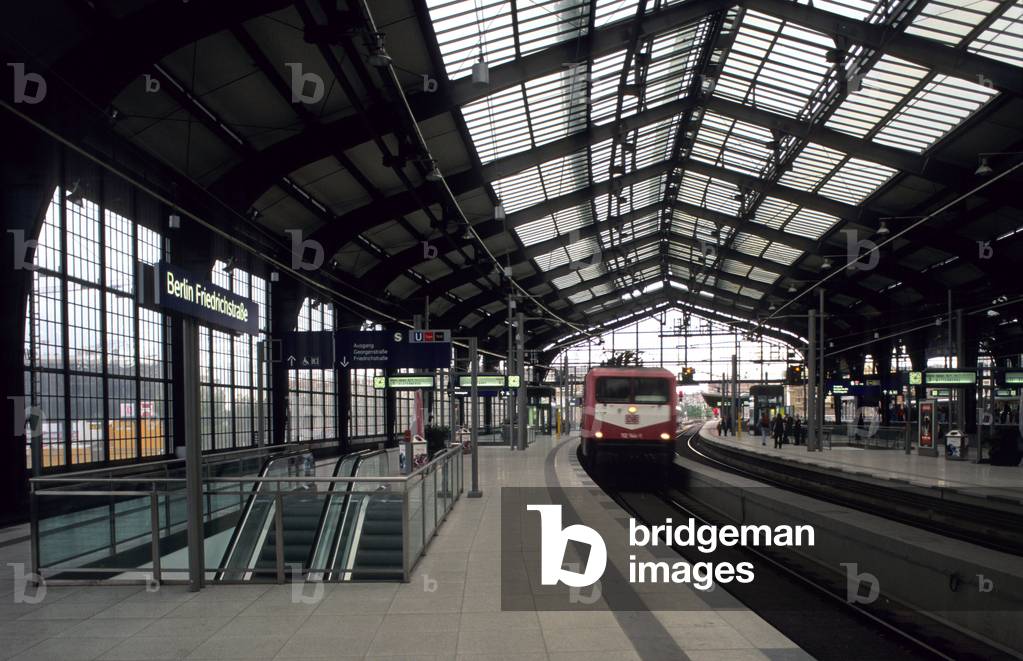
Friedrichstrasse Station, Mitte Quarter aae Berlin (Germany).

LBY4620623: Friedrichstrasse Station, Mitte Quarter aae Berlin (Germany). / Bridgeman Images

The 17th June Street and the Brandenburg Gate (Architect Carl Gotthard Langhans, 1788-1791) in Berlin, Germany. Photography 15/101/99.

LBY4620682: The 17th June Street and the Brandenburg Gate (Architect Carl Gotthard Langhans, 1788-1791) in Berlin, Germany. Photography 15/101/99. / Bridgeman Images

The deposition of Christ (oil on canvas, circa 1651)

LRI4621309: The deposition of Christ (oil on canvas, circa 1651), Le Sueur, Eustache (1617-55) / Bridgeman Images

Nebula in the galaxy NGC 6822 - Bubble nebulae in NGC 6822 - Nebula in the irregular galaxy NGC 6822, adjacent to our galaxy. This gas bubble houses massive stars known as Wolf - Rayet. NGC 6822 is a nearby irregular galaxy reminiscent of the Large Magellanic Cloud (LMC). Like the LMC it contains many, extremely hot stars of the Wolf - Rayet type, stars which often have intense stellar winds blasting from their surfaces. Small groups of such stars are found at the centres of the bubble nebulae seen here, which are the result of the stellar winds colliding with the more or less stationary interstellar medium in NGC 6822. At the interface of the collision, the interstellar medium glows, producing a thin, luminous bubble. Such bubbles are rare in the more turbulent Milky Way galaxy, but Henize 70 in the Large Magellanic Cloud is similar

PIX4620956: Nebula in the galaxy NGC 6822 - Bubble nebulae in NGC 6822 - Nebula in the irregular galaxy NGC 6822, adjacent to our galaxy. This gas bubble houses massive stars known as Wolf - Rayet. NGC 6822 is a nearby irregular galaxy reminiscent of the Large Magellanic Cloud (LMC). Like the LMC it contains many, extremely hot stars of the Wolf - Rayet type, stars which often have intense stellar winds blasting from their surfaces. Small groups of such stars are found at the centres of the bubble nebulae seen here, which are the result of the stellar winds colliding with the more or less stationary interstellar medium in NGC 6822. At the interface of the collision, the interstellar medium glows, producing a thin, luminous bubble. Such bubbles are rare in the more turbulent Milky Way galaxy, but Henize 70 in the Large Magellanic Cloud is similar / Bridgeman Images

The Berliner Ensemble in Berlin (Germany). This photographic work came from the exhibition Berlin, urban mutations presented at the Musee Carnavalet in Paris in 1997. A catalogue is available in the Open City editions. Photography 10/06/95.

JSN4620531: The Berliner Ensemble in Berlin (Germany). This photographic work came from the exhibition Berlin, urban mutations presented at the Musee Carnavalet in Paris in 1997. A catalogue is available in the Open City editions. Photography 10/06/95., Salmon, Jacqueline / Bridgeman Images

Nebula NGC 7023 in Cephee - NGC 7023 (The Iris Nebula) in Cepheus - The Iris Nebula (NGC 7023) is a reflexion nebula illuminated by the massive star HD 200775. The bright star HD 200775 shining through the nebula NGC 7023 is a 10 solar mass star centrally imbedded in a region surrounded by ambient molecular cloud material. Suns are born from vast clouds of dust and gas that gather in the dark places between the stars. Gravity causes these interstellar vapors to collapse inward until the pressure causes high enough temperatures at its center to fuse hydrogen, the university's basic building block, into helium - an event that also releases gamma - ray photons. These photons can take a million years to travel outward through the overlying matter until they reach the surface and escape into space as visible light. The push of the photon's rush to make an exit also stops the cloud's collapse and thus what began as thin gas and dust becomes a brilliant star illuminating the heavens and possibly warming near - by planets. This picture shows a place in deep space where these kinds of events have occurred. The brilliant star near the center of the picture is young and very hot - in relative terms, it was only recently created. The cloud from which it formed still surrounds this young Sun but is being blown away by the push of star's massive radiation. This picture shows the way it looked 1,300 years ago due to the distance that separates it from Earth and the speed that light travels

PIX4620555: Nebula NGC 7023 in Cephee - NGC 7023 (The Iris Nebula) in Cepheus - The Iris Nebula (NGC 7023) is a reflexion nebula illuminated by the massive star HD 200775. The bright star HD 200775 shining through the nebula NGC 7023 is a 10 solar mass star centrally imbedded in a region surrounded by ambient molecular cloud material. Suns are born from vast clouds of dust and gas that gather in the dark places between the stars. Gravity causes these interstellar vapors to collapse inward until the pressure causes high enough temperatures at its center to fuse hydrogen, the university's basic building block, into helium - an event that also releases gamma - ray photons. These photons can take a million years to travel outward through the overlying matter until they reach the surface and escape into space as visible light. The push of the photon's rush to make an exit also stops the cloud's collapse and thus what began as thin gas and dust becomes a brilliant star illuminating the heavens and possibly warming near - by planets. This picture shows a place in deep space where these kinds of events have occurred. The brilliant star near the center of the picture is young and very hot - in relative terms, it was only recently created. The cloud from which it formed still surrounds this young Sun but is being blown away by the push of star's massive radiation. This picture shows the way it looked 1,300 years ago due to the distance that separates it from Earth and the speed that light travels / Bridgeman Images

Nebula NGC 7538 in Cassiope

PIX4620603: Nebula NGC 7538 in Cassiope / Bridgeman Images

La cathedrale de Sens Painting by Jean Baptiste Camille Corot (1796-1875) 1874 Dim. 61x40 cm Paris, Musee du Louvre

LRI4620714: La cathedrale de Sens Painting by Jean Baptiste Camille Corot (1796-1875) 1874 Dim. 61x40 cm Paris, Musee du Louvre, Corot, Jean Baptiste Camille (1796-1875) / Bridgeman Images
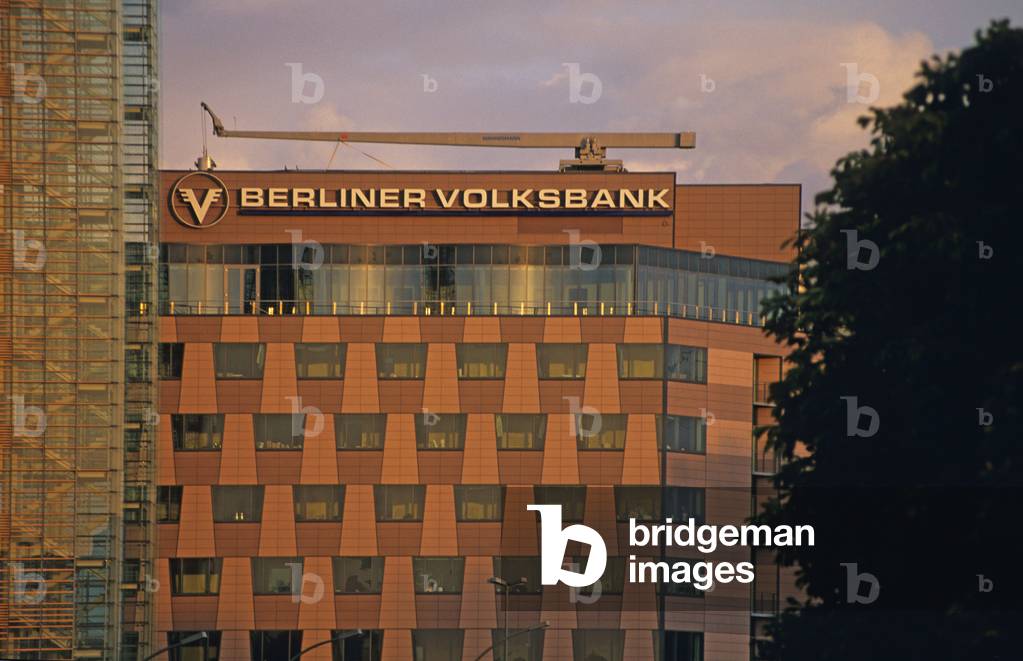
The Volksbank in Berlin (Germany). Construction 1994-1998, architects Arata Isozaki and Steffen Lehmann. Photography 15/10/99.

LBY4620759: The Volksbank in Berlin (Germany). Construction 1994-1998, architects Arata Isozaki and Steffen Lehmann. Photography 15/10/99. / Bridgeman Images

Place du Pantheon in Paris.

TEC4622703: Place du Pantheon in Paris. / Bridgeman Images
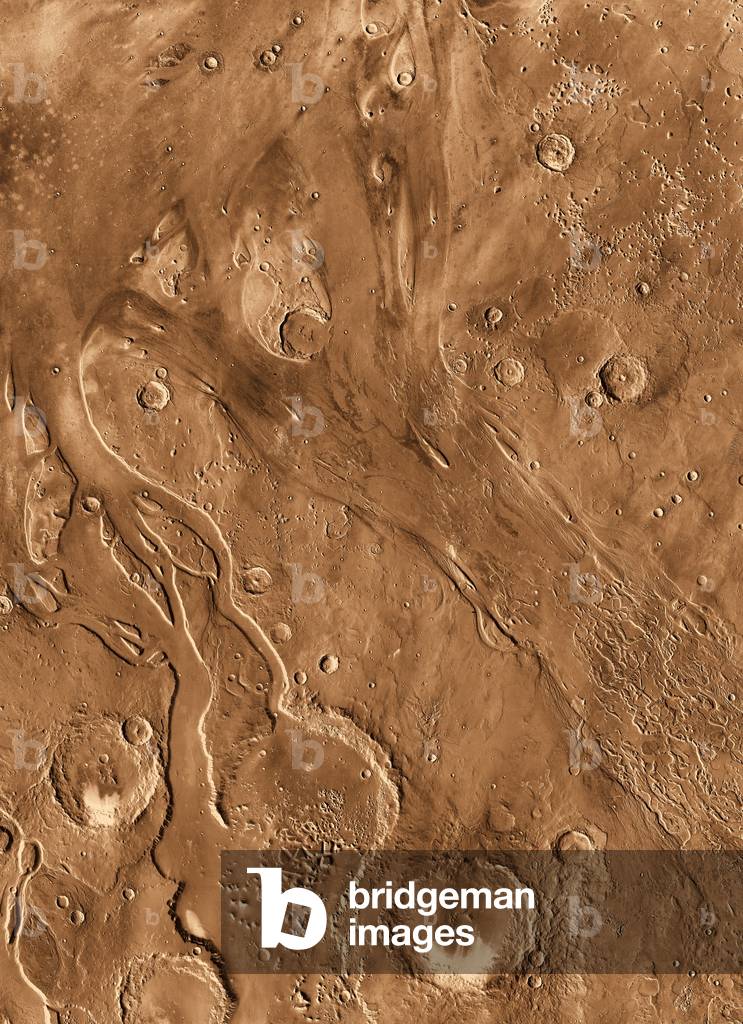
Ancient channels on Mars - Ancient channels on planet Mars. Ares Vallis - View of the area of Ares Vallis and Tiu Vallis obtained by the probe 2001 Mars Odyssey. This region seems to have been shaped by the passage of water. Channels scoured by ancient outbursts of flood waters are seen in this orbital view from Odyssey's Thermal Emission Imaging System.The channels are billions of years old and have likely been affected by multiple processes over time. Here, two channels, Tiu Vallis on the left and Ares Vallis on the right, flow northward from the highlands of the southern hemisphere of Mars.The stark difference between today's cold, dry Mars and the evidence of flood waters in the past tells scientists that the Martian climate has seen great changes

PIX4616321: Ancient channels on Mars - Ancient channels on planet Mars. Ares Vallis - View of the area of Ares Vallis and Tiu Vallis obtained by the probe 2001 Mars Odyssey. This region seems to have been shaped by the passage of water. Channels scoured by ancient outbursts of flood waters are seen in this orbital view from Odyssey's Thermal Emission Imaging System.The channels are billions of years old and have likely been affected by multiple processes over time. Here, two channels, Tiu Vallis on the left and Ares Vallis on the right, flow northward from the highlands of the southern hemisphere of Mars.The stark difference between today's cold, dry Mars and the evidence of flood waters in the past tells scientists that the Martian climate has seen great changes / Bridgeman Images

The cemetery of Pere Lachaise in Paris. The cemetery opened around 1804 on a land formerly owned by the Jesuit. The architect Alexandre Theodore Brongniart conceived the plans of 1810. Many artists worked at Pere-Lachaise in the first half of the 19th century. With an area of almost 44 hectares, it counts about 70 000 monuments.ÆPhotograph 06/06/05.

TEC4616567: The cemetery of Pere Lachaise in Paris. The cemetery opened around 1804 on a land formerly owned by the Jesuit. The architect Alexandre Theodore Brongniart conceived the plans of 1810. Many artists worked at Pere-Lachaise in the first half of the 19th century. With an area of almost 44 hectares, it counts about 70 000 monuments.ÆPhotograph 06/06/05. / Bridgeman Images

The three (Trio) (Lithography, 1913)

LRI4616336: The three (Trio) (Lithography, 1913), Malevich, Kazimir Severinovich (1878-1935) / Bridgeman Images

Houses in the district of Mouzaia in Parisæ20e.

TEC4616369: Houses in the district of Mouzaia in Parisæ20e. / Bridgeman Images

Landscape with red houses Painting by Kasimir Severinovich Malevich (Malevich, Malevic) (1878-1935) Sun 107x106 cm 1910 Sun Kunstmuseum Bale

LRI4616380: Landscape with red houses Painting by Kasimir Severinovich Malevich (Malevich, Malevic) (1878-1935) Sun 107x106 cm 1910 Sun Kunstmuseum Bale, Malevich, Kazimir Severinovich (1878-1935) / Bridgeman Images


Back to top