
Print this page or go back to standard view.
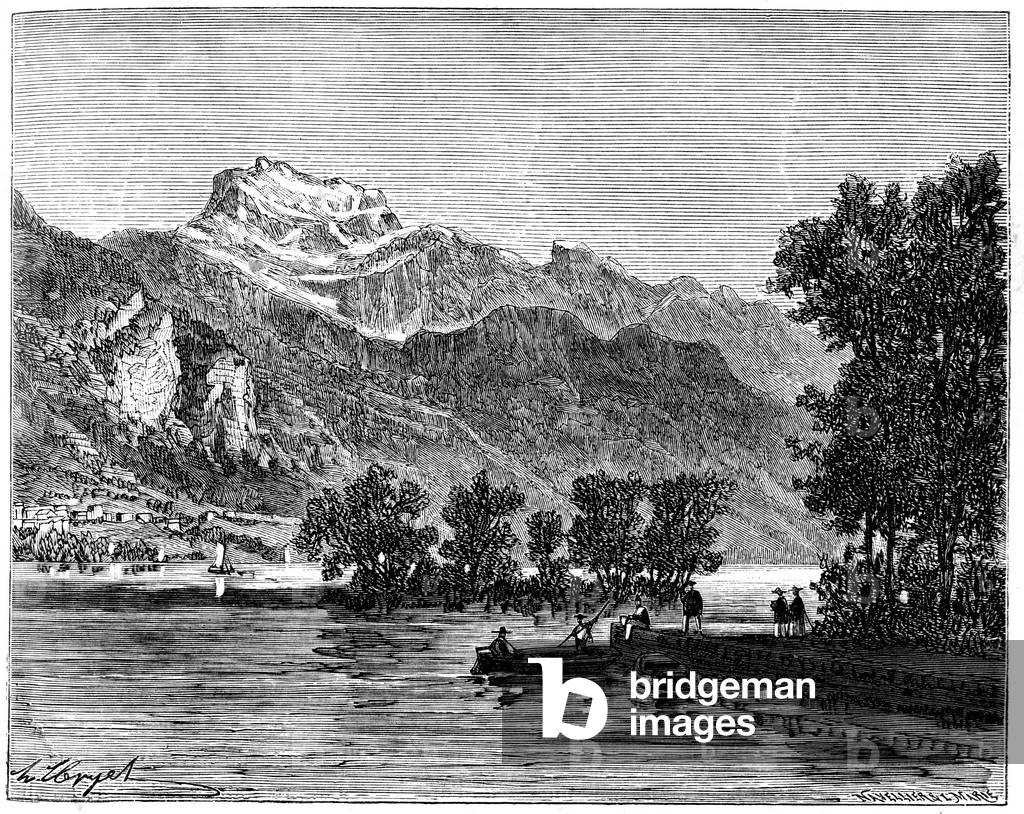
PCT4277754: Lake Annecy, Haute-Savoie (Haute Savoie) in the 19th century. View of the peaks of the Alps and promenade boat. Engraving from La France Illustree de Malte-Brun, edition Rouff 1882. / Bridgeman Images

PCT4277796: Illustration by Edouard de Beaumont (1821-1888) for the fantastic novel “Le Devil amoureux” by Jacques Cazotte (1719-1792). Edition Ganivet 1845. spectrum - monster - ghost - bat, Beaumont, Edouard de (1821-88) (after) / Bridgeman Images

PCT4277821: Illustration (grave wood) by Henry Bischoff (1882-1951) for the fantastic novel “Le Devil amoureux” by Jacques Cazotte (1719-1792). Edition Cres 1920. Belzebuth appears in Alvare as a monstrous camel head - monster - demon - apparition -, Bischoff, Henry (1882-1951) / Bridgeman Images

PCT4277095: War and peace. Allegorie (cartoon) by Gabriele Galantara (1867-1937) on the last cover of the French satirical newspaper “” L'plate au beurre””” n°325 of June 22, 1907. At the end of the International Peace Conference in The Hague, the allegorical figures representing Peace and War exchanged their respective attributes: Peace (lean, chetive, fragile) wears the sword (sword), the red uniform, the helmet and the military boots, the War (strong and well muscular) carries the wings of angel, the white tunic, the The legend says: The results (of the conference): peaceful militarism... or armed peace - policy of disarmament - pacifism., Galantara, Gabriele (Rata Langa) (1865-1937) / Bridgeman Images

PCT4274052: A banquet for the poor (charity - charity committee - Catholic relief - soup - lady patroness). On Christmas Day 1927, Cardinal Ferrari (directed in Paris by Abbe Rivota) organized a mass for the poor, followed by a covered banquet of 2000. Dessin de Damblans (detail) in Pelerin no. 2598 of 9 January 1927. Extract from the text: “” the vast exhibition centre of the Porte de Versailles had been rented for the poor. It was there that more than 2000 unhappy people came to attend Mass and receive the blessing of Bishop Chaptal. After that a banquet was served to them, to the sound of a joyful orchestra, by the ladies of high society and by devoues students.” The work created by Cardinal Andrea Carlo Ferrari (1850-1921), also known as the Compagnie de Saint Paul, is a foundation that brings together canteens for workers, houses of the people and institutions for young girls in difficulty., Damblans, Eugene (1865-1945) / Bridgeman Images

PCT4274168: Young boy (child - boy) posing in a photographer studio with beautiful clothes and a wooden horse with wheels. Original photographic print early 20th century signed H. Tarnand, Cavaillon., Unknown photographer, (20th century) / Bridgeman Images

PCT4274350: Toulouse: the Canal de Brienne and the bridge of the Twin Bridges. Here, in 1814, during what is known as the Battle of Toulouse, the English troops of Wellington malmended the French soldiers of Marechal Soult. To protect his men's retirement, Soult ordered the destruction of some twenty bridges built in Riquet's time on the Canal du Midi. The armistice was signed on the edge of the same Canal at Naurouze on 18 April 1814. Postcard beginning 20th century., Unknown photographer, (20th century) / Bridgeman Images

PCT4274560: The birth of Polichinelle. Drawing by Albert Robida (1848-1926) in a book of children's readings 1920-1930., Robida, Albert (1848-1926) / Bridgeman Images

PCT4274366: Canal du Midi (Canal des deux seas). Naurouze threshold, sharing the waters of the Ocean and the Mediterranean. Obelisque erected by the heritiers of Riquet in 1825, on boulders (poudingue of the tertiary era). Legend says that these stones, separated by faults, slowly come closer and that when they touch each other, the end of the world will be near. This assertion is found in a poesy by the troubadour Raimon de Miraval at the beginning of the 13th century, and in a prophetia by Nostradamus in the 16th century. Even today, some superstitious visitors sometimes throw stones into cracks to prevent them from closing! Photo by Patrice Cartier, Cartier, Patrice / Bridgeman Images

PCT4273723: Nordic mythology: songs of L'Edda, Icelandic legend, early 20th century (chromo) / Bridgeman Images
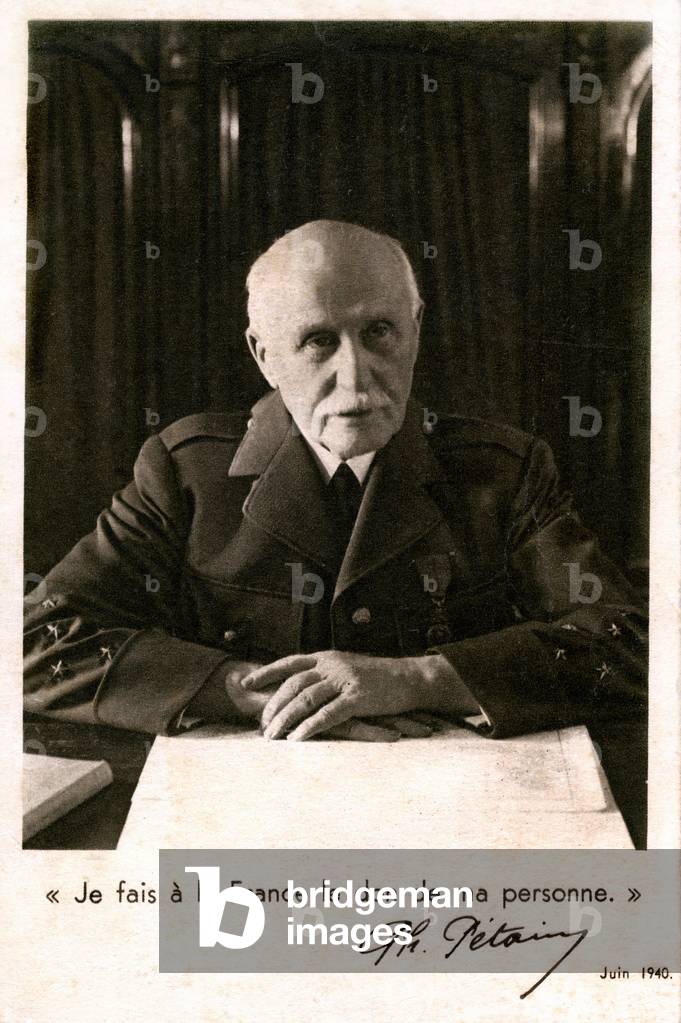
PCT4273856: I donate myself to France. Statement by Marechal Philippe Petain with his signature under his photographic portrait, June 1940. Card sold for National Relief., Cartier, Patrice / Bridgeman Images

PCT4274811: Ball of tallow, new from Guy de Maupassant. Cover of the edition Ollendorff beginning 20th century illustrated by Jeanniot., Cartier, Patrice / Bridgeman Images

PCT4274897: Girl watering flower pots in a garden. Illustration of a school book beginning 20th century., Unknown Artist, (20th century) / Bridgeman Images

PCT4274726: Child posing for the photo, standing on an armchair in a garden. Anonymous sepia print beginning 20th century. Original photograph 9 x 12 cm, Patrice Cartier Collection., Unknown photographer, (20th century) / Bridgeman Images

PCT4274898: Harvest: while adults pick grapes from the vine, two children eat a bunch. Illustration of a school book beginning 20th century., Unknown Artist, (20th century) / Bridgeman Images
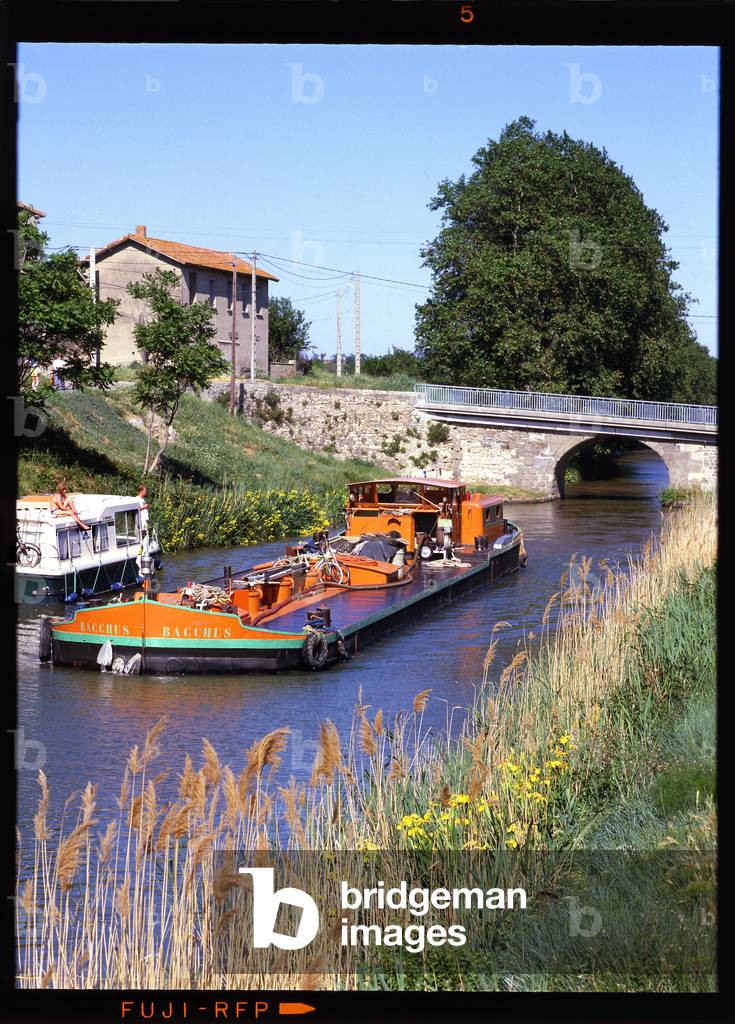
PCT4273980: The Bacchus last pinardier (peniche carrying wine) during one of his final trips on the Canal du Midi (Canal des deux mers) in 1986. Here he meets a tourist boat (pleasure) in the Minervois country, at the edge of the departments of the Aude and the Herault (Occitanie - Languedoc). Photo by Patrice Cartier, Cartier, Patrice / Bridgeman Images

PCT4274107: Cover (cardboard - binding) modern-style (modern style) of the book “” Food and Hygiene of Children”” by Dr. Comby, edition Vigot freres 1908. First dish, back and 4th dish ornate. A mother (young mother) carries in her arms her newborn baby wraps in a cloth. Illustration by Miss M. Duval-Coppin (Duval Coppin)., Cartier, Patrice / Bridgeman Images

PCT4274197: Bernadette Soubirous, 19th century (photo), French Photographer, (19th century) / Bridgeman Images

PCT4274244: The “Ship Railway” of the Canal des deux mers (Canal du Midi), 1912 (print), Unknown photographer, (20th century) / Bridgeman Images

PCT4274984: The rain falls... child (young man) sheltering under an umbrella on the street of a city swept by a heavy rain. Engraving 19th century. / Bridgeman Images

PCT4275041: The zebras, 19th century (chromo) / Bridgeman Images

PCT4275080: Antropomorphic frog, dressed with a dress, on the edge of a pond. Detail of an illustration of the Fables of La Fontaine illustrated by Godefroy, 19th century. / Bridgeman Images

PCT4275301: Steam train: locomotive with driver, a children's book early 20th century (engraving), French School, (20th century) / Bridgeman Images
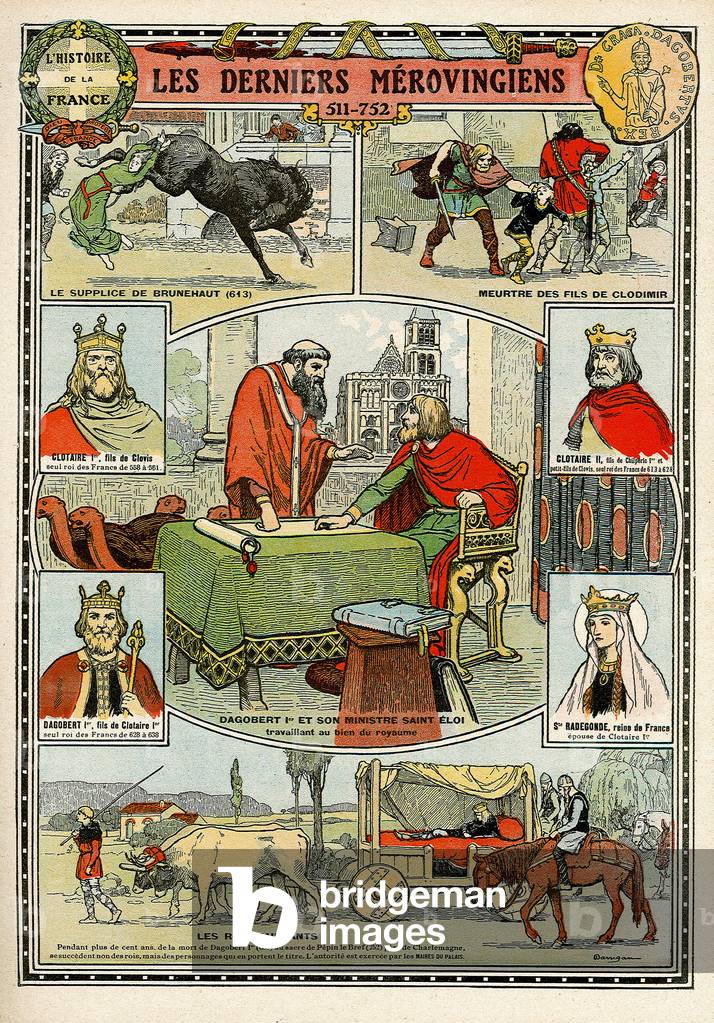
PCT4275489: Illustration for "Histoire de France illustrated with 88 paintings in 5 colours", 1935 (print), Cartier, Patrice / Bridgeman Images

PCT4275319: At sea towards the Pole: the crew of a ship (sailboat) sees a group of whales. Illustration of the novel by Jules Verne (1828-1905) “" The Ice Sphinx "”, 1897. Drawing by George Roux (1855-1929) grave by Hamel., Roux, George (1853-1929) / Bridgeman Images

PCT4274634: Victor Hugo “The Miserables”. Illustration by Brion. Gavroche, a kid from Paris, takes two lost young children under his protection. He will offer them a piece of bread and teach them a few words of Parisian slang. Moms - momacques. Engraving of the edition Ollendorff 1906. See also ref. 33443 and CHD10335. / Bridgeman Images

PCT4274804: Cover ofr "Les Contes de le Becasse" written by Maupassant, 1901 (print), Barbut, Lucien (1862-1926) / Bridgeman Images

PCT4274820: Lullaby “” Sleep”” (Colin my little brother). Illustration of Le Natur in “” Chansons et rounds enfantines”” Garnier edition late 19th century. A baby in his bed, his big brother sings a song to him to sleep. / Bridgeman Images
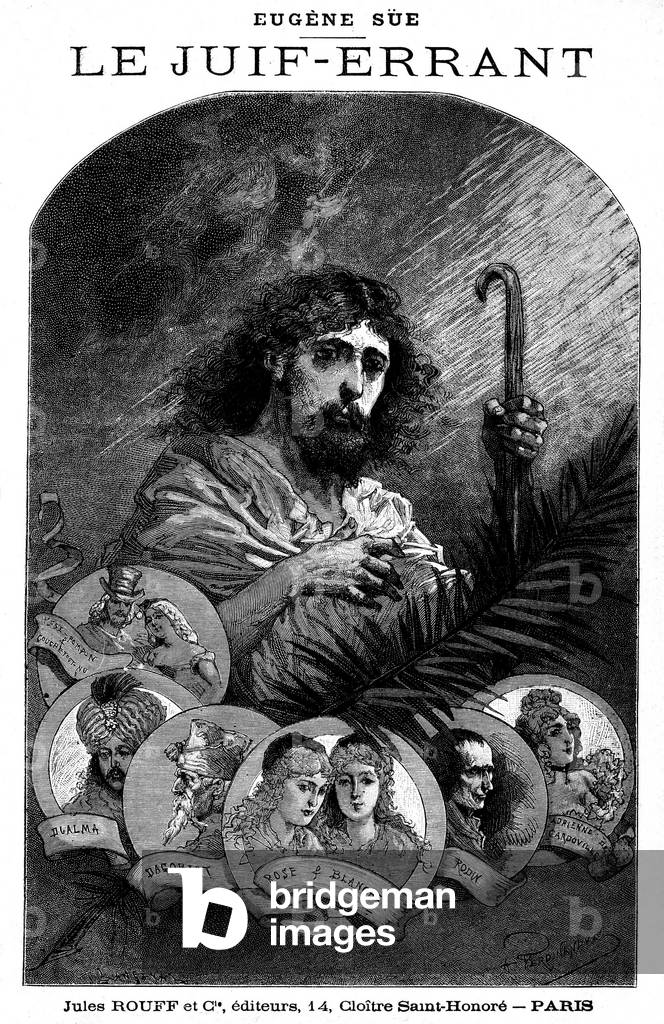
PCT4276774: Frontispice of Eugene Sue's novel “The Wandering Jew”” - Engraving by FERDINANDUS in the Jules Rouff edition of 1883. Portrait of the main characters: Rose et Blanche Rennepont, / Bridgeman Images
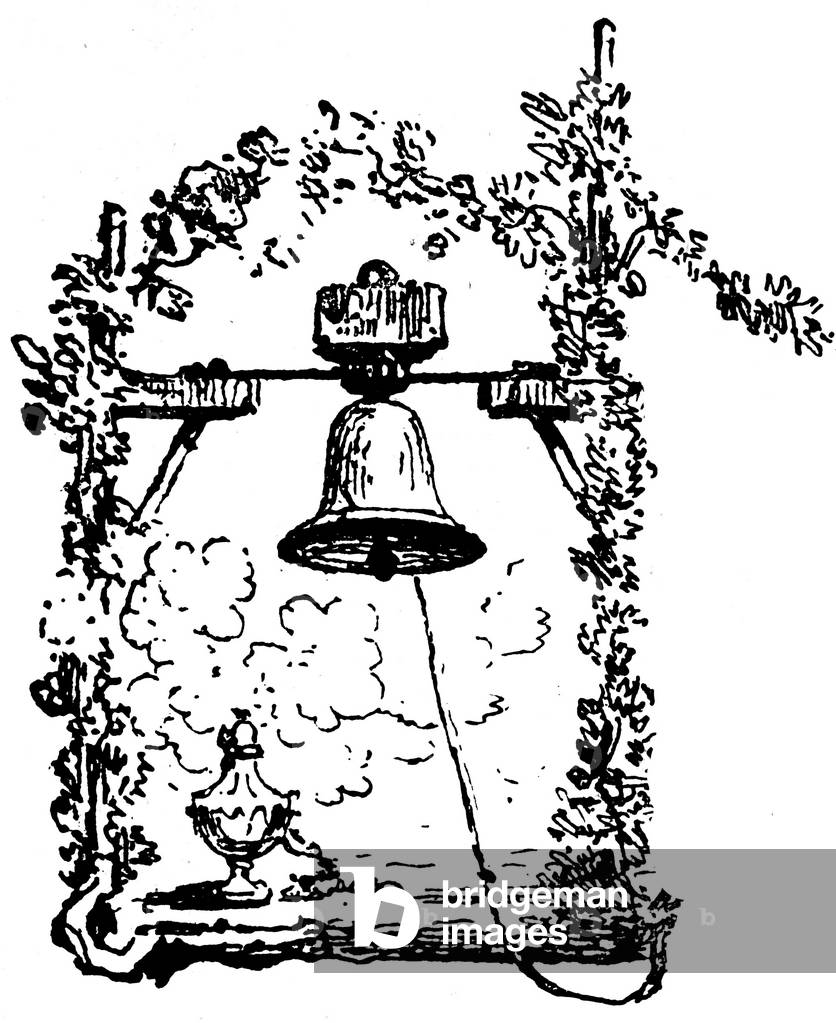
PCT4276858: Bell with its rope - detail of an engraving beginning 20th century -, Unknown Artist, (20th century) / Bridgeman Images

PCT4276964: One of the characters of Honore de Balzac's Human Comedie (1799-1850): Lucien de Rubempre (Lost Illusions) smoking. Engraving mid 19th century. / Bridgeman Images

PCT4277014: Gargantua education: the young gentleman learns to play flute with his music teacher. Engraving by Gustave Dore illustrating the work of Rabelais., Dore, Gustave (1832-83) / Bridgeman Images

PCT4277099: Giant Gargantua, visiting the city of Paris, rests at the top of the towers of Notre Dame and contemplates the people of the Parisians he is preparing to compress. Illustration by Gustave Dore for the work of Francois Rabelais., Dore, Gustave (1832-83) / Bridgeman Images
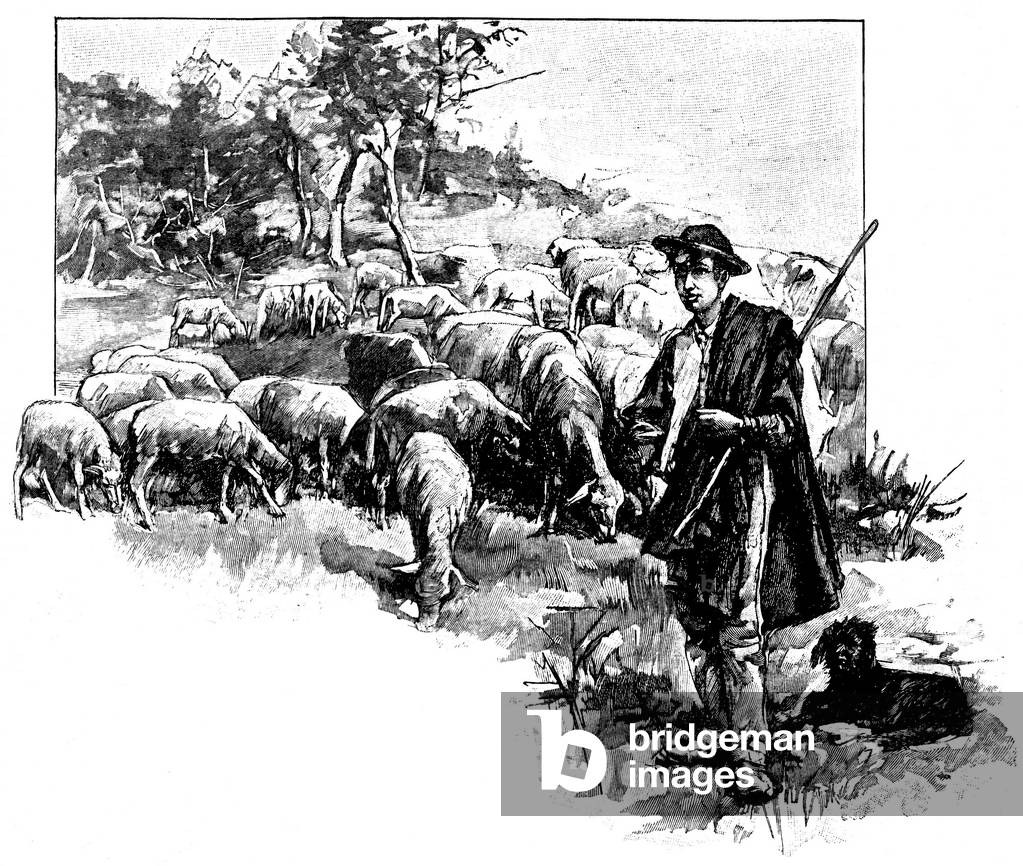
PCT4276445: The Shepherd: a young shepherd keeping his herd of sheep (sheep) with his dog. Engraving late 19th century. / Bridgeman Images
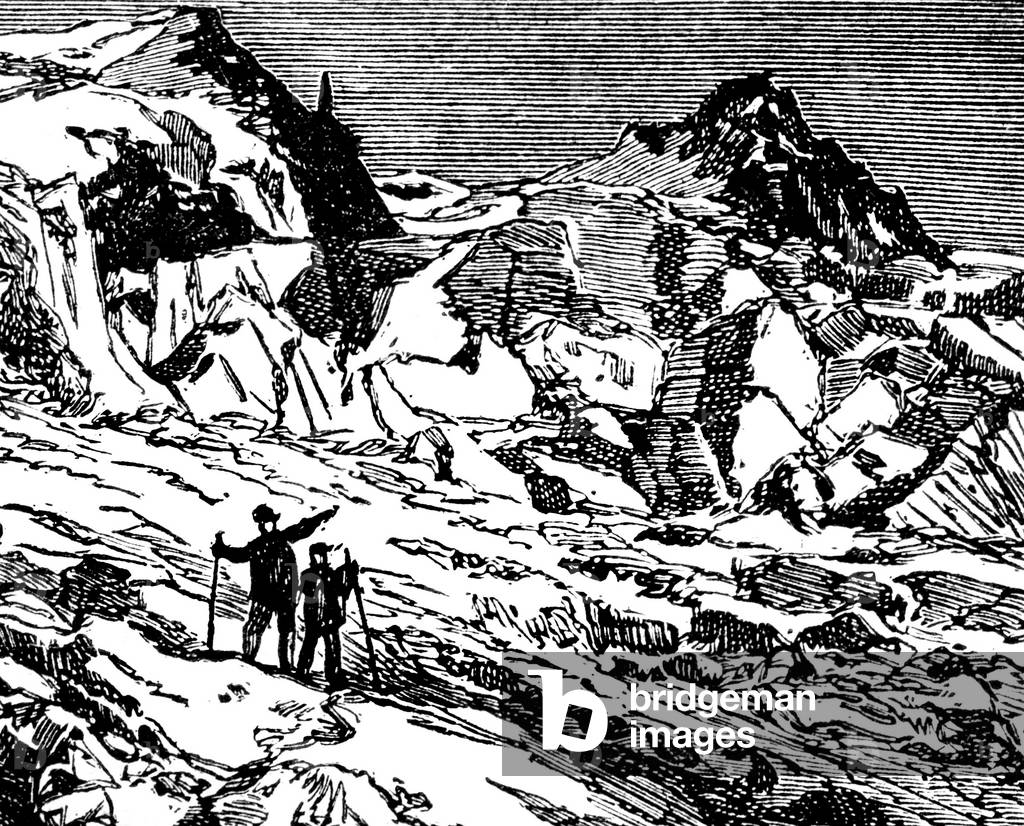
PCT4277469: View of the Alps with snow-capped peaks with two walkers. Engraving by Yon (detail) for the story of Paul Verne “” Fortieth ascension francaise au Mont-Blanc”” (Mont Blanc) 1871. / Bridgeman Images

PCT4276615: Joiner at work with his workbench, with his tools, 1894 (engraving) / Bridgeman Images