Unknown Artist, (19th century) Assets (17892 in total)

Search options

Orientation
Colour

Display options

View

Print

To print search results, use print friendly version of this page.

Results

Former voto (ex voto) sailor, popular offer as a pledge of devotion and gratitude of the sailor surviving to the dangers of the sea coming from the Church of Carmine, Torre del Greco, near Naples, 19th century Italy

LSE4319607: Former voto (ex voto) sailor, popular offer as a pledge of devotion and gratitude of the sailor surviving to the dangers of the sea coming from the Church of Carmine, Torre del Greco, near Naples, 19th century Italy, Unknown Artist, (19th century) / Bridgeman Images
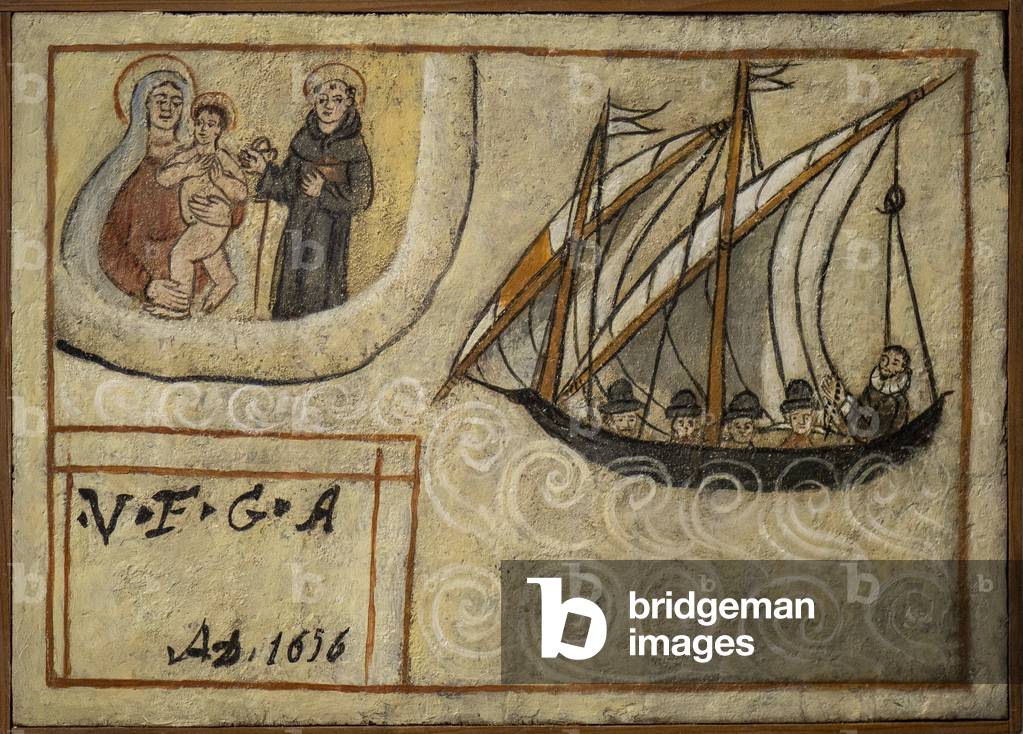
Former voto (ex voto) sailor, popular offer as a pledge of devotion and gratitude of the sailor surviving to the dangers of the sea coming from the Church of Carmine, Torre del Greco, near Naples 19th century Italy

LSE4319635: Former voto (ex voto) sailor, popular offer as a pledge of devotion and gratitude of the sailor surviving to the dangers of the sea coming from the Church of Carmine, Torre del Greco, near Naples 19th century Italy, Unknown Artist, (19th century) / Bridgeman Images

An Algerian native brings the head of the bandit Ali Ould Chick, who had cleared Nemours's mail, for a bonus of 1500 francs, to the office of Marnia, a French military post built in 1844 in the department of Oran, on the border Algeria Morocco. Engraving in “” Le petit journal”” 17/10/1891. Selva's collection.

LSE4323552: An Algerian native brings the head of the bandit Ali Ould Chick, who had cleared Nemours's mail, for a bonus of 1500 francs, to the office of Marnia, a French military post built in 1844 in the department of Oran, on the border Algeria Morocco. Engraving in “” Le petit journal”” 17/10/1891. Selva's collection., Unknown Artist, (19th century) / Bridgeman Images

Portrait of the Baron of Mohrenheim, Russian ambassador to France from 1884 to 1898. Engraving in “” Le petit journal”” 4/06/1892. Selva's collection.

LSE4323641: Portrait of the Baron of Mohrenheim, Russian ambassador to France from 1884 to 1898. Engraving in “” Le petit journal”” 4/06/1892. Selva's collection., Unknown Artist, (19th century) / Bridgeman Images

Mucius Scaevola before Porsenna (Mucius Scaevola before Porsenna). Caius Mucius Scaevola, a young Roman patrician captured by the royal guard of Porsenna (Porsinna, Porsena), (Etruscan king, VIth century BC) who siege Rome (Italy), plunged his hand into the fire, in order to prove his determination and courage.

XEE4192954: Mucius Scaevola before Porsenna (Mucius Scaevola before Porsenna). Caius Mucius Scaevola, a young Roman patrician captured by the royal guard of Porsenna (Porsinna, Porsena), (Etruscan king, VIth century BC) who siege Rome (Italy), plunged his hand into the fire, in order to prove his determination and courage., Unknown Artist, (19th century) / Bridgeman Images

The dance of death, the pope and a skeleton (print)

LRI4677366: The dance of death, the pope and a skeleton (print), Unknown Artist, (19th century) / Bridgeman Images

The salt wells of Ho-Boung (Ho Boung), the open galleries on the mountain side, 20 metres deep, are supported by wooden frames, the water is brought by bamboo ducts into marble troughs, each corresponding to a furnace, where salt water is concentrated for two days until a block of salt is obtained. 60 kilos, mold in an iron basin. Engraving to illustrate the voyage of exploration in Indochina, by Francis Garnier, lieutenant of ship, in 1866-1868, published in “” Le tour du monde””” 1872, edited by Edouard Charton, edition Hachette, Paris. Selva Collection.

LSE4329286: The salt wells of Ho-Boung (Ho Boung), the open galleries on the mountain side, 20 metres deep, are supported by wooden frames, the water is brought by bamboo ducts into marble troughs, each corresponding to a furnace, where salt water is concentrated for two days until a block of salt is obtained. 60 kilos, mold in an iron basin. Engraving to illustrate the voyage of exploration in Indochina, by Francis Garnier, lieutenant of ship, in 1866-1868, published in “” Le tour du monde””” 1872, edited by Edouard Charton, edition Hachette, Paris. Selva Collection., Unknown Artist, (19th century) / Bridgeman Images

Tsar Alexander III (1815-1894) dances the quadrille d'honneur at a feast given by the Count of Montebello, French ambassador to Russia. Engraving in “” Le petit journal”” 11/03/1893. Selva's collection.

LSE4323725: Tsar Alexander III (1815-1894) dances the quadrille d'honneur at a feast given by the Count of Montebello, French ambassador to Russia. Engraving in “” Le petit journal”” 11/03/1893. Selva's collection., Unknown Artist, (19th century) / Bridgeman Images

The capture of Thiassale (Ivory Coast), by Captain Jean Baptiste Marchand (1863-1934), commander of the colony's military forces, with a troop of 115 men, they fought the Baoule warriors between the Bendama River and the virgin forest. Engraving in “” Le petit journal”” 26/08/1893. Selva's collection.

LSE4323818: The capture of Thiassale (Ivory Coast), by Captain Jean Baptiste Marchand (1863-1934), commander of the colony's military forces, with a troop of 115 men, they fought the Baoule warriors between the Bendama River and the virgin forest. Engraving in “” Le petit journal”” 26/08/1893. Selva's collection., Unknown Artist, (19th century) / Bridgeman Images

The scaphandlers are looking for the corpses of the Cabo Machichaco and Alfonso III ships, which exploded in the port of Santander (Spain). Engraving in “” Le petit journal””/1893. Selva's collection.

LSE4323841: The scaphandlers are looking for the corpses of the Cabo Machichaco and Alfonso III ships, which exploded in the port of Santander (Spain). Engraving in “” Le petit journal””/1893. Selva's collection., Unknown Artist, (19th century) / Bridgeman Images

A young man, wanting to be photographed in the cage of a lion, gets devoured, despite the efforts of the tamer to hold the lion. Engraving in “” Le petit journal”” 29/09/1895. Selva's collection.

LSE4324117: A young man, wanting to be photographed in the cage of a lion, gets devoured, despite the efforts of the tamer to hold the lion. Engraving in “” Le petit journal”” 29/09/1895. Selva's collection., Unknown Artist, (19th century) / Bridgeman Images

Cartoon on England: French and Russian, has the entrance of an English pastry shop, laughing at English, in the Petrin, with its German ally, because English accumulates diplomatic problems, since the Venezuelan affair, which marks the diplomatic break between the United States and the United Kingdom, and then with the difficult transvaal relations. with the boers, settlers from south africa, of neerlandese origin, refractaries to the british authority. Engraving in “” Le petit journal”” 3/02/1896. Selva's collection.

LSE4324157: Cartoon on England: French and Russian, has the entrance of an English pastry shop, laughing at English, in the Petrin, with its German ally, because English accumulates diplomatic problems, since the Venezuelan affair, which marks the diplomatic break between the United States and the United Kingdom, and then with the difficult transvaal relations. with the boers, settlers from south africa, of neerlandese origin, refractaries to the british authority. Engraving in “” Le petit journal”” 3/02/1896. Selva's collection., Unknown Artist, (19th century) / Bridgeman Images

Anarchist attack in Barcelona, bomb explosion in the procession leaving the church of Santa Maria, street nuevos cambios. Engraving in “” Le petit journal”” 21/06/1896. Selva's collection.

LSE4324205: Anarchist attack in Barcelona, bomb explosion in the procession leaving the church of Santa Maria, street nuevos cambios. Engraving in “” Le petit journal”” 21/06/1896. Selva's collection., Unknown Artist, (19th century) / Bridgeman Images

The hot spring of Te Tarata, surrounded by terraces superimposed with white silica, on the left, four geysers and on the right, lake and waterfall, drawing by Lancelot, to illustrate Ferdinand de Hochstetter's journey to New Zealand from 1858 to 1860. Engraving in “” Le tour du monde””, edited by Edouard Charton, 1865. Selva's collection.

LSE4325474: The hot spring of Te Tarata, surrounded by terraces superimposed with white silica, on the left, four geysers and on the right, lake and waterfall, drawing by Lancelot, to illustrate Ferdinand de Hochstetter's journey to New Zealand from 1858 to 1860. Engraving in “” Le tour du monde””, edited by Edouard Charton, 1865. Selva's collection., Unknown Artist, (19th century) / Bridgeman Images
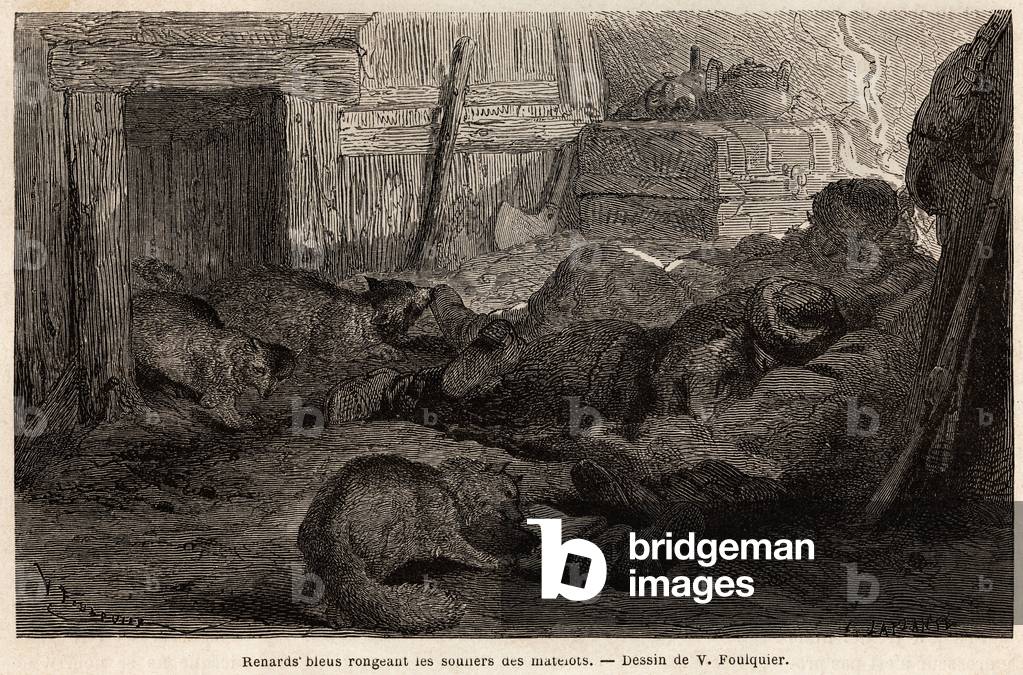
Blue foxes gnawing the shoes of seamen asleep in the refuge of the observation station, drawing by V.Foulquier, to illustrate the Spitzberg, 1838-1839, by Charles Martins. Engraving in “” Le tour du monde””, edited by Edouard Charton, 1865. Selva's collection.

LSE4325509: Blue foxes gnawing the shoes of seamen asleep in the refuge of the observation station, drawing by V.Foulquier, to illustrate the Spitzberg, 1838-1839, by Charles Martins. Engraving in “” Le tour du monde””, edited by Edouard Charton, 1865. Selva's collection., Unknown Artist, (19th century) / Bridgeman Images

A horse walk in Shurakhan (Kyrgyzstan or Kyrgyzstan). Drawing by Emile Bayard (1837-1891), to illustrate the journey to Central Asia, in 1863, by Arminius Vambery (Hungarian scientist disguise in dervish). Engraving in “” Le tour du monde””, edited by Edouard Charton, 1865. Selva's collection.

LSE4325552: A horse walk in Shurakhan (Kyrgyzstan or Kyrgyzstan). Drawing by Emile Bayard (1837-1891), to illustrate the journey to Central Asia, in 1863, by Arminius Vambery (Hungarian scientist disguise in dervish). Engraving in “” Le tour du monde””, edited by Edouard Charton, 1865. Selva's collection., Unknown Artist, (19th century) / Bridgeman Images

The tankoa, a kind of rectangular raft that can carry 6 to 8 people, consists of straw boots firmly tied together, this boat serves as a ferry and is established at fixed posts to cross the Goumara (Perou River). Drawing by Emile Bayard (1837-1891), to illustrate the voyage from the Pacific Ocean to the Atlantic Ocean, 1846 to 1860, by Paul Marcoy. Engraving in “” Le tour du monde””, edited by Edouard Charton, 1865. Selva's collection.

LSE4325612: The tankoa, a kind of rectangular raft that can carry 6 to 8 people, consists of straw boots firmly tied together, this boat serves as a ferry and is established at fixed posts to cross the Goumara (Perou River). Drawing by Emile Bayard (1837-1891), to illustrate the voyage from the Pacific Ocean to the Atlantic Ocean, 1846 to 1860, by Paul Marcoy. Engraving in “” Le tour du monde””, edited by Edouard Charton, 1865. Selva's collection., Unknown Artist, (19th century) / Bridgeman Images

Portrait of an African ivory negociant, surrounds his wives. Drawing by Emile Bayard (1837-1891), to illustrate the journey to Gabon, in 1861-64, of Doctor Griffon du Bellay. Engraving in “” Le tour du monde””, edited by Edouard Charton, 1865. Selva's collection.

LSE4325621: Portrait of an African ivory negociant, surrounds his wives. Drawing by Emile Bayard (1837-1891), to illustrate the journey to Gabon, in 1861-64, of Doctor Griffon du Bellay. Engraving in “” Le tour du monde””, edited by Edouard Charton, 1865. Selva's collection., Unknown Artist, (19th century) / Bridgeman Images

Women from the banks of the Zambeze defriching a hoe, and introducing children to agricultural work. Engravure to illustrate Dr. Livingstone's first voyages to Southern Africa from 1840 to 1856, in “Le tour du monde, nouveau journal des voyages”” published under the direction of Edouard Charton, 1866, Paris. Selva Collection.

LSE4325719: Women from the banks of the Zambeze defriching a hoe, and introducing children to agricultural work. Engravure to illustrate Dr. Livingstone's first voyages to Southern Africa from 1840 to 1856, in “Le tour du monde, nouveau journal des voyages”” published under the direction of Edouard Charton, 1866, Paris. Selva Collection., Unknown Artist, (19th century) / Bridgeman Images

A box in the guebra (or Zoroastrian) cemetery near Teheran (Iran), the corpse remains exposed in the open air until it is stripped of all its flesh, clothed with a kind of shroud that wraps its head like a turban, and covers its shoulders, turns towards the south, legs and arms cross and the figure uncovered so that the birds of prey for him rip out the eyes. Engraving to illustrate the story of Henri de Blocqueville “14 mois de captivite chez les turcomans”” between 1860 and 1861, in “Le tour du monde, nouveau journal des voyages”” published under the direction of Edouard Charton, 1866, Paris. Selva Collection.

LSE4325759: A box in the guebra (or Zoroastrian) cemetery near Teheran (Iran), the corpse remains exposed in the open air until it is stripped of all its flesh, clothed with a kind of shroud that wraps its head like a turban, and covers its shoulders, turns towards the south, legs and arms cross and the figure uncovered so that the birds of prey for him rip out the eyes. Engraving to illustrate the story of Henri de Blocqueville “14 mois de captivite chez les turcomans”” between 1860 and 1861, in “Le tour du monde, nouveau journal des voyages”” published under the direction of Edouard Charton, 1866, Paris. Selva Collection., Unknown Artist, (19th century) / Bridgeman Images

Gold mining and washing in a claim in Cameron Town (British Columbia, Canada), the district is the richest gold deposit in the region, gold is extracted from underground by hollow wells, from which buckets of “paid mud”, a mixture of clay and gravel that contains gold powder. Engraving to illustrate the voyage from the Atlantic to the Pacific (route du nord ouest par les terres), in 1862-1864 by Viscount Milton and Doctor Cheadle, in “Le tour du monde, nouveau journal des voyages”, published under the direction of Edouard Charton, 1866, Paris. Selva Collection.

LSE4325987: Gold mining and washing in a claim in Cameron Town (British Columbia, Canada), the district is the richest gold deposit in the region, gold is extracted from underground by hollow wells, from which buckets of “paid mud”, a mixture of clay and gravel that contains gold powder. Engraving to illustrate the voyage from the Atlantic to the Pacific (route du nord ouest par les terres), in 1862-1864 by Viscount Milton and Doctor Cheadle, in “Le tour du monde, nouveau journal des voyages”, published under the direction of Edouard Charton, 1866, Paris. Selva Collection., Unknown Artist, (19th century) / Bridgeman Images

Two ronins (samurai having lost his master) standing in ambush. Engraving to illustrate the voyage to Japan, in 1863-1864, by Aime Humbert, minister of the Swiss Confederation, in “” Le tour du monde, nouveau journal des voyages”” published under the direction of Edouard Charton, 1867, Paris. Selva Collection.

LSE4326185: Two ronins (samurai having lost his master) standing in ambush. Engraving to illustrate the voyage to Japan, in 1863-1864, by Aime Humbert, minister of the Swiss Confederation, in “” Le tour du monde, nouveau journal des voyages”” published under the direction of Edouard Charton, 1867, Paris. Selva Collection., Unknown Artist, (19th century) / Bridgeman Images
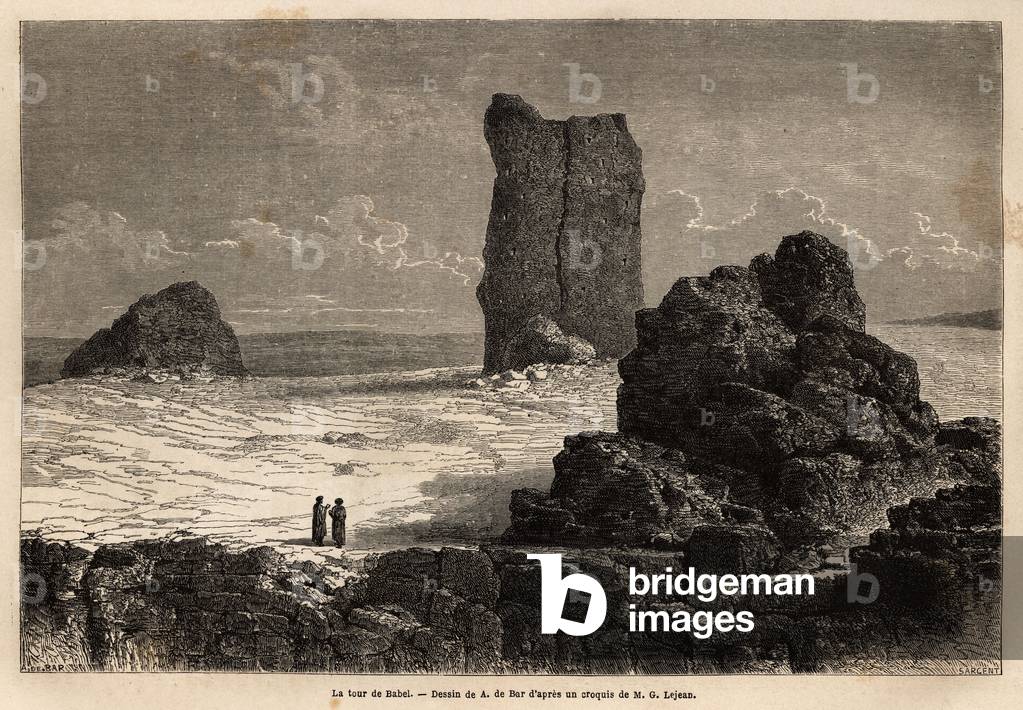
The storefronted ruins of Birs Nimroud, which the tourist community of Baghdad (Iraq) at the time, identifies as the mythical tower of Babel. Engravure pour illustrrer le voyage dans la Babylon, en 1866, by Guillaume Lejean, in “Le tour du monde, nouveau journal des voyages”” published under the direction of Edouard Charton, 1867, Paris. Selva Collection.

LSE4326245: The storefronted ruins of Birs Nimroud, which the tourist community of Baghdad (Iraq) at the time, identifies as the mythical tower of Babel. Engravure pour illustrrer le voyage dans la Babylon, en 1866, by Guillaume Lejean, in “Le tour du monde, nouveau journal des voyages”” published under the direction of Edouard Charton, 1867, Paris. Selva Collection., Unknown Artist, (19th century) / Bridgeman Images

Indians Tapuyas (Brazil) are stuck on their boats, waiting for the return of the maree, (region of the lower Amazon), looking for a forest suitable for the recovery of the milky seve of Ficus, which leads them to wander in boat for long months. Engraving to illustrate the voyage from the Pacific Ocean to the Atlantic Ocean, 1848-1860, by Paul Marcoy, in “” Le tour du monde, nouveau journal des voyages”” published under the direction of Edouard Charton, 1867, Paris. Selva Collection.

LSE4326256: Indians Tapuyas (Brazil) are stuck on their boats, waiting for the return of the maree, (region of the lower Amazon), looking for a forest suitable for the recovery of the milky seve of Ficus, which leads them to wander in boat for long months. Engraving to illustrate the voyage from the Pacific Ocean to the Atlantic Ocean, 1848-1860, by Paul Marcoy, in “” Le tour du monde, nouveau journal des voyages”” published under the direction of Edouard Charton, 1867, Paris. Selva Collection., Unknown Artist, (19th century) / Bridgeman Images

A shell merchant in the middle of the street rises in balance on the barrel containing his goods, which he tows with two long chopsticks. Engraving to illustrate the voyage to Japan, in 1863-1864, by Aime Humbert, minister of the Swiss Confederation, in “Le tour du monde, nouveau journal des voyages”” published under the direction of Edouard Charton, Hachette, Paris, 1867. Selva Collection.

LSE4326373: A shell merchant in the middle of the street rises in balance on the barrel containing his goods, which he tows with two long chopsticks. Engraving to illustrate the voyage to Japan, in 1863-1864, by Aime Humbert, minister of the Swiss Confederation, in “Le tour du monde, nouveau journal des voyages”” published under the direction of Edouard Charton, Hachette, Paris, 1867. Selva Collection., Unknown Artist, (19th century) / Bridgeman Images

A Japanese writer has his work table, rediting a text on a long roll that he rolls or derouls according to the progress of his task. Engraving to illustrate the voyage to Japan, in 1863-1864, by Aime Humbert, minister of the Swiss Confederation, in “Le tour du monde, nouveau journal des voyages”” published under the direction of Edouard Charton, Hachette, Paris, 1867. Selva Collection.

LSE4326441: A Japanese writer has his work table, rediting a text on a long roll that he rolls or derouls according to the progress of his task. Engraving to illustrate the voyage to Japan, in 1863-1864, by Aime Humbert, minister of the Swiss Confederation, in “Le tour du monde, nouveau journal des voyages”” published under the direction of Edouard Charton, Hachette, Paris, 1867. Selva Collection., Unknown Artist, (19th century) / Bridgeman Images

Attack on Mr Fernand Labori (1860-1917), a lawyer in the defence of Alfred Dreyfus (1859-1935), struck with a bullet in the back in Rennes as he was on his way to the place where the case was judged. Engraving in “” Le petit journal”” 27/8/1899. Selva Collection.

LSE4326905: Attack on Mr Fernand Labori (1860-1917), a lawyer in the defence of Alfred Dreyfus (1859-1935), struck with a bullet in the back in Rennes as he was on his way to the place where the case was judged. Engraving in “” Le petit journal”” 27/8/1899. Selva Collection., Unknown Artist, (19th century) / Bridgeman Images
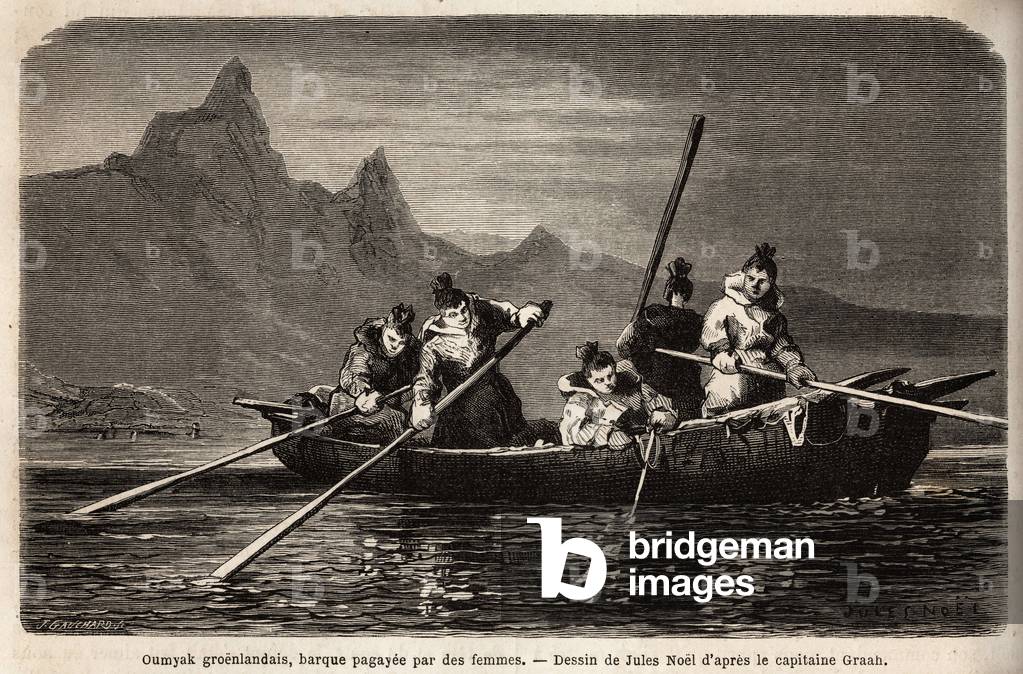
Greenland Umyak, type of boat operated by women. Engraving to illustrate the voyage to the free sea of the Arctic pole, by Doctor Hayes, surgeon of the United States Navy, in 1860-1862, published in “Le tour du monde, nouveau journal des voyages”, edited by Edouard Charton, 1868, Paris. Selva Collection.

LSE4328098: Greenland Umyak, type of boat operated by women. Engraving to illustrate the voyage to the free sea of the Arctic pole, by Doctor Hayes, surgeon of the United States Navy, in 1860-1862, published in “Le tour du monde, nouveau journal des voyages”, edited by Edouard Charton, 1868, Paris. Selva Collection., Unknown Artist, (19th century) / Bridgeman Images

The Trevi Fountain in Rome, completed in 1762, is an example of the perpetuation of the Baroque style in the 18th century in Italy, based on Palazzo Poli, this monumental work in the form of a triumphal arch crushes the tiny square on which it is located. Engraving to illustrate the voyage to Rome, by Francis Wey, in 1864-1868, published in “Le tour du monde, nouveau journal des voyages”, under the direction of Edouard Charton, 1868, Paris. Selva Collection.

LSE4328205: The Trevi Fountain in Rome, completed in 1762, is an example of the perpetuation of the Baroque style in the 18th century in Italy, based on Palazzo Poli, this monumental work in the form of a triumphal arch crushes the tiny square on which it is located. Engraving to illustrate the voyage to Rome, by Francis Wey, in 1864-1868, published in “Le tour du monde, nouveau journal des voyages”, under the direction of Edouard Charton, 1868, Paris. Selva Collection., Unknown Artist, (19th century) / Bridgeman Images

A funeral convoy in the Icelandic countryside, headed by a horse carrying the coffin, followed by about thirty people and a herd of dogs, shouting and barking throughout the day, stopping at each house to drink a glass of alcohol, so that the funebre procession ends up in a state of drunkenness. Engraving to illustrate the voyage in Iceland, story by Noel Nougaret, in 1866, published in “Le tour du monde, nouveau journal des voyages”, under the direction of Edouard Charton, 1868, Paris. Selva Collection.

LSE4328357: A funeral convoy in the Icelandic countryside, headed by a horse carrying the coffin, followed by about thirty people and a herd of dogs, shouting and barking throughout the day, stopping at each house to drink a glass of alcohol, so that the funebre procession ends up in a state of drunkenness. Engraving to illustrate the voyage in Iceland, story by Noel Nougaret, in 1866, published in “Le tour du monde, nouveau journal des voyages”, under the direction of Edouard Charton, 1868, Paris. Selva Collection., Unknown Artist, (19th century) / Bridgeman Images

Indians of Cuzco (Peru), vetus of the manta, sandals and traditional sombrero, employed as labour for the exploitation of guano deposits in the Chincha Islands, drinking shisha, but fermented brandy. Engraving to illustrate Les iles Chincha, rect by L.Simonin, in 1860, published in “Le tour du monde, nouveau journal des voyages””, edited by Edouard Charton, 1868, Paris. Selva Collection.

LSE4328379: Indians of Cuzco (Peru), vetus of the manta, sandals and traditional sombrero, employed as labour for the exploitation of guano deposits in the Chincha Islands, drinking shisha, but fermented brandy. Engraving to illustrate Les iles Chincha, rect by L.Simonin, in 1860, published in “Le tour du monde, nouveau journal des voyages””, edited by Edouard Charton, 1868, Paris. Selva Collection., Unknown Artist, (19th century) / Bridgeman Images

A Tatar school in Schusha (Transcaucasia, Russia), instruction is given to boys by the mullah, and consists exclusively of reading and writing, as well as commentary on the verses of the Qur'an. Engraving to illustrate the voyage in the provinces of the Caucasus, by Basile Vereschaguine, in 1864-1865, published in “” le tour du monde””, under the direction of D'Edouard Charton, Hachette, Paris 1869.Selva Collection.

LSE4328609: A Tatar school in Schusha (Transcaucasia, Russia), instruction is given to boys by the mullah, and consists exclusively of reading and writing, as well as commentary on the verses of the Qur'an. Engraving to illustrate the voyage in the provinces of the Caucasus, by Basile Vereschaguine, in 1864-1865, published in “” le tour du monde””, under the direction of D'Edouard Charton, Hachette, Paris 1869.Selva Collection., Unknown Artist, (19th century) / Bridgeman Images

Mowing a sheep by a young Tatar man, in Schusha (Transcaucasia, Russia). Engraving to illustrate the voyage in the provinces of the Caucasus, by Basile Vereschaguine, in 1864-1865, published in “” le tour du monde””, under the direction of D'Edouard Charton, Hachette, Paris 1869.Selva Collection.

LSE4328619: Mowing a sheep by a young Tatar man, in Schusha (Transcaucasia, Russia). Engraving to illustrate the voyage in the provinces of the Caucasus, by Basile Vereschaguine, in 1864-1865, published in “” le tour du monde””, under the direction of D'Edouard Charton, Hachette, Paris 1869.Selva Collection., Unknown Artist, (19th century) / Bridgeman Images

A stage of the Japanese theatre, in Yokohama, with three galleries for the reception of spectators; the actors play on a high stage, each accompanied by a man holding a long stick at the end of which a candle is held; during the performance, it is not uncommon for the spectators to intervene and give the actors a replica. Engraving to illustrate the journey to Japan, by Aime Humbert, minister of the Swiss Confederation, in 1863-1864, published in “” le tour du monde””, under the direction of Edouard Charton, Hachette, Paris 1869.Selva Collection.

LSE4328714: A stage of the Japanese theatre, in Yokohama, with three galleries for the reception of spectators; the actors play on a high stage, each accompanied by a man holding a long stick at the end of which a candle is held; during the performance, it is not uncommon for the spectators to intervene and give the actors a replica. Engraving to illustrate the journey to Japan, by Aime Humbert, minister of the Swiss Confederation, in 1863-1864, published in “” le tour du monde””, under the direction of Edouard Charton, Hachette, Paris 1869.Selva Collection., Unknown Artist, (19th century) / Bridgeman Images

The main gopuram of the temple of Rama a Combaronum, composed of 11 floors, and topped by 11 balls, the various faces of this pyramidal tower are completely covered with statues.Engraving to illustrate the journey to the meridional provinces of India, by Alfred Grandidier, in 1862-1864, published in “” the tour du monde”, under the direction of Edouard Charton, Hachette, Paris 1869.Selva Collection.

LSE4328757: The main gopuram of the temple of Rama a Combaronum, composed of 11 floors, and topped by 11 balls, the various faces of this pyramidal tower are completely covered with statues.Engraving to illustrate the journey to the meridional provinces of India, by Alfred Grandidier, in 1862-1864, published in “” the tour du monde”, under the direction of Edouard Charton, Hachette, Paris 1869.Selva Collection., Unknown Artist, (19th century) / Bridgeman Images

Parsi dealers and merchants at the Bombay cotton market. Engraving to illustrate the voyage in the meridional provinces of India, by Alfred Grandidier, in 1862-1864, published in “” Le tour du monde””” 1869, edited by Edouard Charton, edition Hachette, Paris. Selva Collection.

LSE4328769: Parsi dealers and merchants at the Bombay cotton market. Engraving to illustrate the voyage in the meridional provinces of India, by Alfred Grandidier, in 1862-1864, published in “” Le tour du monde””” 1869, edited by Edouard Charton, edition Hachette, Paris. Selva Collection., Unknown Artist, (19th century) / Bridgeman Images


Back to top