Egyptian 18th Dynasty (c.1567-1320 BC) Assets (907 in total)

Search options

Orientation
Colour

Display options

View

Print

To print search results, use print friendly version of this page.

Results

Talatat: Portrait of Nefertiti, c.1353-1347 BC (painted sandstone)

XCL499890: Talatat: Portrait of Nefertiti, c.1353-1347 BC (painted sandstone) , Egyptian 18th Dynasty (c.1567-1320 BC) / Bridgeman Images

Chair or Bed Leg with the God Bes, 1540-1296 BC (tamarisk)

XCL499984: Chair or Bed Leg with the God Bes, 1540-1296 BC (tamarisk) , Egyptian 18th Dynasty (c.1567-1320 BC) / Bridgeman Images

Comb with Gazelle, c.1391-1353 BC (wood)

XCL500218: Comb with Gazelle, c.1391-1353 BC (wood) , Egyptian 18th Dynasty (c.1567-1320 BC) / Bridgeman Images

Domestic Shrine, c.1479-1425 BC (limestone, originally painted)

XCL491052: Domestic Shrine, c.1479-1425 BC (limestone, originally painted) , Egyptian 18th Dynasty (c.1567-1320 BC) / Bridgeman Images

Head of Amenhotep III Wearing the Blue Crown, c.1391-1353 BC (granodiorite)

XCL491444: Head of Amenhotep III Wearing the Blue Crown, c.1391-1353 BC (granodiorite) , Egyptian 18th Dynasty (c.1567-1320 BC) / Bridgeman Images

Trial Piece Worked on Both Sides, c.1391-1353 BC (limestone)

XCL491038: Trial Piece Worked on Both Sides, c.1391-1353 BC (limestone) , Egyptian 18th Dynasty (c.1567-1320 BC) / Bridgeman Images

Burial chamber of Sobekmose, c.1417–1379 BC (sandstone, traces of paint)

XOS5667124: Burial chamber of Sobekmose, c.1417–1379 BC (sandstone, traces of paint), Egyptian 18th Dynasty (c.1567-1320 BC) / Bridgeman Images

Statuette of Huwebenef, c.1550–1479 BC (wood)

XOS5667128: Statuette of Huwebenef, c.1550–1479 BC (wood), Egyptian 18th Dynasty (c.1567-1320 BC) / Bridgeman Images

Egyptian antiquite: view of the columns of the hypostyle room of the Temple of Amon, Karnak in Luxor, Egypt (photo)

JLJ4590231: Egyptian antiquite: view of the columns of the hypostyle room of the Temple of Amon, Karnak in Luxor, Egypt (photo), Egyptian 18th Dynasty (c.1567-1320 BC) / Bridgeman Images

Egyptian antiquite: Osiriac pillar of Sesostris I, from the temple of Amon in Karnak, 1971-26 BC (stone)

JLJ4588648: Egyptian antiquite: Osiriac pillar of Sesostris I, from the temple of Amon in Karnak, 1971-26 BC (stone), Egyptian 18th Dynasty (c.1567-1320 BC) / Bridgeman Images

Egyptian antiquite: view of the columns of the hypostyle room of the Temple of Amon, Karnak in Luxor, Egypt (photo)

JLJ4590339: Egyptian antiquite: view of the columns of the hypostyle room of the Temple of Amon, Karnak in Luxor, Egypt (photo), Egyptian 18th Dynasty (c.1567-1320 BC) / Bridgeman Images

Egyptian antiquitis: Horus guides Roy and his wife to the pesse of hearts. Fragments of fresco from the Tomb of Roy (TT255). 18th dynasty. From the West Bank of Luxor, Egypt

LRI4681447: Egyptian antiquitis: Horus guides Roy and his wife to the pesse of hearts. Fragments of fresco from the Tomb of Roy (TT255). 18th dynasty. From the West Bank of Luxor, Egypt, Egyptian 18th Dynasty (c.1567-1320 BC) / Bridgeman Images

Egyptian antiquite: procession with bearers of canopy vessels used to collect the deceased's viscera. Painting of the Tomb of Roy (TT255). 18th dynasty. From the West Bank of Luxor, Egypt

LRI4681482: Egyptian antiquite: procession with bearers of canopy vessels used to collect the deceased's viscera. Painting of the Tomb of Roy (TT255). 18th dynasty. From the West Bank of Luxor, Egypt, Egyptian 18th Dynasty (c.1567-1320 BC) / Bridgeman Images

Detail of an inscription with cartridge and hieroglyphs representing long life and prosperity. (relief)

LRI4682116: Detail of an inscription with cartridge and hieroglyphs representing long life and prosperity. (relief), Egyptian 18th Dynasty (c.1567-1320 BC) / Bridgeman Images

Stone block representing an offering to the Pharaoh (painted low relief)

LRI4682565: Stone block representing an offering to the Pharaoh (painted low relief), Egyptian 18th Dynasty (c.1567-1320 BC) / Bridgeman Images

The sacred boat carrying the catafalque with the mummy of Userhat (fresco)

LRI4682980: The sacred boat carrying the catafalque with the mummy of Userhat (fresco), Egyptian 18th Dynasty (c.1567-1320 BC) / Bridgeman Images

Tiyi (or Tiye) represented as the divinite Isis. 14th century BC (Black basalt sculpture)

LRI4593033: Tiyi (or Tiye) represented as the divinite Isis. 14th century BC (Black basalt sculpture), Egyptian 18th Dynasty (c.1567-1320 BC) / Bridgeman Images

Pharaoh Amenhotep II ( Amenophis II) holding two wine vases, offerings to the gods. 15th-14th Century BC (Granite sculpture)

LRI4593056: Pharaoh Amenhotep II ( Amenophis II) holding two wine vases, offerings to the gods. 15th-14th Century BC (Granite sculpture), Egyptian 18th Dynasty (c.1567-1320 BC) / Bridgeman Images

The guests at the funeral banquet of Ramose

IBE5345539: The guests at the funeral banquet of Ramose, Egyptian 18th Dynasty (c.1567-1320 BC) / Bridgeman Images

Female head, wooden
Female head, wooden

IBE5375659: Female head, wooden, Egyptian 18th Dynasty (c.1567-1320 BC) / Bridgeman Images

Detail of the prow of a boat with the head of a Syrian ibex and a figure thought to be Princess Mutnedjmet, from the tomb of Tutankhamun (c.1370-52 BC) New Kingdom (alabaster) (see 149413)

XZL149400: Detail of the prow of a boat with the head of a Syrian ibex and a figure thought to be Princess Mutnedjmet, from the tomb of Tutankhamun (c.1370-52 BC) New Kingdom (alabaster) (see 149413), Egyptian 18th Dynasty (c.1567-1320 BC) / Bridgeman Images

Egyptian antiquite: upper part of the statue of King Amenhotep IV (Amenophis IV or Akhenaton).18th dynasty. From Karnak. Egyptian Museum, Cairo.

LRI4639876: Egyptian antiquite: upper part of the statue of King Amenhotep IV (Amenophis IV or Akhenaton).18th dynasty. From Karnak. Egyptian Museum, Cairo., Egyptian 18th Dynasty (c.1567-1320 BC) / Bridgeman Images

Egyptian antiquite: basalt bust of Pharaoh Thutmosis (Tuthmosis or Thutmus) III (circa 1504-1450 BC) 18th dynasty. From Karnak. Cairo, Egyptian Museum

LRI4639882: Egyptian antiquite: basalt bust of Pharaoh Thutmosis (Tuthmosis or Thutmus) III (circa 1504-1450 BC) 18th dynasty. From Karnak. Cairo, Egyptian Museum, Egyptian 18th Dynasty (c.1567-1320 BC) / Bridgeman Images
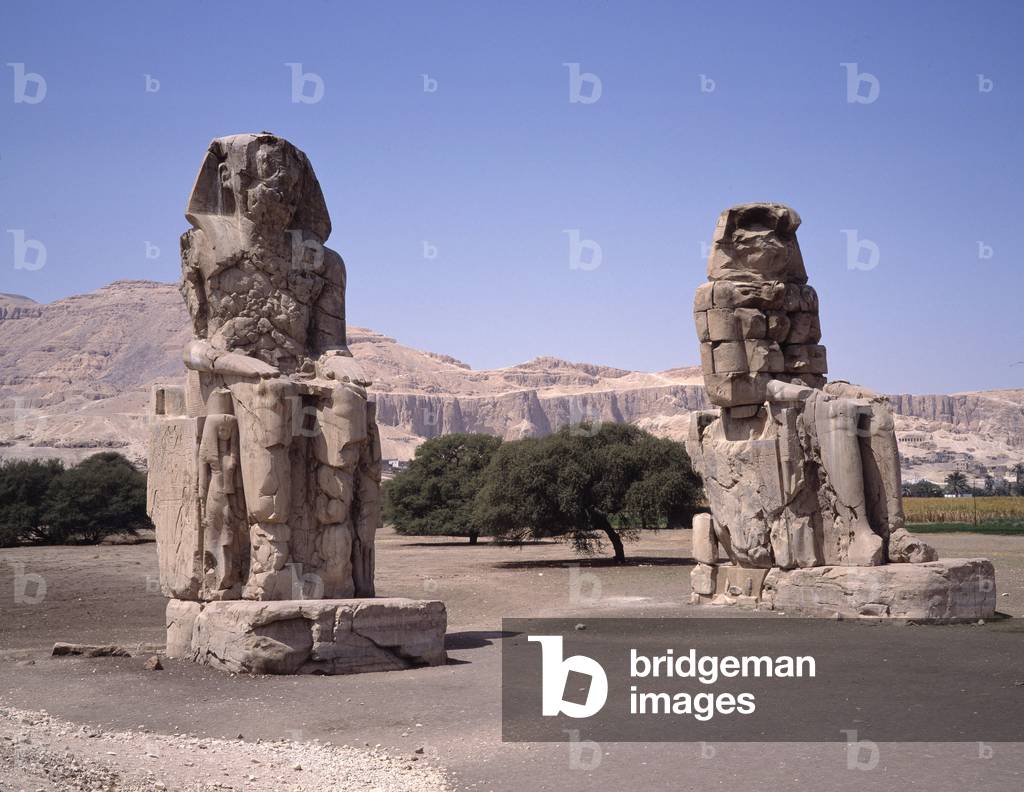
View of the Colossus of Memnon, period Amenophis III, new empire, 18th dynasty. Thebes. Egypt, -1567-1320 BC (photo)

JLJ4679245: View of the Colossus of Memnon, period Amenophis III, new empire, 18th dynasty. Thebes. Egypt, -1567-1320 BC (photo), Egyptian 18th Dynasty (c.1567-1320 BC) / Bridgeman Images

Egyptian antiquitis: a hand holding a papyrus flower. Tomb of Kherouef (TT192) (18th Dynasty, 1530-1290 BC), Luxor (Thebes), Egypt

LRI4681313: Egyptian antiquitis: a hand holding a papyrus flower. Tomb of Kherouef (TT192) (18th Dynasty, 1530-1290 BC), Luxor (Thebes), Egypt, Egyptian 18th Dynasty (c.1567-1320 BC) / Bridgeman Images

Egyptian antiquite: representation of Anubis, Hathor and hieroglyphs. Painting of the Tomb of Roy (TT255). 18th dynasty. From the West Bank of Luxor, Egypt

LRI4681481: Egyptian antiquite: representation of Anubis, Hathor and hieroglyphs. Painting of the Tomb of Roy (TT255). 18th dynasty. From the West Bank of Luxor, Egypt, Egyptian 18th Dynasty (c.1567-1320 BC) / Bridgeman Images

Relief of a priest, new kingdom, (limestone)

SBL7129547: Relief of a priest, new kingdom, (limestone), Egyptian 18th Dynasty (c.1567-1320 BC) / Bridgeman Images

An Amarna Pottery Jar, Dynasty XVIII, Reign of Akhenaten, 1353-1335 BC (ceramic)

CH7144322: An Amarna Pottery Jar, Dynasty XVIII, Reign of Akhenaten, 1353-1335 BC (ceramic), Egyptian 18th Dynasty (c.1567-1320 BC) / Bridgeman Images

Floral unguent jar, from the Tomb of Tutankhamun (c.1370-1352 BC) New Kingdom (alabaster) (see also 227993)

BAL59230: Floral unguent jar, from the Tomb of Tutankhamun (c.1370-1352 BC) New Kingdom (alabaster) (see also 227993), Egyptian 18th Dynasty (c.1567-1320 BC) / Bridgeman Images

Head of Sakhmet, from Thebes, New Kingdom, c.1404-1367 BC (granite)

FIT111298: Head of Sakhmet, from Thebes, New Kingdom, c.1404-1367 BC (granite), Egyptian 18th Dynasty (c.1567-1320 BC) / Bridgeman Images
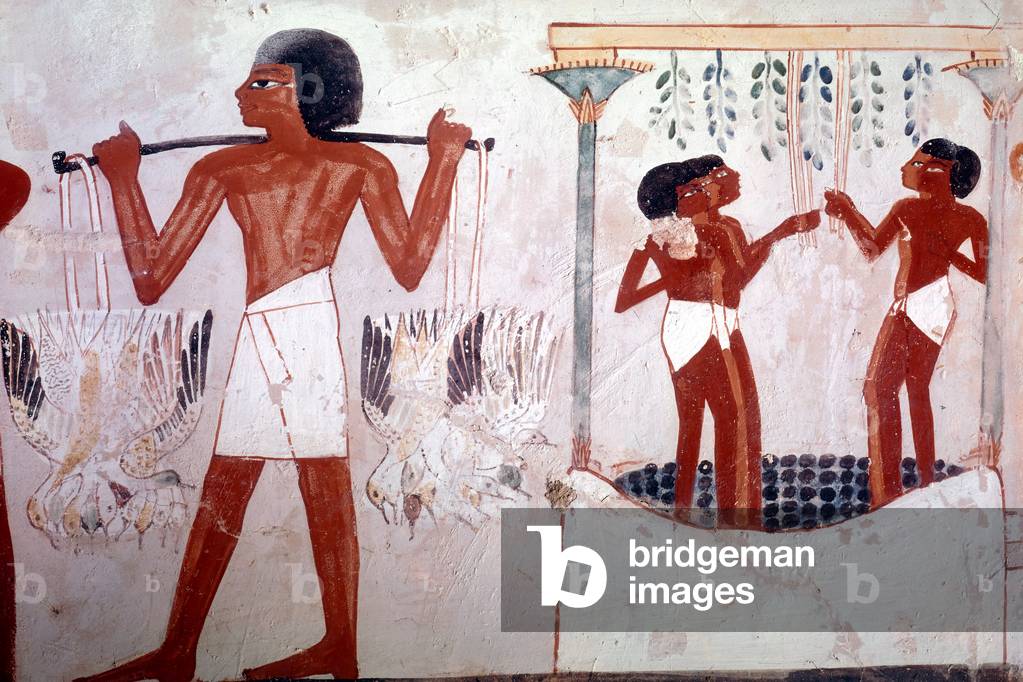
Illustration rural daily life : plucking fowls and grape harvesting, coming from Nakht tomb in Thebes, 18th dynasty (fresco)

XRH1707873: Illustration rural daily life : plucking fowls and grape harvesting, coming from Nakht tomb in Thebes, 18th dynasty (fresco), Egyptian 18th Dynasty (c.1567-1320 BC) / Bridgeman Images

Amenhotep III in the Blue Crown, c.1390–52 B.C. (quartzite)

XOS3740397: Amenhotep III in the Blue Crown, c.1390–52 B.C. (quartzite), Egyptian 18th Dynasty (c.1567-1320 BC) / Bridgeman Images

Four figures of the grotesque deity Bes, New Kingdom (wood and ivory)

FIT55413: Four figures of the grotesque deity Bes, New Kingdom (wood and ivory), Egyptian 18th Dynasty (c.1567-1320 BC) / Bridgeman Images

Pair statue of Kerem, scribe and door keeper of the chapel of the goddess Hathor, and his wife Abykhy, from Thebes, New Kingdom (painted limestone)

FIT76538: Pair statue of Kerem, scribe and door keeper of the chapel of the goddess Hathor, and his wife Abykhy, from Thebes, New Kingdom (painted limestone), Egyptian 18th Dynasty (c.1567-1320 BC) / Bridgeman Images

The king's pendant in the form of a boat showing the symbol of the god's resurrection, from the tomb of Tutankhamun (c.1370-52 BC) New Kingdom (gold & semi-precious stones)

XCF407377: The king's pendant in the form of a boat showing the symbol of the god's resurrection, from the tomb of Tutankhamun (c.1370-52 BC) New Kingdom (gold & semi-precious stones), Egyptian 18th Dynasty (c.1567-1320 BC) / Bridgeman Images

Heads of female attendants, fragment of a sunk relief, c.1370 BC (plaster & pigment on limestone)

UEA420159: Heads of female attendants, fragment of a sunk relief, c.1370 BC (plaster & pigment on limestone), Egyptian 18th Dynasty (c.1567-1320 BC) / Bridgeman Images


Back to top