Search options

Orientation
Colour

Display options

View

Print

To print search results, use print friendly version of this page.

2497525 Search Results

Small bucchero amphora decorated with spirals from the Tomb 2 of Casaletti di Ceri. 675-650 BC

LRI4689832: Small bucchero amphora decorated with spirals from the Tomb 2 of Casaletti di Ceri. 675-650 BC, Etruscan, (7th century BC) / Bridgeman Images
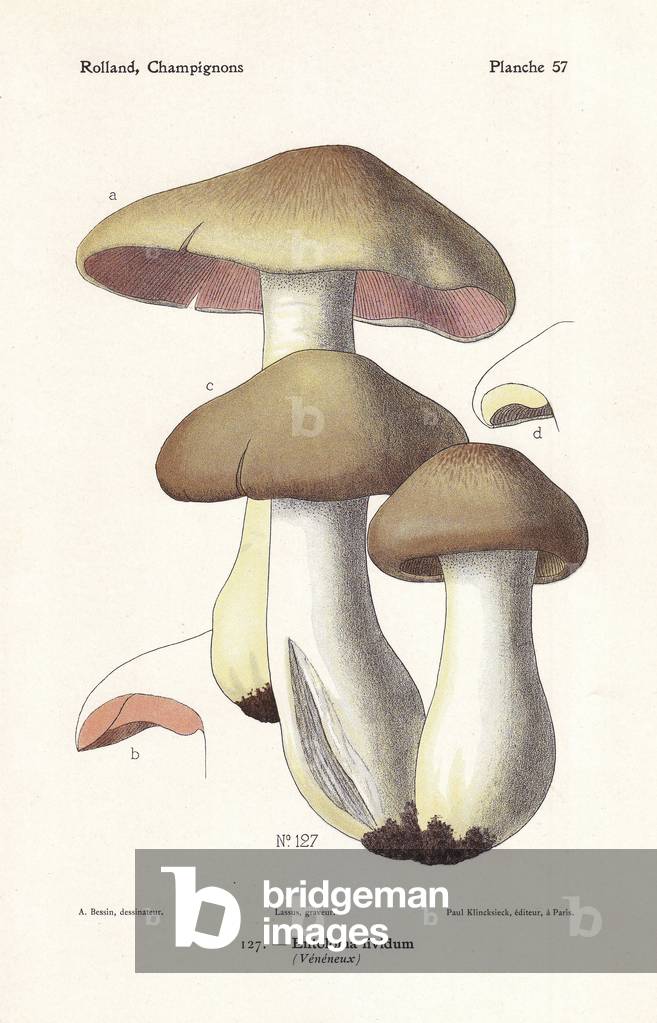
Livid entoloma or livid agaric, Entoloma sinuatum (Entoloma lividum). Chromolithograph by Lassus after an illustration by A. Bessin from Leon Rolland's Guide to Mushrooms from France, Switzerland and Belgium, Atlas des Mushrooms, Paul Klincksieck, Paris, 1910.

FLO4689906: Livid entoloma or livid agaric, Entoloma sinuatum (Entoloma lividum). Chromolithograph by Lassus after an illustration by A. Bessin from Leon Rolland's Guide to Mushrooms from France, Switzerland and Belgium, Atlas des Mushrooms, Paul Klincksieck, Paris, 1910. / Bridgeman Images

Edible mushrooms: salt-loving agaricus, Psalliota bernardii, and horse mushroom Psalliota arvensis. Chromolithograph drawn by Bessin for Leon Rolland's “Atlas of Mushrooms”” 1911.

FLO4689950: Edible mushrooms: salt-loving agaricus, Psalliota bernardii, and horse mushroom Psalliota arvensis. Chromolithograph drawn by Bessin for Leon Rolland's “Atlas of Mushrooms”” 1911. / Bridgeman Images

Edible mushrooms: Dryad's saddle, Polyporus squamosus, Polyporus pes caprae. Chromolithograph drawn by Bessin for Leon Rolland's “Atlas of Mushrooms”” 1911.

FLO4689999: Edible mushrooms: Dryad's saddle, Polyporus squamosus, Polyporus pes caprae. Chromolithograph drawn by Bessin for Leon Rolland's “Atlas of Mushrooms”” 1911. / Bridgeman Images

Austrian pink copper. Chromolithograph by Georges Severeyns from an illustration by Walter H. Fitch from William Paul's “The Rose Garden in two divisions,” London, 1888. First issued in 1848 with 15 colored plates, “” The Rose Garden”” soon became a standard work on roses and ran to 10 editions, the last in 1903. The illustrations for the 9th edition were by Walter Fitch, the famous artist who illustrated Curtis' “” Botanical Magazine”” for many years.

FLO4690021: Austrian pink copper. Chromolithograph by Georges Severeyns from an illustration by Walter H. Fitch from William Paul's “The Rose Garden in two divisions,” London, 1888. First issued in 1848 with 15 colored plates, “” The Rose Garden”” soon became a standard work on roses and ran to 10 editions, the last in 1903. The illustrations for the 9th edition were by Walter Fitch, the famous artist who illustrated Curtis' “” Botanical Magazine”” for many years. / Bridgeman Images

Yellow brain mushroom Tremella mesenterica, Tremellodon gelatinosum, black itch's butter Exidia glandulosa, and apricot jelly Guepinia rufa. Chromolithograph drawn by Bessin for Leon Rolland's “Atlas of Mushrooms”” 1911.

FLO4689623: Yellow brain mushroom Tremella mesenterica, Tremellodon gelatinosum, black itch's butter Exidia glandulosa, and apricot jelly Guepinia rufa. Chromolithograph drawn by Bessin for Leon Rolland's “Atlas of Mushrooms”” 1911. / Bridgeman Images

Etruscan civilization: female bronze statuette from Brolio. 550 BC. Dim. 36 cm Florence, Museo Archeologico, inv. 561

LRI4689650: Etruscan civilization: female bronze statuette from Brolio. 550 BC. Dim. 36 cm Florence, Museo Archeologico, inv. 561, Etruscan, (6th century BC) / Bridgeman Images
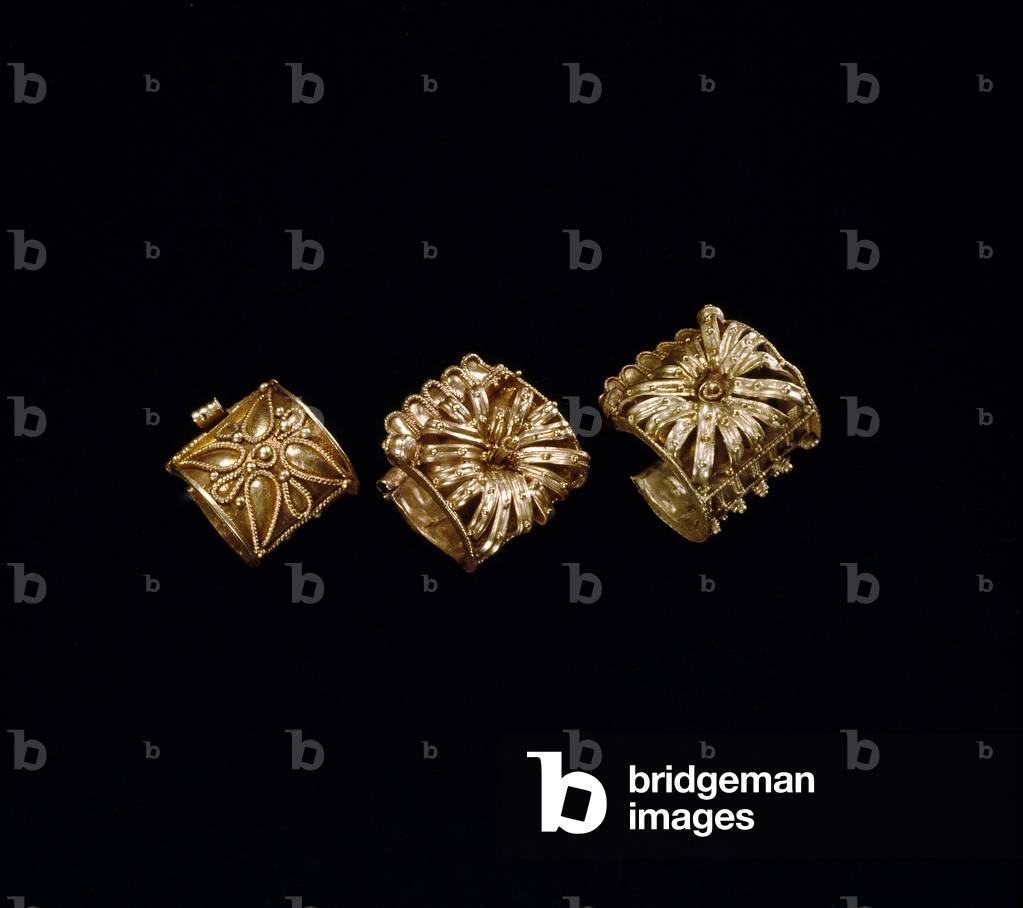
Etruscan civilization: “” gold earrings”” From the tomb of the Flabelli, Populonia, Italy - 6th century BC Florence, Museo Archeologico

LRI4689653: Etruscan civilization: “” gold earrings”” From the tomb of the Flabelli, Populonia, Italy - 6th century BC Florence, Museo Archeologico, Etruscan, (6th century BC) / Bridgeman Images
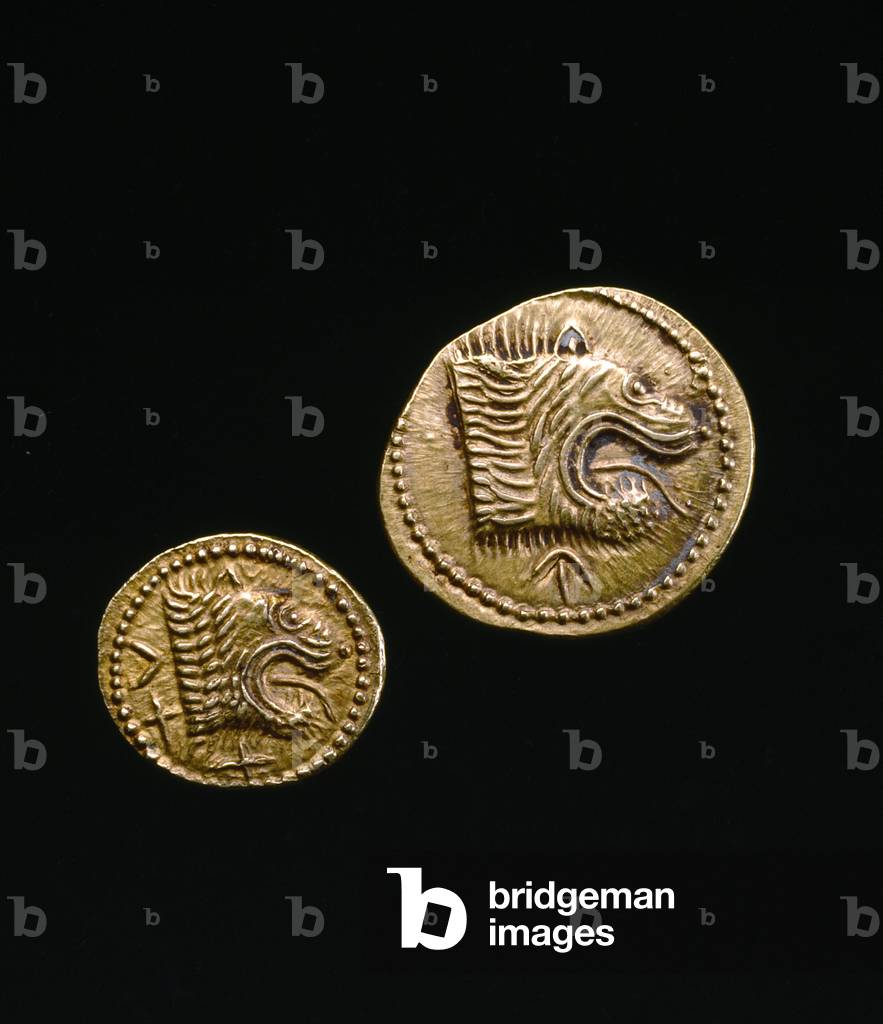
Etruscan civilization: “” two pieces aureus””” 5th century BC Provenance unknown Florence, Museo Archeologico, inv 36246 - Etruscan civilization: two aureus coins, 5th century BC. Unknown provenance. Museum of Archaeology, inv 36246, Florence, Italy

LRI4689688: Etruscan civilization: “” two pieces aureus””” 5th century BC Provenance unknown Florence, Museo Archeologico, inv 36246 - Etruscan civilization: two aureus coins, 5th century BC. Unknown provenance. Museum of Archaeology, inv 36246, Florence, Italy, Etruscan, (5th century BC) / Bridgeman Images
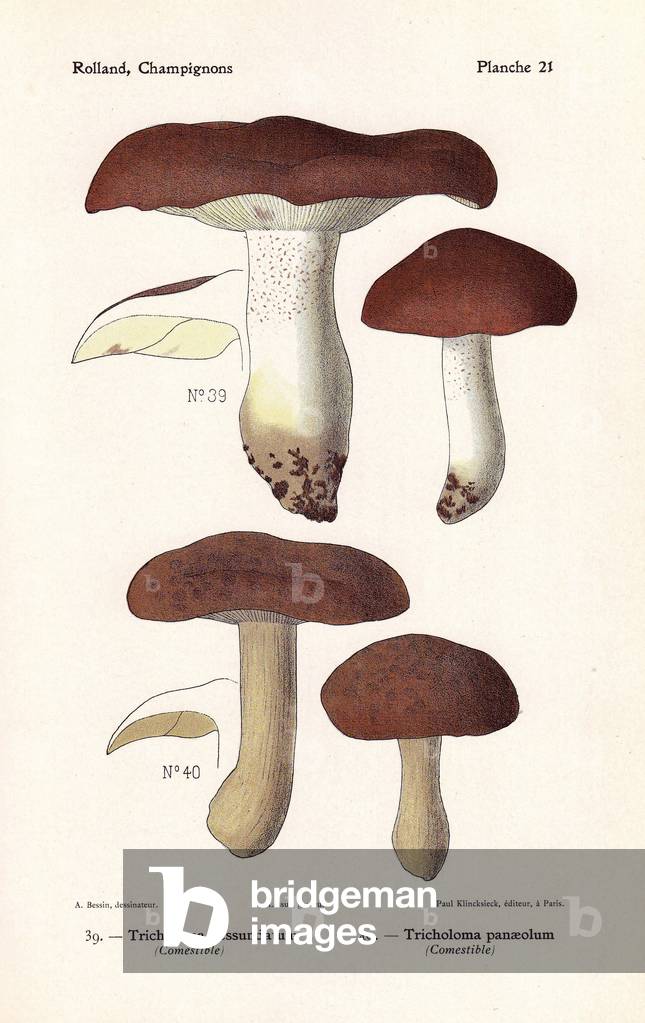
Edible mushrooms: Tricholoma pessundatum, Tricholoma panaeolum. Chromolithograph drawn by Bessin for Leon Rolland's “Atlas of Mushrooms”” 1911.

FLO4689715: Edible mushrooms: Tricholoma pessundatum, Tricholoma panaeolum. Chromolithograph drawn by Bessin for Leon Rolland's “Atlas of Mushrooms”” 1911. / Bridgeman Images

Terracotta pot with its lid, from the tomb of the bronze tan, 680-670 BC

LRI4689730: Terracotta pot with its lid, from the tomb of the bronze tan, 680-670 BC, Etruscan, (7th century BC) / Bridgeman Images

Poisonous mushrooms: milkcap, Lactarius scrobiculatus, and birch milkcap, L. theiogalus, L. tabidus. Chromolithograph drawn by Bessin for Leon Rolland's “Atlas of Mushrooms”” 1911.

FLO4689747: Poisonous mushrooms: milkcap, Lactarius scrobiculatus, and birch milkcap, L. theiogalus, L. tabidus. Chromolithograph drawn by Bessin for Leon Rolland's “Atlas of Mushrooms”” 1911. / Bridgeman Images

Death cap mushroom, Amanita phalloides, and fool's mushroom. Highly poisonous mushrooms. Chromolithograph by Lassus after an illustration by A. Bessin from Leon Rolland's Guide to Mushrooms from France, Switzerland and Belgium, Atlas des Mushrooms, Paul Klincksieck, Paris, 1910.

FLO4689756: Death cap mushroom, Amanita phalloides, and fool's mushroom. Highly poisonous mushrooms. Chromolithograph by Lassus after an illustration by A. Bessin from Leon Rolland's Guide to Mushrooms from France, Switzerland and Belgium, Atlas des Mushrooms, Paul Klincksieck, Paris, 1910. / Bridgeman Images
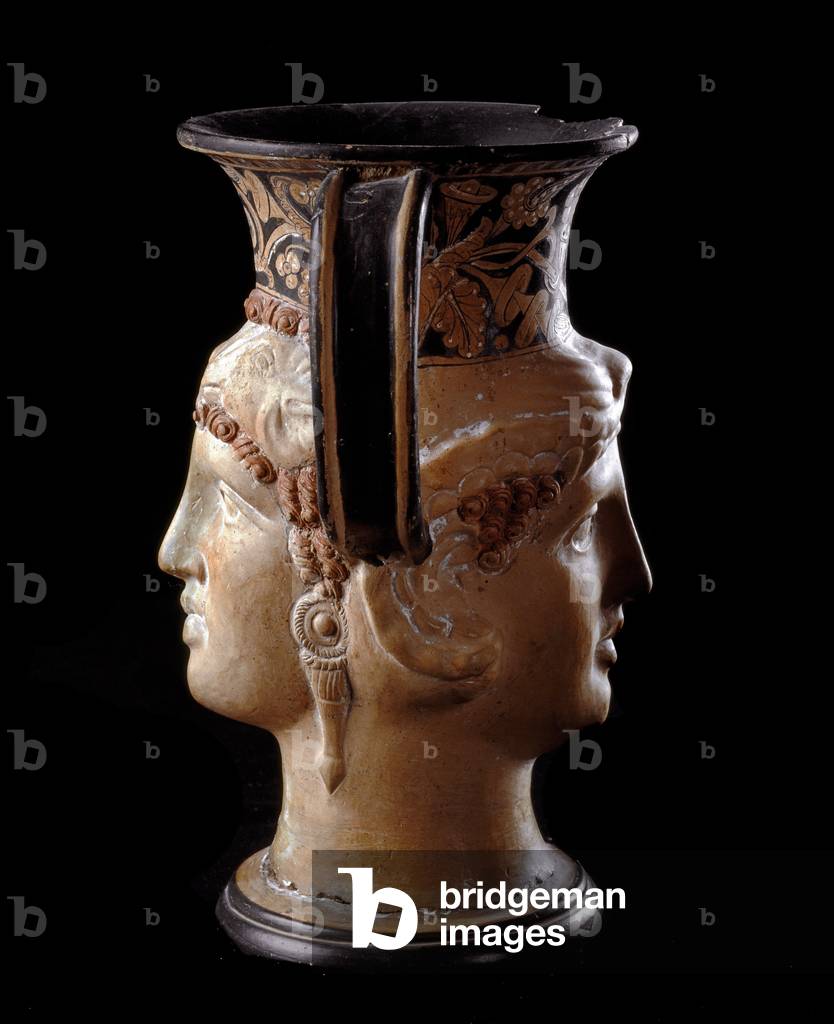
Double head kantharos, Heracles and Omphale. From Cerveteri. 320 BC

LRI4689766: Double head kantharos, Heracles and Omphale. From Cerveteri. 320 BC, Etruscan, (4th century BC) / Bridgeman Images

Rufous or red milkcap, Lactarius rufus, weeping milkcap, Lactifluus volemus, Lactarius volemus, mild milkcap, Lactarius subdulcis and candy cap or curry milkcap, Lactarius camphoratus. Chromolithograph by Lassus after an illustration by A. Bessin from Leon Rolland's Guide to Mushrooms from France, Switzerland and Belgium, Atlas des Mushrooms, Paul Klincksieck, Paris, 1910.

FLO4689786: Rufous or red milkcap, Lactarius rufus, weeping milkcap, Lactifluus volemus, Lactarius volemus, mild milkcap, Lactarius subdulcis and candy cap or curry milkcap, Lactarius camphoratus. Chromolithograph by Lassus after an illustration by A. Bessin from Leon Rolland's Guide to Mushrooms from France, Switzerland and Belgium, Atlas des Mushrooms, Paul Klincksieck, Paris, 1910. / Bridgeman Images

Chalice of brown paste from the tomb of the bronze tank, 680-670 BC

LRI4689830: Chalice of brown paste from the tomb of the bronze tank, 680-670 BC, Etruscan, (7th century BC) / Bridgeman Images

Prince mushroom, Agaricus augustus (Psalliota augusta) and field mushroom, Agaricus campestris (Psalliota campestris). Chromolithograph by Lassus after an illustration by A. Bessin from Leon Rolland's Guide to Mushrooms from France, Switzerland and Belgium, Atlas des Mushrooms, Paul Klincksieck, Paris, 1910.

FLO4689946: Prince mushroom, Agaricus augustus (Psalliota augusta) and field mushroom, Agaricus campestris (Psalliota campestris). Chromolithograph by Lassus after an illustration by A. Bessin from Leon Rolland's Guide to Mushrooms from France, Switzerland and Belgium, Atlas des Mushrooms, Paul Klincksieck, Paris, 1910. / Bridgeman Images

Etruscan civilization: “” Bronze artifacts from etruscan site, sword blade, axes) 750-700 BC From the site of Populonia, Italy - Florence, Museo Archeologico

LRI4689612: Etruscan civilization: “” Bronze artifacts from etruscan site, sword blade, axes) 750-700 BC From the site of Populonia, Italy - Florence, Museo Archeologico, Etruscan, (8th century BC) / Bridgeman Images

Etruscan civilization: bronze tripod in the shape of lion's foot (leg) - 480-460 BC Dim 27.5 cm Florence, Museo Archeologico, inv 710

LRI4689631: Etruscan civilization: bronze tripod in the shape of lion's foot (leg) - 480-460 BC Dim 27.5 cm Florence, Museo Archeologico, inv 710, Etruscan, (5th century BC) / Bridgeman Images
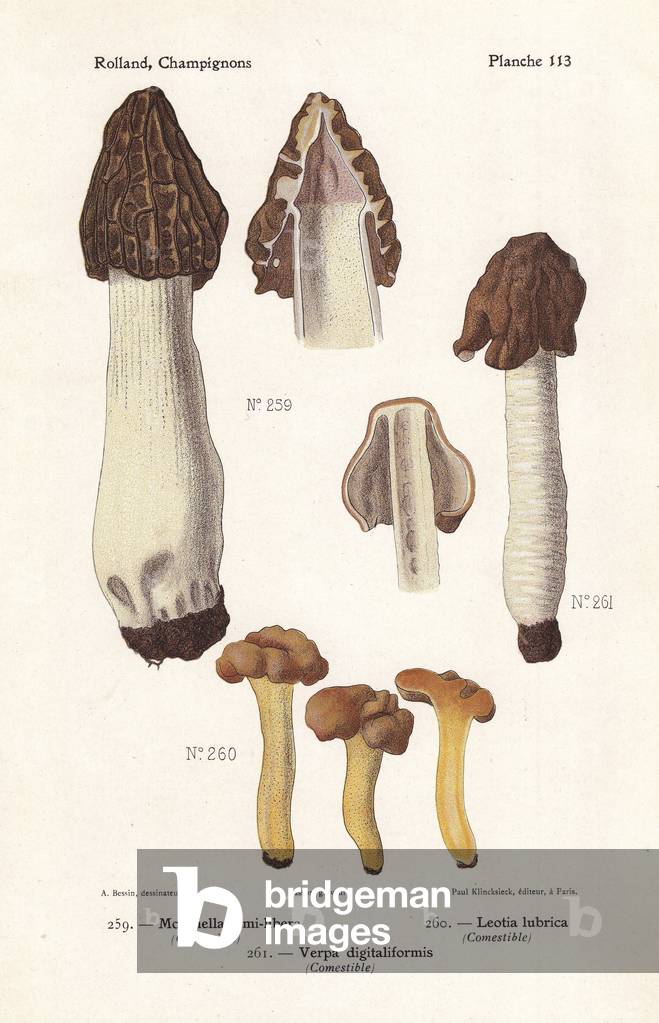
Half-free morel, Morchella semilibera, jelly baby, Leotia lubrica, and false morel, Verpa digitaliformis. Chromolithograph by Lassus after an illustration by A. Bessin from Leon Rolland's Guide to Mushrooms from France, Switzerland and Belgium, Atlas des Mushrooms, Paul Klincksieck, Paris, 1910.

FLO4689657: Half-free morel, Morchella semilibera, jelly baby, Leotia lubrica, and false morel, Verpa digitaliformis. Chromolithograph by Lassus after an illustration by A. Bessin from Leon Rolland's Guide to Mushrooms from France, Switzerland and Belgium, Atlas des Mushrooms, Paul Klincksieck, Paris, 1910. / Bridgeman Images

Etruscan civilization: “” Alabastre””” Upper part in plaster shaped woman with long hair 600-550 BC Dim 24.5 cm From the tomb of the Flabelli a Populonia, Italy - Florence Museo Archeologico inv 89293 b

LRI4689764: Etruscan civilization: “” Alabastre””” Upper part in plaster shaped woman with long hair 600-550 BC Dim 24.5 cm From the tomb of the Flabelli a Populonia, Italy - Florence Museo Archeologico inv 89293 b, Etruscan, (6th century BC) / Bridgeman Images

Coincap mushroom, Collybia grammocephela. Chromolithograph drawn by Bessin for Leon Rolland's “Atlas of Mushrooms”” 1911.

FLO4689851: Coincap mushroom, Collybia grammocephela. Chromolithograph drawn by Bessin for Leon Rolland's “Atlas of Mushrooms”” 1911. / Bridgeman Images

Cyclomyces setiporus (Polyporus intybaceus) and birch polypore, Piptoporus betulinus (Polyporus betulinus). Chromolithograph by Lassus after an illustration by A. Bessin from Leon Rolland's Guide to Mushrooms from France, Switzerland and Belgium, Atlas des Mushrooms, Paul Klincksieck, Paris, 1910.

FLO4690003: Cyclomyces setiporus (Polyporus intybaceus) and birch polypore, Piptoporus betulinus (Polyporus betulinus). Chromolithograph by Lassus after an illustration by A. Bessin from Leon Rolland's Guide to Mushrooms from France, Switzerland and Belgium, Atlas des Mushrooms, Paul Klincksieck, Paris, 1910. / Bridgeman Images

Pride of Waltham pink hybrid pink. Chromolithograph by Georges Severeyns from an illustration by Walter H. Fitch from William Paul's “The Rose Garden in two divisions,” London, 1888. First issued in 1848 with 15 colored plates, “” The Rose Garden”” soon became a standard work on roses and ran to 10 editions, the last in 1903. The illustrations for the 9th edition were by Walter Fitch, the famous artist who illustrated Curtis' “” Botanical Magazine”” for many years.

FLO4690054: Pride of Waltham pink hybrid pink. Chromolithograph by Georges Severeyns from an illustration by Walter H. Fitch from William Paul's “The Rose Garden in two divisions,” London, 1888. First issued in 1848 with 15 colored plates, “” The Rose Garden”” soon became a standard work on roses and ran to 10 editions, the last in 1903. The illustrations for the 9th edition were by Walter Fitch, the famous artist who illustrated Curtis' “” Botanical Magazine”” for many years. / Bridgeman Images

The skeleton of Death guides a group of tourists through the Catacombs in Paris. Handcoloured copperplate drawn and engraved by Thomas Rowlandson from The English Dance of Death, Ackermann, London, 1816.

FLO4690146: The skeleton of Death guides a group of tourists through the Catacombs in Paris. Handcoloured copperplate drawn and engraved by Thomas Rowlandson from The English Dance of Death, Ackermann, London, 1816., Rowlandson, Thomas (1756-1827) / Bridgeman Images

The skeleton of Death as a priest celebrating the wedding between a young woman and an ugly old man. Handcoloured copperplate drawn and engraved by Thomas Rowlandson from The English Dance of Death, Ackermann, London, 1816.

FLO4690212: The skeleton of Death as a priest celebrating the wedding between a young woman and an ugly old man. Handcoloured copperplate drawn and engraved by Thomas Rowlandson from The English Dance of Death, Ackermann, London, 1816., Rowlandson, Thomas (1756-1827) / Bridgeman Images

The miracle of Saint Placidus: Saint Benedict of Nursie saves the young Placidus caught in the stream of a lake. 13th century (fresco)

LRI4690283: The miracle of Saint Placidus: Saint Benedict of Nursie saves the young Placidus caught in the stream of a lake. 13th century (fresco), Consolo (Magister Conxolus) (13th century) / Bridgeman Images

The skeleton of Death holds the rudder on a rowboat escaping a shipwreck, as its desparate crew row for the shore and passengers drown in the waves. Handcoloured copperplate drawn and engraved by Thomas Rowlandson from The English Dance of Death, Ackermann, London, 1816.

FLO4690317: The skeleton of Death holds the rudder on a rowboat escaping a shipwreck, as its desparate crew row for the shore and passengers drown in the waves. Handcoloured copperplate drawn and engraved by Thomas Rowlandson from The English Dance of Death, Ackermann, London, 1816., Rowlandson, Thomas (1756-1827) / Bridgeman Images

The skeleton of Death comes for Tom Higgins, a bricklayer's lad who has expired waiting for a dish outside an inn. Handcoloured copperplate drawn and engraved by Thomas Rowlandson from The English Dance of Death, Ackermann, London, 1816.

FLO4690480: The skeleton of Death comes for Tom Higgins, a bricklayer's lad who has expired waiting for a dish outside an inn. Handcoloured copperplate drawn and engraved by Thomas Rowlandson from The English Dance of Death, Ackermann, London, 1816., Rowlandson, Thomas (1756-1827) / Bridgeman Images

The Theatre: Tourists enjoying a play at Scarborough Theatre. Handcoloured copperplate engraving by Thomas Rowlandson after a sketch by J. Green from Poetical Sketches of Scarborough, Ackermann, London, 1813.

FLO4690573: The Theatre: Tourists enjoying a play at Scarborough Theatre. Handcoloured copperplate engraving by Thomas Rowlandson after a sketch by J. Green from Poetical Sketches of Scarborough, Ackermann, London, 1813., Rowlandson, Thomas (1756-1827) / Bridgeman Images

The skeleton of Death fights with gentlemen gamblers in the Chance room at a London gaming club. Handcoloured copperplate drawn and engraved by Thomas Rowlandson from The English Dance of Death, Ackermann, London, 1816.

FLO4690198: The skeleton of Death fights with gentlemen gamblers in the Chance room at a London gaming club. Handcoloured copperplate drawn and engraved by Thomas Rowlandson from The English Dance of Death, Ackermann, London, 1816., Rowlandson, Thomas (1756-1827) / Bridgeman Images

The twelve Apotres Detail of a fresco of the school of Siena. 14th century. Monastery of St. Benedict (Sacro Speco), Superior Church in Subiaco (Rome), Italy

LRI4690207: The twelve Apotres Detail of a fresco of the school of Siena. 14th century. Monastery of St. Benedict (Sacro Speco), Superior Church in Subiaco (Rome), Italy, Sienese School, (14th century) / Bridgeman Images

The skeleton of Death rides with a man toward the betting post on a racetrack, while children play a game of lotto. Handcoloured copperplate drawn and engraved by Thomas Rowlandson from The English Dance of Death, Ackermann, London, 1816.

FLO4690214: The skeleton of Death rides with a man toward the betting post on a racetrack, while children play a game of lotto. Handcoloured copperplate drawn and engraved by Thomas Rowlandson from The English Dance of Death, Ackermann, London, 1816., Rowlandson, Thomas (1756-1827) / Bridgeman Images

The skeleton of Death helps a large matron onto the fatal Last Stage. Handcoloured copperplate drawn and engraved by Thomas Rowlandson from The English Dance of Death, Ackermann, London, 1816.

FLO4690445: The skeleton of Death helps a large matron onto the fatal Last Stage. Handcoloured copperplate drawn and engraved by Thomas Rowlandson from The English Dance of Death, Ackermann, London, 1816., Rowlandson, Thomas (1756-1827) / Bridgeman Images

The skeleton of Death paints a portrait of an Alderman, while his young servant girl flirts with a gallant artist behind the screen. Handcoloured copperplate drawn and engraved by Thomas Rowlandson from The English Dance of Death, Ackermann, London, 1816.

FLO4690501: The skeleton of Death paints a portrait of an Alderman, while his young servant girl flirts with a gallant artist behind the screen. Handcoloured copperplate drawn and engraved by Thomas Rowlandson from The English Dance of Death, Ackermann, London, 1816., Rowlandson, Thomas (1756-1827) / Bridgeman Images

Duchess of Bedford, hybrid crimson pink. Chromolithograph by Georges Severeyns from an illustration by Walter H. Fitch from William Paul's “The Rose Garden in two divisions,” London, 1888. First issued in 1848 with 15 colored plates, “” The Rose Garden”” soon became a standard work on roses and ran to 10 editions, the last in 1903. The illustrations for the 9th edition were by Walter Fitch, the famous artist who illustrated Curtis' “” Botanical Magazine”” for many years.

FLO4690087: Duchess of Bedford, hybrid crimson pink. Chromolithograph by Georges Severeyns from an illustration by Walter H. Fitch from William Paul's “The Rose Garden in two divisions,” London, 1888. First issued in 1848 with 15 colored plates, “” The Rose Garden”” soon became a standard work on roses and ran to 10 editions, the last in 1903. The illustrations for the 9th edition were by Walter Fitch, the famous artist who illustrated Curtis' “” Botanical Magazine”” for many years. / Bridgeman Images


Back to top