2496536 Search Results

PIX4635593: Lactee route seen from Chile - On the right, a shooting star. Image obtained in Las Campanas-Chile in 2002 / Bridgeman Images

FLO4636121: Native of Papua Island (New Guinea and Indonesia). Lithography for the book: “” Galerie complete en tableaux fideles des peuples d'Amérique et d'Australie”” by Friedrich Wilhelm Goedsche (1785-1863), Meissen edition (Germany), 1835-1840. Natives of the island of Papua, New Guinea. Handcoloured lithograph from Friedrich Wilhelm Goedsche's “” Vollstaendige Voelkergallerie in getreuen Abbildungen”” (Complete Gallery of Peoples in True Pictures), Meissen, circa 1835-1840. / Bridgeman Images

FLO4636164: View of the island of the Admiraute (Papua New Guinea), with indigenous natives on their canoes. Lithography for the book: “” Galerie complete en tableaux fideles des peuples d'Amérique et d'Australie”” by Friedrich Wilhelm Goedsche (1785-1863), Meissen edition (Germany), 1835-1840. View of Admiralty Islands, Papua New Guinea: naked natives paddling canoes and sailboats on a river, one with a person standing on the outrigger with a spear. Handcoloured lithograph from Friedrich Wilhelm Goedsche's “” Vollstaendige Voelkergallerie in getreuen Abbildungen”” (Complete Gallery of Peoples in True Pictures), Meissen, circa 1835-1840. / Bridgeman Images

FLO4636204: Indigenous boats sailing, fishing off Tinian Island, Mariana Islands (USA). Lithography for the book: “” Galerie complete en tableaux fideles des peuples d'Amérique et d'Australie”” by Friedrich Wilhelm Goedsche (1785-1863), Meissen edition (Germany), 1835-1840. View of natives fishing in sailing boats with outriggers off Tinian Island, Marianas. Handcoloured lithograph from Friedrich Wilhelm Goedsche's “” Vollstaendige Voelkergallerie in getreuen Abbildungen”” (Complete Gallery of Peoples in True Pictures), Meissen, circa 1835-1840. / Bridgeman Images

FLO4634967: The ruins of the castle of Bonjem, in the region of Fezzan (Libya). Lithography for the book: “” Galerie complete en tableaux fideles des peuples d'Afrique” by Friedrich Wilhelm Goedsche (1785-1863), edition Meissen (Germany), 1835-1840. The castle of Bonjem (Bogem), Roman ruins in the Fezzan region of the Sahara in present-day Libya. Handcoloured lithograph from Friedrich Wilhelm Goedsche's “” Vollstaendige Voelkergallerie in getreuen Abbildungen”” (Complete Gallery of Peoples in True Pictures), Meissen, circa 1835-1840. / Bridgeman Images
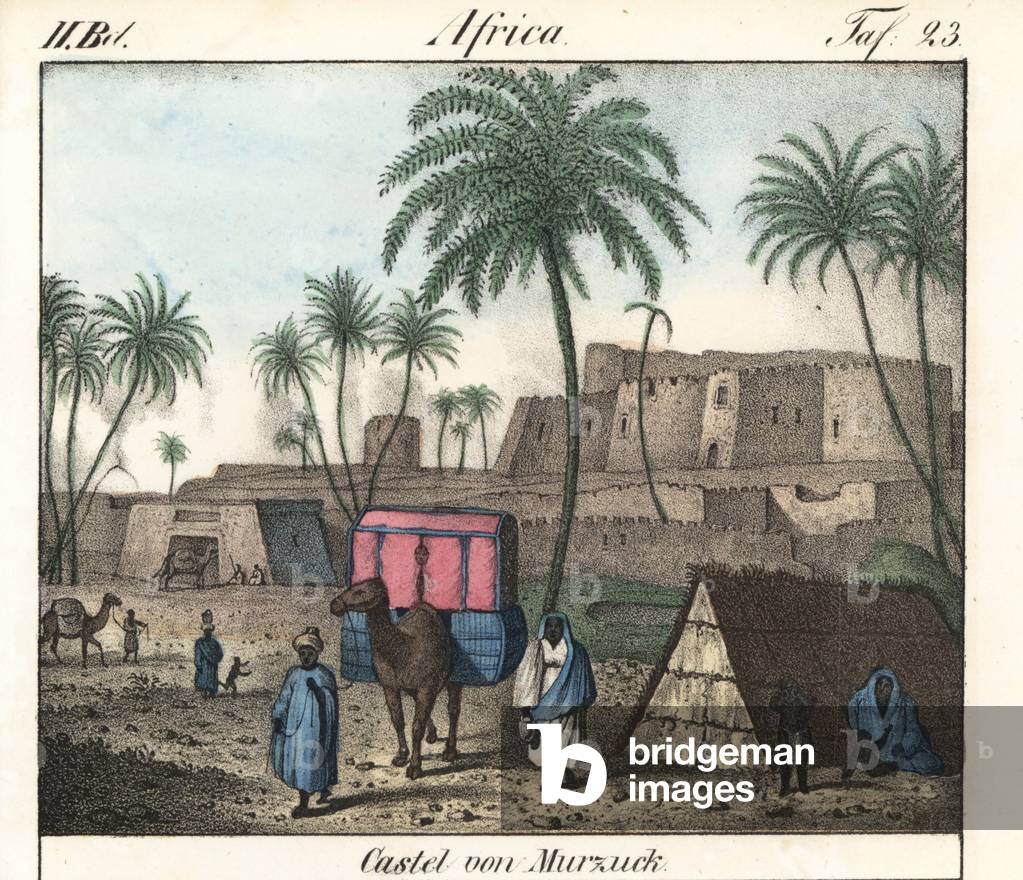
FLO4635014: Murzuk Castle, oasis of the Fezzan region (Libya). Lithography for the book: “” Galerie complete en tableaux fideles des peuples d'Afrique” by Friedrich Wilhelm Goedsche (1785-1863), edition Meissen (Germany), 1835-1840. The castle of Murzuk, oasis town in the Fezzan region of the Sahara desert. Handcoloured lithograph from Friedrich Wilhelm Goedsche's “” Vollstaendige Voelkergallerie in getreuen Abbildungen”” (Complete Gallery of Peoples in True Pictures), Meissen, circa 1835-1840. / Bridgeman Images

FLO4635165: Native thatch house, under a palm tree in Senegambie (Senegal and Gambia). Lithography for the book: “” Galerie complete en tableaux fideles des peuples d'Afrique” by Friedrich Wilhelm Goedsche (1785-1863), edition Meissen (Germany), 1835-1840. Native thatched hut under palm trees in Senegal (Senegal and Gambia), west Africa. Handcoloured lithograph from Friedrich Wilhelm Goedsche's “” Vollstaendige Voelkergallerie in getreuen Abbildungen”” (Complete Gallery of Peoples in True Pictures), Meissen, circa 1835-1840. / Bridgeman Images

FLO4635086: Nubian statue (Sudan) of the god Amon, sitting on a chair and holding Ankh, the cross of life and a sceptre. Lithography for the book: “” Galerie complete en tableaux fideles des peuples d'Afrique” by Friedrich Wilhelm Goedsche (1785-1863), edition Meissen (Germany), 1835-1840. Nubian statue of the god Amun (Hammon) seated on a chair with the ankh symbol and was sceptre. Handcoloured lithograph from Friedrich Wilhelm Goedsche's “” Vollstaendige Voelkergallerie in getreuen Abbildungen”” (Complete Gallery of Peoples in True Pictures), Meissen, circa 1835-1840. / Bridgeman Images

FLO4635370: San hunters (formerly bochimans or bushmen) (South Africa) and their habitat in the bushes. Lithography for the book: “” Galerie complete en tableaux fideles des peuples d'Afrique” by Friedrich Wilhelm Goedsche (1785-1863), edition Meissen (Germany), 1835-1840. San hunters and their living quarters in the bush, South Africa. Handcoloured lithograph from Friedrich Wilhelm Goedsche's “” Vollstaendige Voelkergallerie in getreuen Abbildungen”” (Complete Gallery of Peoples in True Pictures), Meissen, circa 1835-1840. / Bridgeman Images
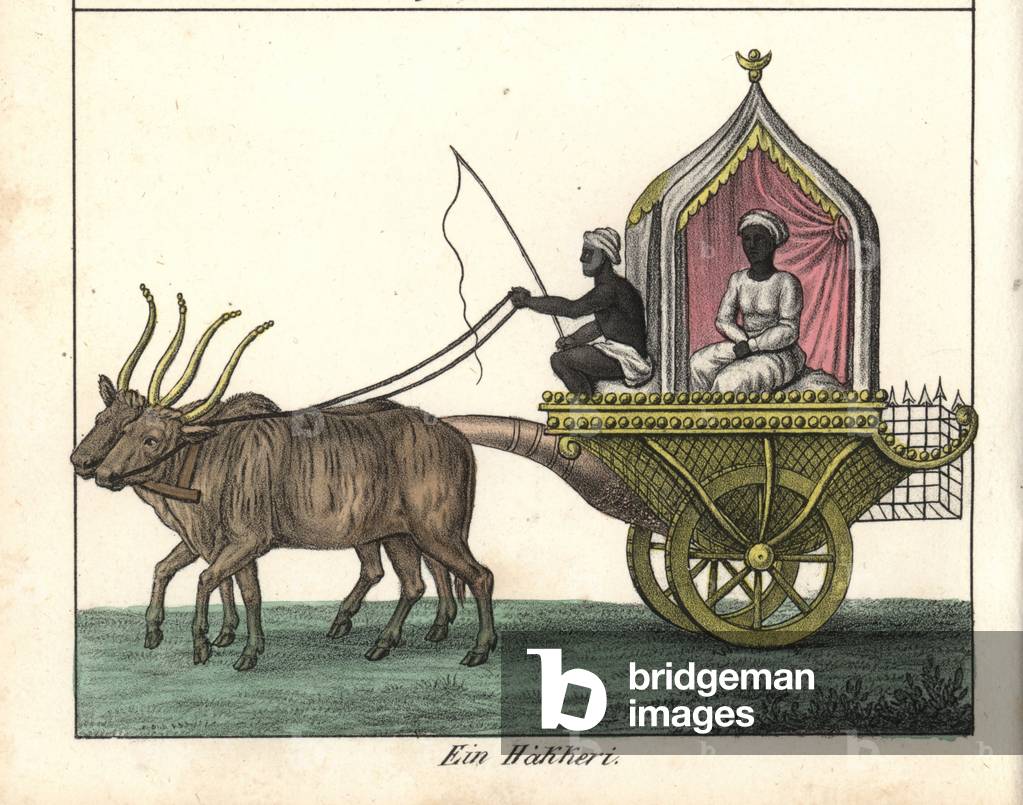
FLO4634032: Indian tank, fire by oxen. Lithography for the book: “” Galerie complete en tableaux fideles des peuples d'Asie”” by Friedrich Wilhelm Goedsche (1785-1863), edition Meissen (Germany), 1835-1840. Indian festival carriage driven by bulls. Handcoloured lithograph from Friedrich Wilhelm Goedsche's “” Vollstaendige Voelkergallerie in getreuen Abbildungen”” (Complete Gallery of Peoples in True Pictures), Meissen, circa 1835-1840. / Bridgeman Images

FLO4634013: Costumes of Indian peasants: a farmer with a rifle and a shield, a farmer with her baby and a monk in a saffron dress, with her bowl of offerings. Lithography for the book: “” Galerie complete en tableaux fideles des peuples d'Asie”” by Friedrich Wilhelm Goedsche (1785-1863), edition Meissen (Germany), 1835-1840. Costumes of Indian farmer with shield and rifle, woman farmer with baby, and monk with begging bowl and saffron robes. Handcoloured lithograph from Friedrich Wilhelm Goedsche's “” Vollstaendige Voelkergallerie in getreuen Abbildungen”” (Complete Gallery of Peoples in True Pictures), Meissen, circa 1835-1840. / Bridgeman Images

FLO4634098: Indian costumes: a man from Coromandel coast and two soldiers from Mysore (or Maissour). With a gold coin from the East India Company. Lithography for the book: “” Galerie complete en tableaux fideles des peuples d'Asie”” by Friedrich Wilhelm Goedsche (1785-1863), edition Meissen (Germany), 1835-1840. Indian costumes including a man from the Coromandel coast and two soldiers from Mysore. Gold coins from the East India Company. Handcoloured lithograph from Friedrich Wilhelm Goedsche's “” Vollstaendige Voelkergallerie in getreuen Abbildungen”” (Complete Gallery of Peoples in True Pictures), Meissen, circa 1835-1840. / Bridgeman Images

FLO4594640: Dress of the early part of the reign of King Henry VIII, 1509-1520. She wears a green dress with square collar, lace cuffs on puff sleeves, gold belt and jeweled necklace, headdress and choker. Based on a portrait of Lady Abergavenny, descriptions by Hall, Hollingshed, and Stow, print attached to Horace Walpole's Royal and Noble Authors, brassed in the Shelley family, Clapham Church, Sussex. Handcoloured lithograph from “” Costumes of British Ladies from the Time of William the First to the Reign of Queen Victoria”, London, Dickinson and Son, 1840. / Bridgeman Images

FLO4594652: Dress of the reign of Henry VIII, 1509-1547. She wears a purple hat decorated with jewels and feathers, a red dress with puffed and slit sleeves, lace collar and cuffs. Based on a woodcut of the time, Strutt's Habits, Society of Antiquaries, Observations on Female Headdress in England.” Handcoloured lithograph from “” Costumes of British Ladies from the Time of William the First to the Reign of Queen Victoria”, London, Dickinson and Son, 1840. / Bridgeman Images
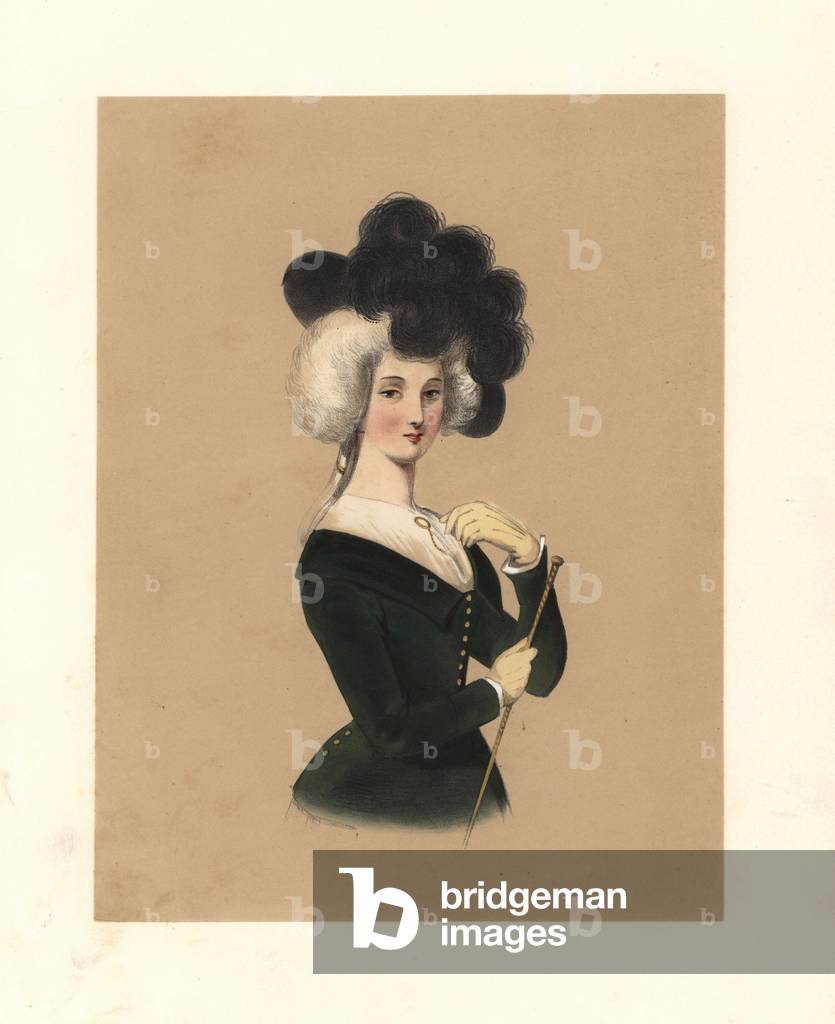
FLO4594783: Dress (Dress) of the reign of George III, 1760-1820. Woman in black hat with black plumes over a bouffant hairstyle, wearing a green velvet riding jacket, tan gloves, and carrying a crop. From a family picture by John Hoppner in the riding dress worn by the lady represented. Handcoloured lithograph from “” Costumes of British Ladies from the Time of William the First to the Reign of Queen Victoria”, London, Dickinson and Son, 1840. / Bridgeman Images
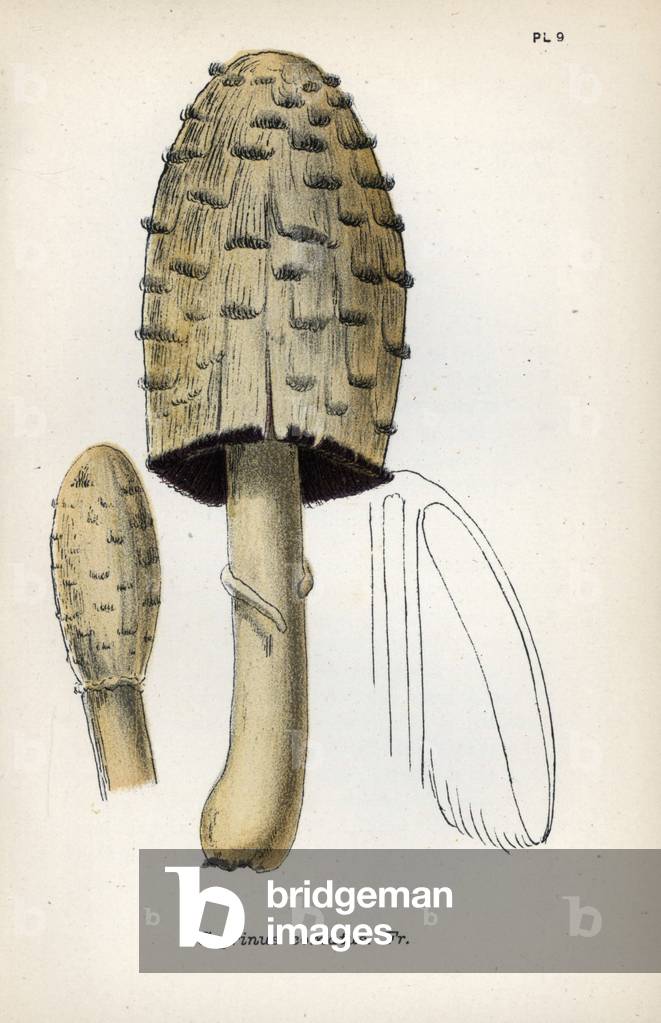
FLO4594404: Chromolithography based on a drawing by Mordecai Cubitt Cooke (1825-1914), published in “A Plain and Easy Account of British Fungi”, edition Robert Hardwicke, London, 1862 / Bridgeman Images
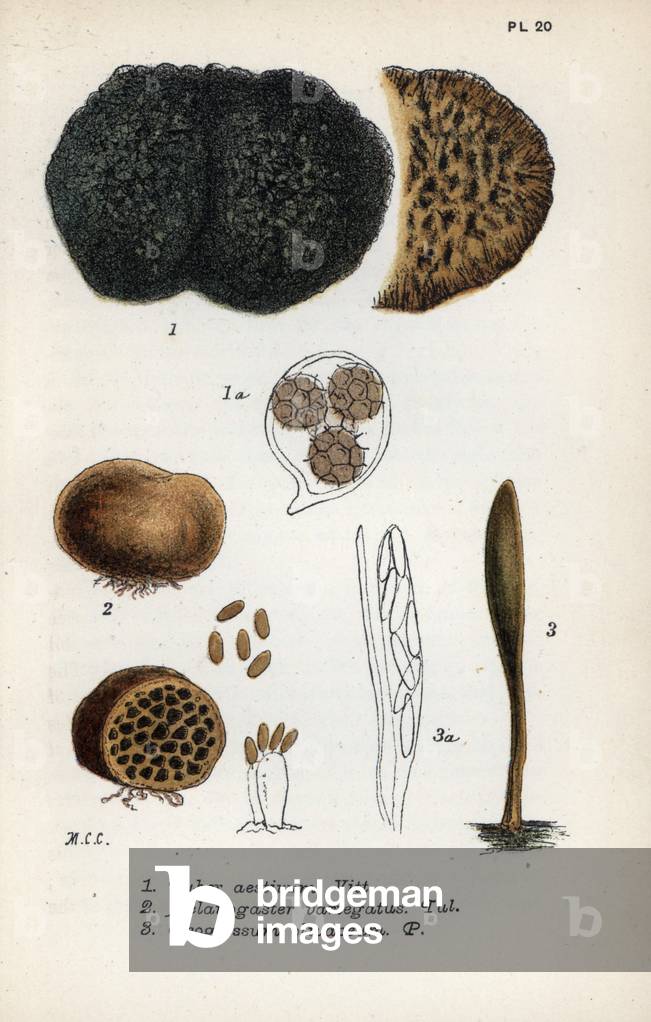
FLO4594463: Summer truffle or St. John's truffle (Tuber aestivum 1), roge truffle (Melanogaster variegatus 2), geoglosse or tongue (Geoglossum olivaceum 3) -Chromolithography after drawing by Mordecai Cubitt Cooke (1825-1914), published in “A Plain and Easy Account of British Fungi” (English mushrooms), edition Robert Hardwicke, London, 1862 / Bridgeman Images

FLO4594497: Dress (Robe) of the reign of King William II, Rufus, 1087-1100. She wears a fur trimmed cloak over a full dress, and her hair long tied in ribbons. Illuminated manuscripts, Cotton MS Nero C.4 and psalter of the 12th century. Handcoloured lithograph from “” Costumes of British Ladies from the Time of William the First to the Reign of Queen Victoria”, London, Dickinson and Son, 1840. / Bridgeman Images

LRI4594549: Winter. Sculpture, 16th century, Giambologna (Giovanni da Bologna), (1529-1608) / Bridgeman Images

FLO4594665: Dress (Robe) of the early part of the reign of Queen Mary, 1553-1558. She weasrs a lace headdress and collar, a bodice with puff shoulders and short sleeves decorated with jewels. Based on descriptions by Pedro de Gante, Stow, Hall, Strutt, and portraits. Handcoloured lithograph from “” Costumes of British Ladies from the Time of William the First to the Reign of Queen Victoria”, London, Dickinson and Son, 1840. / Bridgeman Images

FLO4594692: Dress during the Protectorate, 1653-1659. She wears five ribbons in her hair, a tall lace collar, a black dress with green sleeves and scarlet shoulders over embroidered petticoats. Based on Speed's Map of England, portrait of Lady Croke. Handcoloured lithograph from “” Costumes of British Ladies from the Time of William the First to the Reign of Queen Victoria”, London, Dickinson and Son, 1840. / Bridgeman Images

FLO4594695: Dress (Dress) of the reign of Charles II, 1660-1681. She wears her hair in ringlets, a necklace, low-cut dress with puff sleeves decorated with jewels. Based on portraits of Anne Hyde, Duchess of York, and others at Hampton Court. Handcoloured lithograph from “” Costumes of British Ladies from the Time of William the First to the Reign of Queen Victoria”, London, Dickinson and Son, 1840. / Bridgeman Images

FLO4594776: Dress (Dress) of the reign of King George III, 1760-1820. She wears a tropical bird in her powdered hair, a crucifix around her neck, silk embroidered dress and petticoats, white gloves and fan. Based on a miniature by Christian Friedrich Zincke of Mrs. Elizabeth Montagu, print of the Duchess of Devonshire by Bartolozzi, and “” The Maiden Aunt””” 1776. Handcoloured lithograph from “” Costumes of British Ladies from the Time of William the First to the Reign of Queen Victoria”, London, Dickinson and Son, 1840. / Bridgeman Images

FLO4594333: Astronomical telescopes, chiefly reflecting, including Dr. David Brewster's patent telescope and John Smeaton's telescope support. Copperplate engraving by Wilson Lowry after a drawing by J. Farey from Abraham Rees' Cyclopedia or Universal Dictionary of Arts, Sciences and Literature, Longman, Hurst, Rees, Orme and Brown, London, 1820. / Bridgeman Images

LRI4594389: Christ before Pontius Pilate. Detail. Low relief of the left pulpit, c.1460 approx, Donatello, (c.1386-1466) / Bridgeman Images

FLO4594534: Dress (Dress) of the reign of King John, 1199-1216. She wears a green mantle fastened at the throat over a grey-blue dress, white embroidered veil with diadem and wimple. Based on an order by the king for a pelisson to be made for the queen, Du Cange, Matthew Paris, Sir Walter Scott's descriptions. Handcoloured lithograph from “” Costumes of British Ladies from the Time of William the First to the Reign of Queen Victoria”, London, Dickinson and Son, 1840. / Bridgeman Images

FLO4594603: Dress of the reign of King Henry VI, 1422-1461. She wears a blue furlined mantle over a jeweled and furtrimmed bodice over a pink skirt. Her Royal MS, Harleian MS, Froissart, Montfaucon, drawing by King Rene, print in Lidgate's poem, Nuremburg Chronicle. Handcoloured lithograph from “” Costumes of British Ladies from the Time of William the First to the Reign of Queen Victoria”, London, Dickinson and Son, 1840. / Bridgeman Images

FLO4594621: Dress (Robe) of the reign of King Richard III, 1483-1485. Blue and gold embroidered dress with white puff sleeves, jeweled necklace and belt, headdress with upright veil. Based on illuminated Royal manuscript 16F2, Harleian manuscript 4425, “” Roman de la Rose,””” Strutt's Habits. Handcoloured lithograph from “” Costumes of British Ladies from the Time of William the First to the Reign of Queen Victoria”, London, Dickinson and Son, 1840. / Bridgeman Images

FLO4594690: Dress (Dress) of the reign of James I and Charles I, 1603-1649. She wears a black hat, tall lace collar, necklace, black mantle over a green puff-sleeved dress with lace cuffs, and carries a peacock feather fan. Portrait of James I's daughter, Elizabeth, Queen of Bohemia, Speed's Map of England, Vansomer's portrait of the time. Handcoloured lithograph from “” Costumes of British Ladies from the Time of William the First to the Reign of Queen Victoria”, London, Dickinson and Son, 1840. / Bridgeman Images
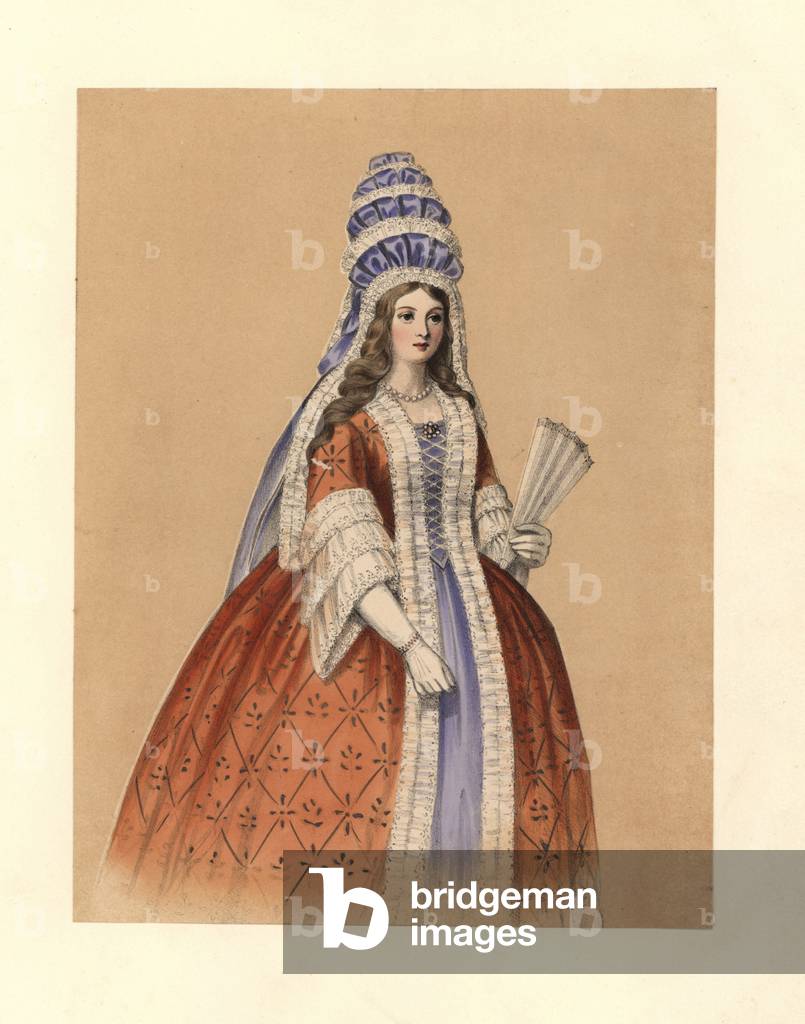
FLO4594718: Dress (Dress) of the reign of Queen Anne, 1702-1714. She wears a tall hat of ribbon and lace, a dress trimmed with lace, white gloves, and carries a lace fan. Addison's Spectator, prints and portraits, Horace Walpole. Handcoloured lithograph from “” Costumes of British Ladies from the Time of William the First to the Reign of Queen Victoria”, London, Dickinson and Son, 1840. / Bridgeman Images

FLO4594747: Dress (Robe) of the reign of George II, 1727-1760. She wears a headdress in the shape of a carriage, beauty spots, necklaces and chokers, a dress with fitted bodice, short sleeves and long lace cuffs, a lace apron, and a watch hanging from her belt. Based on Hogarth, Gray's Inn Journal, Thomas Jefferys Collection of Dresses, and “” The Connoisseur.” Handcoloured lithograph from “” Costumes of British Ladies from the Time of William the First to the Reign of Queen Victoria”, London, Dickinson and Son, 1840. / Bridgeman Images

FLO4594874: Mr. Henry Gattie as Monsieur Morbleu in the farce “” Monsieur Tonson”” at the Theatre Royal Drury Lane. Gattie (1774-1844) was a popular actor and singer known for his impersonations of Frenchmen and Irishmen. Handcoloured stipple copperplate engraving by Robert Cooper after a painting by Michael William Sharp. From D. Terry's “” British Theatrical Gallery,” London, Henry Berthoud Jr., 1825. / Bridgeman Images
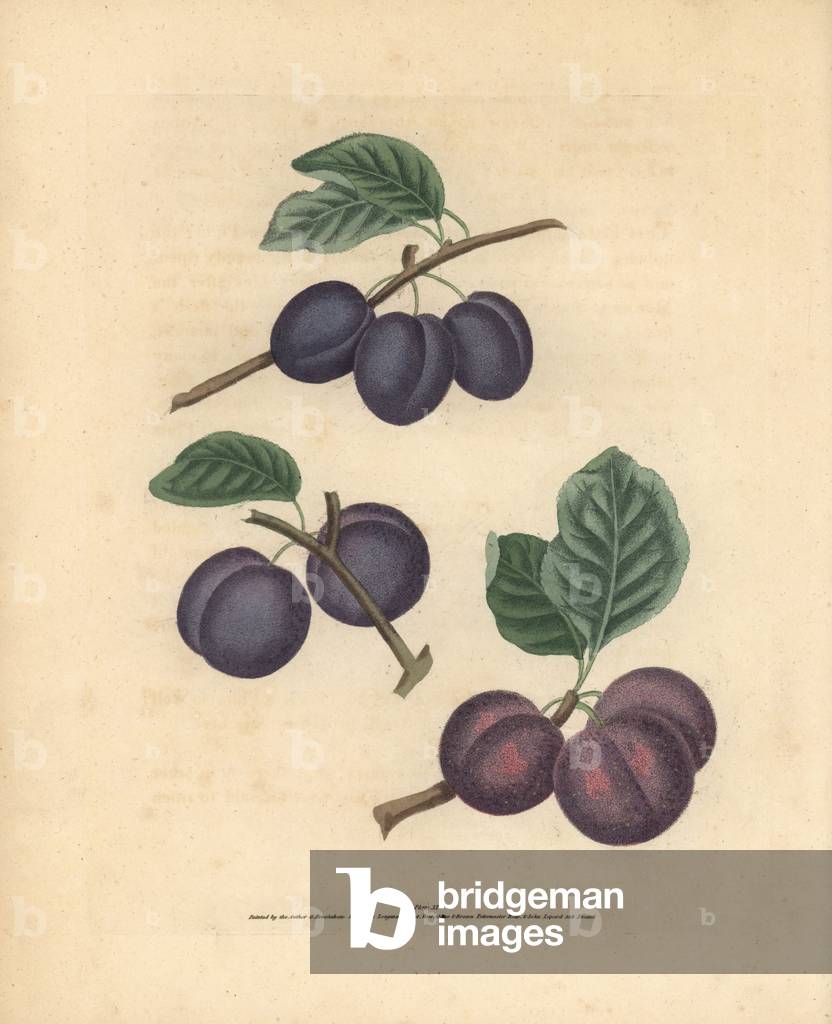
FLO4594995: Plum varieties, Prunus domestica: Tours, Lawrane's Early Plum and Orleans. Handcoloured stipple engraving of an illustration by George Brookshaw from his own “” Pomona Britannica,”” London, Longman, Hurst, etc., 1817. The quarto edition of the original folio edition published from 1804-1812. Brookshaw (1751-1823) was a successful cabinet maker who disappeared in the 1790s before returning as a flower painter with the anonymous “” New Treatise on Flower Painting,””” 1797. Â / Bridgeman Images
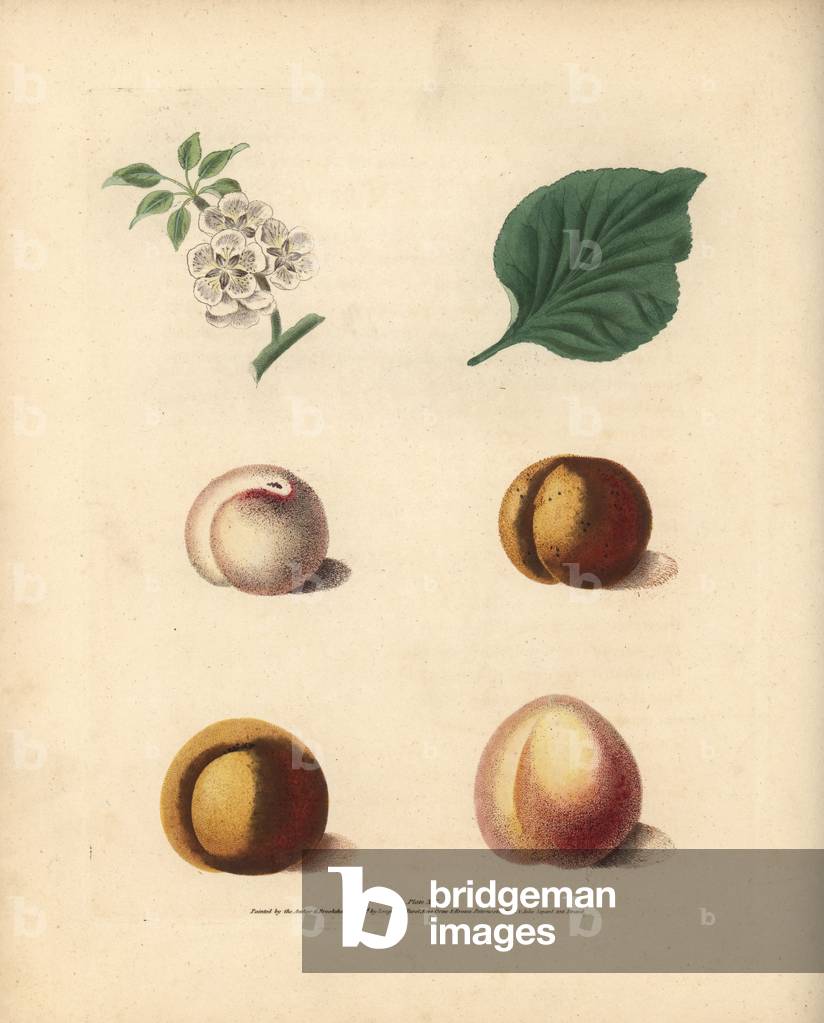
FLO4595036: Apricot varieties, Prunus armeniaca: blossom, leaf, White Masculine, Red Masculine, Orange Apricot and Turkey Apricot. Handcoloured stipple engraving of an illustration by George Brookshaw from his own “” Pomona Britannica,”” London, Longman, Hurst, etc., 1817. The quarto edition of the original folio edition published from 1804-1812. Brookshaw (1751-1823) was a successful cabinet maker who disappeared in the 1790s before returning as a flower painter with the anonymous “” New Treatise on Flower Painting,””” 1797. / Bridgeman Images

FLO4595223: Green flesh or Candia melon, Cucumis melo. Handcoloured stipple engraving of an illustration by George Brookshaw from his own “” Pomona Britannica,”” London, Longman, Hurst, etc., 1817. The quarto edition of the original folio edition published from 1804-1812. Brookshaw (1751-1823) was a successful cabinet maker who disappeared in the 1790s before returning as a flower painter with the anonymous “” New Treatise on Flower Painting,””” 1797. / Bridgeman Images

LRI4595258: Funeral monument of Piero and Giovanni de Medici, son of Cosimo de Medici the former. Sculpture, 1469-1472, Verrocchio, Andrea del (1435-88) / Bridgeman Images
